


What Is a Lab-Grown Diamond? A Complete Beginner's Guide
Last updated July 2026
If you're just starting to research engagement rings or fine jewellery, "lab-grown diamond" is a term you'll run into constantly, and it's worth understanding properly before you go any further. Here's the short, clear version: what it actually is, how it's made, and how it stacks up against a mined diamond.
The Definition
A lab-grown diamond is a real diamond created in a controlled laboratory environment rather than formed underground over one to three billion years. It has the same chemical composition (pure carbon), the same cubic crystal structure, and the same optical brilliance as a mined diamond.
Lab-grown diamonds are:
- Physically identical to mined diamonds
- Optically identical, same fire, same sparkle
- Chemically identical, same crystal lattice
- Graded by the same major labs, IGI and GIA, using the same fundamental criteria
They are not diamond simulants. Cubic zirconia and moissanite are different materials entirely, not diamonds at all. A lab-grown diamond is diamond, full stop, just grown above ground.
How Are They Made?
Two methods, both genuinely technical processes requiring real precision and equipment:
- HPHT (High Pressure High Temperature) replicates the pressure and heat conditions deep within the earth
- CVD (Chemical Vapour Deposition) grows a diamond layer by layer from carbon-rich gas in a vacuum chamber
Both produce genuine, gem-quality diamonds suitable for fine jewellery, typically over a period of two to six weeks depending on size and method. We've covered exactly how each process works, with the specific temperatures, pressures and timelines, in our full guide: How Are Lab-Grown Diamonds Made?
Are They Real Diamonds?
Yes. This comes up constantly, and the short answer is unambiguous: a lab-grown diamond is chemically, physically and optically identical to a mined diamond. It's tested, graded and certified using the same fundamental standards, cut, colour, clarity, carat, and comes with a formal grading report and laser inscription for verification. If you want the full explanation of what "real" actually means in a regulatory and gemological sense, we've gone deep on that separately in Are Lab-Grown Diamonds Real Diamonds?
How Do They Compare to Mined Diamonds?
At a glance:
- Composition and durability — identical, both are pure crystallised carbon, both score 10 on the Mohs hardness scale
- Certification — both graded by IGI or GIA
- Price — lab-grown typically runs 70 to 90% less than a comparable mined diamond as of 2026
- Environmental impact — depends on the individual producer's energy source rather than being uniformly lower; we'd rather be precise here than repeat a blanket claim
For the full head-to-head, including current pricing data and the nuances behind each point, see Lab-Grown vs Mined Diamonds: The Real Differences in 2026.
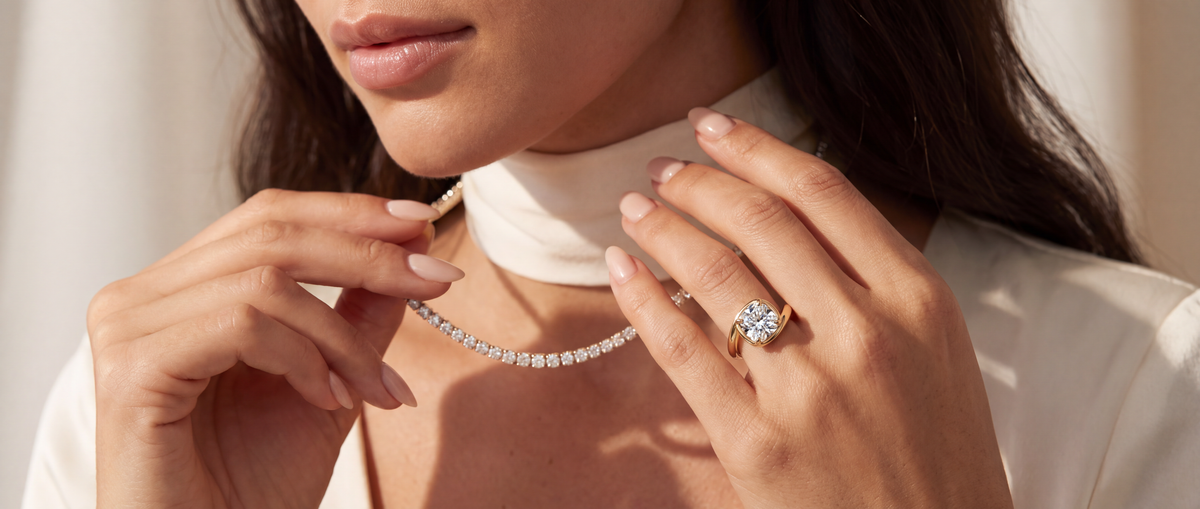
💎 Want to see the real thing? Explore the Elysian Radiant Solitaire Ring, available with an IGI- or GIA-certified lab-grown diamond.
Common Misconceptions, Briefly
A few things worth clearing up early, since they come up in nearly every first conversation:
- "They're fake." They're not, simulants like cubic zirconia and moissanite are different materials; a lab-grown diamond is genuine diamond.
- "They're lower quality." Often the opposite, controlled growing conditions frequently produce higher clarity and colour grades than the average mined stone.
- "They won't last." They're identical in hardness and durability to mined diamonds, entirely suitable for daily wear over decades.
We've gone through nine of the most common myths in detail, with the honest trade-offs included, in Lab-Grown Diamond Myths, Debunked.
Why Are Lab-Grown Diamonds So Popular Right Now?
- Traceable, conflict-free sourcing
- Considerably better value, a larger or cleaner stone for the same budget
- Full customisation, particularly useful for bespoke design work
- Genuine technological maturity, this isn't an emerging category anymore, it's a well-established, heavily graded and certified part of the market
We see this shift clearly in our own client base at VYOR Diamond Lab, particularly among couples who want transparency and value without compromising on brilliance or durability. For the fuller case, see Why Choose a Lab-Grown Diamond?
Should You Choose a Lab-Grown Diamond?
If you want the same brilliance, durability and genuine authenticity as a mined diamond, with a fully traceable origin and considerably better value, lab-grown is a legitimate, well-established choice, not a compromise. Whether it's the right choice for you specifically depends on your own priorities, and that's a conversation worth having properly rather than deciding from a blog post alone.
Start Here, Then Go Deeper
This guide is deliberately the short version. If you want to go further on any specific point, here's where to look next:
- The 4Cs of Diamonds Explained — how cut, colour, clarity and carat actually work
- How Are Lab-Grown Diamonds Made? — the full HPHT vs CVD breakdown
- Lab-Grown Diamond Certification — what IGI and GIA reports actually tell you
- Lab-Grown vs Mined Diamonds — the full comparison with current pricing
Talk to Us at VYOR Diamond Lab
Nikolett and I lead every consultation personally at our Wembley showroom, no salespeople, and we're genuinely happy to answer beginner questions, there's no such thing as a question too basic when you're making a decision like this. Book a showroom or virtual consultation and we'll walk you through real, certified stones at your own pace.
Frequently Asked Questions
Is a lab-grown diamond a real diamond? Yes. It's chemically, physically and optically identical to a mined diamond. The only difference is where it formed.
How much cheaper is a lab-grown diamond than a mined one? Typically 70 to 90% less for a comparable cut, colour, clarity and carat weight, as of 2026.
How long does it take to grow a lab-grown diamond? Generally two to six weeks, depending on size and growth method (HPHT or CVD).
Are lab-grown diamonds as durable as mined diamonds? Yes. Both score 10 out of 10 on the Mohs hardness scale and are equally suitable for daily wear.
Is a lab-grown diamond the same as moissanite? No. Moissanite is silicon carbide, a different gemstone entirely. A lab-grown diamond is genuine diamond, grown above ground.
Explore our Lab-Grown Diamond Engagement Ring Collection, or book a consultation at our Wembley showroom to see certified stones in person.


Share:
Lab-Grown vs Mined Diamonds: Who Actually Wins? A Scorecard
How to Read an IGI Diamond Certificate: A Section-by-Section Guide