

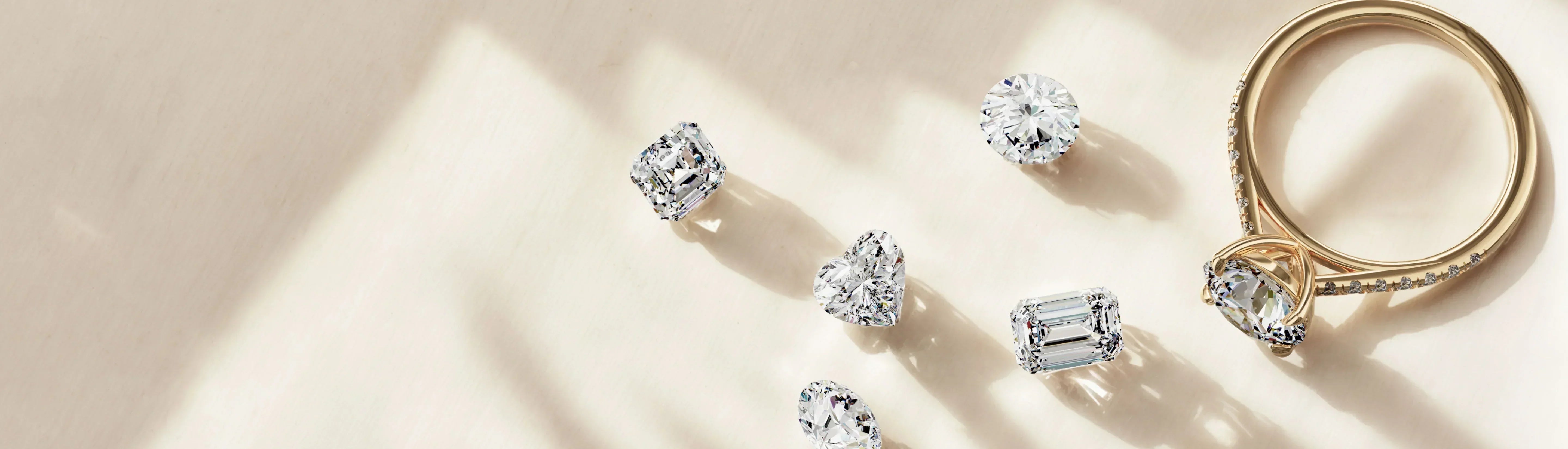
Why Choose a Lab-Grown Diamond? What Actually Makes the Case
Last updated July 2026
If you're leaning toward a lab-grown diamond but want the reasoning laid out plainly, here's the honest case for it, along with where lab-grown isn't automatically the better choice, because a genuinely useful guide should tell you both.
What Is a Lab-Grown Diamond, Exactly?
A lab-grown diamond is a real diamond grown in a controlled environment rather than formed underground over billions of years. It shares the same physical, optical and chemical properties as a mined diamond, identical hardness, identical brilliance, identical crystal structure.
Two growth methods are used:
- HPHT (High Pressure High Temperature) — replicates the pressure and heat of the earth's mantle
- CVD (Chemical Vapour Deposition) — grows the diamond layer by layer from carbon-rich gas
Neither is a shortcut or a compromise. Both produce a genuine diamond. If you want the technical detail on how each process works, we've covered it in full in How Are Lab-Grown Diamonds Made?
It's Not the Same as Moissanite
Worth clearing up early: a lab-grown diamond and moissanite are not the same thing. Moissanite is silicon carbide, a genuinely different gemstone with its own optical character, more fire, a different sparkle pattern. It's a wonderful option in its own right, but it isn't a diamond. A lab-grown diamond is diamond, full stop, just grown above ground. That distinction matters for how each is graded, certified and compared. If you're weighing the two against each other, our guide to moissanite vs lab-grown diamonds breaks down the practical differences.
The Case for Lab-Grown
More Diamond for Your Budget
This is the headline reason most people look at lab-grown, and the number is worth stating accurately: as of 2026, lab-grown diamonds typically cost around 70 to 90% less than a mined diamond of the same cut, colour, clarity and carat weight. That's a wider gap than it was even a couple of years ago. In practice, it means a larger stone, a higher colour or clarity grade, or more budget left over for the setting, without compromising on any of the 4Cs.
Traceable, Conflict-Free Origin
Because lab-grown diamonds are grown in controlled facilities, their origin is fully traceable from growth to finished stone. There's no ambiguity about sourcing, which is a genuine point of difference from the mined diamond supply chain, where the Kimberley Process addresses conflict financing specifically but doesn't cover every ethical consideration around labour and working conditions.
Certified to the Same Standard
Reputable lab-grown diamonds are certified by the same major labs that grade mined diamonds, IGI and GIA, and evaluated on the same core criteria: cut, colour, clarity and carat weight, plus proportions, polish and symmetry. One nuance worth knowing: GIA changed how it certifies lab-grown diamonds in October 2025, moving to a simplified Premium/Standard system rather than the detailed 4Cs scale it still uses for mined stones. We've explained exactly what that means for a certificate in our lab-grown certification guide.
Visually Identical
Placed side by side, a well-cut lab-grown diamond and a well-cut mined diamond are indistinguishable to the naked eye, and to most jewellers without lab equipment. The 4Cs still determine how a stone looks and performs; origin doesn't change that.
Where Lab-Grown Isn't Automatically the Better Choice
A genuinely useful guide includes this part too:
- Environmental impact isn't a blanket win. Mining has a well-documented footprint, but a lab-grown diamond's impact depends heavily on the energy source used to grow it. One grown on renewable energy has a meaningfully lower footprint than a mined stone; one grown on a coal-heavy grid may not. The US Federal Trade Commission has specifically cautioned against unqualified "eco-friendly" claims for lab-grown diamonds, so we'd rather be precise than make a claim we can't stand behind. Ask any retailer what powered the growth of the specific stone you're considering.
- Resale value is meaningfully lower than mined diamonds. Neither should be treated as a financial investment, but lab-grown diamonds typically retain around 10 to 30% of retail price on resale, versus roughly 25 to 50% for mined diamonds, because new lab-grown stones can be produced on demand. If resale genuinely matters to you, that's worth weighing. We go into this properly in why resale value shouldn't drive your decision.
- Some buyers simply value the geological history of a natural stone. That's a legitimate preference, not something a price comparison can talk anyone out of.
Choosing Lab-Grown in Australia
Lab-grown diamonds have become a genuinely mainstream choice for Australian couples, not a fringe alternative. If you're in Perth, we'd encourage you to see stones in person rather than relying on photos alone; if you're elsewhere in Australia, a virtual consultation lets you compare certified stones with the same level of detail.
How We Approach This at VYOR Diamond Lab
Nikolett and I lead every consultation at our Wembley showroom personally, no salespeople, and we'll always show you the trade-offs honestly rather than only the upside. If lab-grown, mined, or moissanite each has a case for your specific priorities, we'll walk you through all three side by side so the decision is yours, made with full information.
Frequently Asked Questions
Are lab-grown diamonds actually real diamonds? Yes. They're chemically, physically and optically identical to mined diamonds. The only difference is where they formed.
How much cheaper is a lab-grown diamond than a mined one? Typically 70 to 90% less for a comparable cut, colour, clarity and carat weight, as of 2026.
Are lab-grown diamonds certified the same way as mined diamonds? Largely, yes, both are graded by IGI or GIA. Since October 2025, GIA uses a simplified Premium/Standard system for lab-grown diamonds rather than the detailed 4Cs scale it still applies to mined stones.
Is a lab-grown diamond the same as moissanite? No. Moissanite is a different gemstone (silicon carbide). A lab-grown diamond is a genuine diamond, grown above ground rather than mined.
Are lab-grown diamonds always better for the environment? Not automatically. Impact depends on the energy source used to grow the stone. Renewable-energy production has a meaningfully lower footprint than mining; coal-powered production may not.
Explore our Lab-Grown Diamond Engagement Ring Collection, or book a consultation at our Wembley showroom to compare lab-grown, mined and moissanite options in person.

Share:
Lab-Grown vs Mined Diamonds: The Real Differences in 2026
Coloured Lab-Grown Diamonds: A Complete Guide to Fancy Hues