

How Are Lab-Grown Diamonds Made? HPHT vs CVD Explained
Last updated July 2026
Lab-grown diamonds sit at the intersection of genuine science and fine jewellery, and understanding how they're actually made goes a long way toward understanding why they're a real diamond, not an imitation. Here's exactly how the two production methods work, and what each means for the finished stone.
What Is a Lab-Grown Diamond?
A lab-grown diamond is a real diamond, grown above ground in a controlled environment rather than formed deep within the earth's mantle over one to three billion years. It shares the same atomic structure (carbon in a cubic crystal lattice) and identical physical, chemical and optical properties as a mined diamond:
- Same hardness, 10 on the Mohs scale
- Same brilliance and fire
- Same eligibility for certification through IGI or GIA
What differs is origin, and the genuinely remarkable science behind how that origin is engineered.
The Two Growth Methods: HPHT and CVD
HPHT: High Pressure High Temperature
This is the original lab diamond production method, designed to replicate the pressure and heat conditions found deep within the earth.
How it works:
- A small diamond seed is placed in a chamber with a high-purity carbon source, typically graphite
- The chamber is subjected to extreme pressure, generally in the range of 870,000 to 1.5 million+ psi, and heat between roughly 1,300°C and 1,600°C
- The carbon dissolves and begins crystallising around the seed
- Over several days to a few weeks, a rough diamond forms
What this means for the finished stone:
- Commonly used to grow yellow and blue diamonds, since nitrogen and boron are naturally incorporated during the process
- Capable of producing very high-quality colourless diamonds, including larger carat sizes
- Can occasionally leave trace metallic inclusions from the growth catalyst, visible only under magnification
CVD: Chemical Vapour Deposition
CVD is the newer, lower-pressure method, and it allows for more precise control over a diamond's purity as it grows.
How it works:
- A flat diamond seed plate is placed in a vacuum chamber
- The chamber is filled with hydrocarbon gases, typically methane and hydrogen
- Microwave or laser energy breaks down the gas molecules into a plasma
- Carbon atoms settle onto the seed and build the diamond layer by layer, typically over three to four weeks
What this means for the finished stone:
- Tends to produce exceptionally clean diamonds with high clarity
- Colourless CVD diamonds can be grown without metallic traces, since no metal catalyst is involved
- Often undergoes post-growth HPHT annealing to improve colour or remove a brownish tint that can develop during CVD growth
Is HPHT or CVD Better?
Neither is universally superior, each is suited to different outcomes, and what actually matters is the quality of the finished, certified stone rather than the growth method on its own.
| HPHT | CVD | |
|---|---|---|
| Pressure & heat | Very high pressure, high heat | Lower pressure, moderate heat |
| Typical growth time | Days to a few weeks | Roughly 3–4 weeks |
| Common strength | Larger colourless stones, yellows and blues | Exceptionally high clarity, colourless stones |
| Inclusions | Occasional trace metallic inclusions | Minimal, generally cleaner growth |
| Post-growth treatment | Less common | More common, typically for colour correction |
We work with both HPHT and CVD suppliers at VYOR Diamond Lab, and select only IGI- or GIA-certified stones regardless of growth method, the certificate and the physical stone's own quality are what actually matter.
How Long Does It Take to Grow a Lab-Grown Diamond?
Growth time depends on both size and method, generally ranging from around two to six weeks. A 1-carat HPHT diamond might take roughly one to two weeks; larger stones, particularly 2 to 5 carats, take considerably longer, and CVD growth generally runs toward the longer end of that range. After growth, every rough stone still needs to be cut, polished and graded, exactly as a mined diamond would be. Fast by geological standards, still a genuinely slow and technically demanding process by manufacturing standards.
Do Lab-Grown Diamonds Need Treatment After Growth?
Some lab-grown diamonds, CVD stones in particular, undergo treatment after growth:
- HPHT annealing to improve colour or remove unwanted tint
- Irradiation, for producing certain fancy colours
- Laser inscription, for certification and identification, not a treatment in the gemological sense, but a standard part of the certification process
These treatments are industry standard practice and always disclosed on the diamond's certificate.
How to Tell Which Method Grew Your Diamond
Most IGI or GIA lab-grown diamond reports state the growth method directly, typically in a growth process field reading "Grown by CVD method" or "Grown by HPHT method," with any post-growth treatment noted separately.
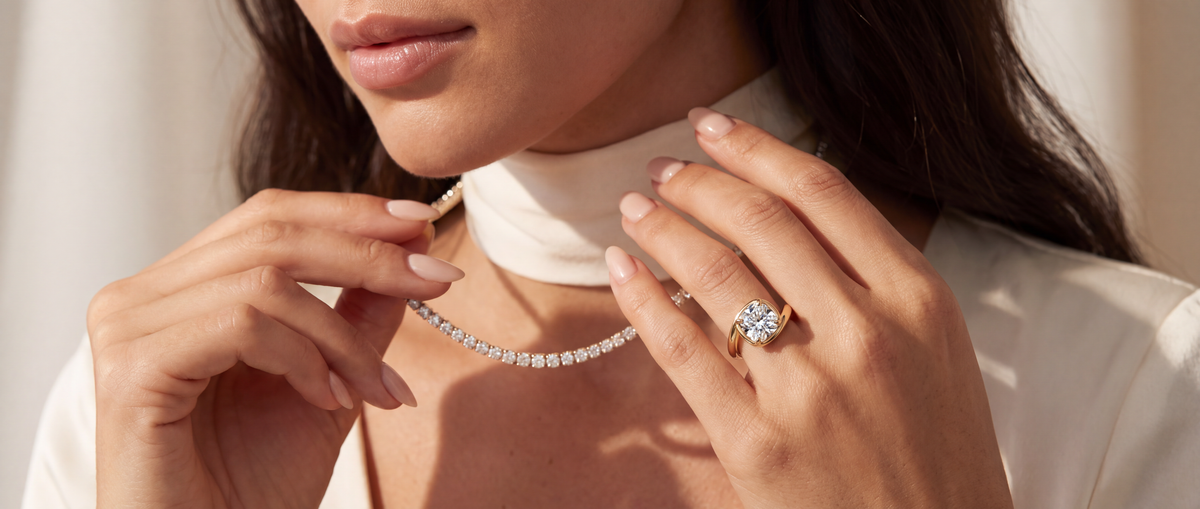
💎 See how lab-grown brilliance performs in a finished setting: explore our Bezel-Set Radiant Diamond Ring.
Science, Sparkle, and What It Means for You
Understanding how a lab-grown diamond is made helps demystify what you're actually buying, a genuine, high-performance gemstone, crafted with real precision and expertise, not an imitation. Whether grown by HPHT or CVD, a well-selected lab-grown diamond offers:
- The same brilliance and durability as a mined diamond
- A fully traceable origin
- Meaningfully better value for a given specification, though environmental impact specifically depends on the energy source used by the individual grower, worth asking about rather than assuming
Choosing the Right Stone at VYOR Diamond Lab
Nikolett and I review the growth method, treatment history and certification of every stone we source, and we're always upfront about which applies to a specific diamond you're considering. Book a consultation and we'll walk you through real, certified stones so you can compare HPHT and CVD examples directly rather than just in theory.
Frequently Asked Questions
Is HPHT or CVD better for a lab-grown diamond? Neither is universally better. HPHT suits larger colourless stones and naturally-coloured yellows and blues; CVD tends to produce exceptionally clean, high-clarity colourless diamonds. The finished stone's certified quality matters more than the growth method alone.
How long does it take to grow a lab-grown diamond? Generally two to six weeks, depending on size and method. A 1-carat HPHT diamond might take one to two weeks; CVD growth and larger stones typically take longer.
Do lab-grown diamonds have inclusions? They can, just as mined diamonds can. HPHT diamonds occasionally show trace metallic inclusions from the growth catalyst; CVD diamonds tend to be cleaner but can require post-growth colour treatment.
How do I know if my lab-grown diamond was grown by HPHT or CVD? Check the certificate. Most IGI and GIA lab-grown reports state the growth method directly, along with any post-growth treatment applied.
Are treated lab-grown diamonds disclosed? Yes. Any post-growth treatment, HPHT annealing or irradiation, is industry standard and always noted on the diamond's certificate.
Explore our Lab-Grown Diamond Engagement Ring Collection, or book a consultation to compare HPHT and CVD stones in person.


Share:
Lab-Grown vs Mined Diamonds: Who Actually Wins? A Scorecard
How to Read an IGI Diamond Certificate: A Section-by-Section Guide