

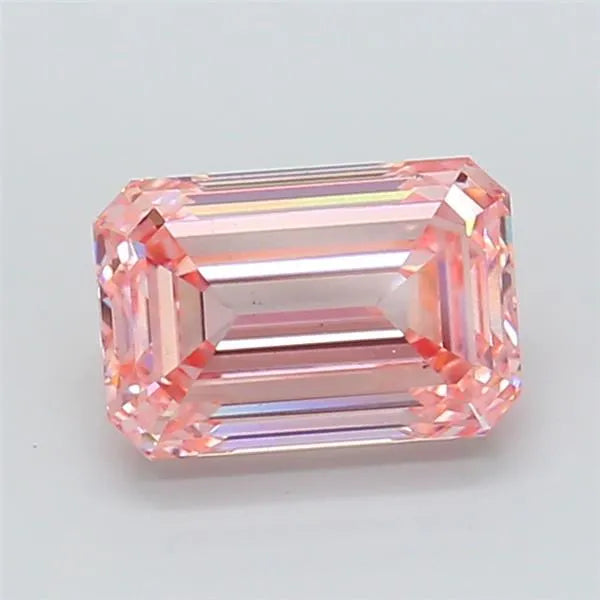
Coloured Lab-Grown Diamonds: A Complete Guide to Fancy Hues
Last updated July 2026
Fancy colour diamonds have always represented individuality, from soft champagne to vivid pink and blue. What's changed is accessibility: lab-grown technology now produces these same hues with far more control over tone, intensity and cost than the natural fancy colour market ever allowed. Here's how coloured lab-grown diamonds are made, graded, and what to actually look for.
What Are Fancy Colour Diamonds?
Fancy colour diamonds show noticeable body colour beyond the standard D-to-Z scale used for near-colourless stones. That colour comes from one of a few mechanisms:
- Trace elements — nitrogen produces yellow, boron produces blue
- Structural distortion in the crystal lattice — the primary cause of pink
- Radiation exposure — associated with green, and occasionally blue
The same mechanisms that produce colour in mined fancy diamonds can be replicated, and in some cases more precisely controlled, in a lab-grown stone. The result is chemically and structurally identical colour, just with more consistency and considerably more accessibility.
How Are Coloured Lab-Grown Diamonds Created?
Coloured lab-grown diamonds start with the same two growth processes used for colourless stones, HPHT (High Pressure High Temperature) or CVD (Chemical Vapour Deposition). Colour is introduced in one of two ways:
Intrinsic Colour (During Growth)
Specific trace elements are introduced into the growth environment:
- Nitrogen produces yellow and orange hues
- Boron produces light blue shades
- Structural distortion, engineered during HPHT growth, produces pink tones, a more complex process than simple trace-element doping
Intrinsic colour forms as the diamond grows and is permanent and stable over time.
Enhanced Colour (Post-Growth Treatment)
Some lab-grown diamonds undergo treatment after growth to introduce or intensify colour:
- Irradiation — used to produce vivid greens or blues
- Annealing — heat treatment used to stabilise and intensify colour
These treatments are disclosed on the certificate. A treated stone isn't less authentic, it's still a genuine diamond, but the type of colour origin does affect how it's graded and, generally, its value relative to intrinsic colour.
What Colours Are Available in Lab-Grown Diamonds?
Yellow — warm tones from light canary to deep golden. One of the most stable and widely available lab-grown colours.
Pink — highly sought after, particularly since the closure of Australia's Argyle mine removed the primary historical source of natural pink diamonds. Lab-grown pink offers an accessible alternative to what is now an extremely limited natural supply.
Blue — typically a soft sky or steel blue, achieved through boron introduced during HPHT growth or via post-growth treatment.
Green — rare in both mined and lab-grown form. Lab-grown greens tend toward pale, luminous tones and are often irradiated to achieve stronger colour.
Champagne and cognac — earthy, neutral tones suited to understated designs.
How Are Fancy Colour Diamonds Graded?
Unlike near-colourless diamonds, which are graded on the absence of colour, fancy colour diamonds are assessed on three factors:
- Hue — the dominant colour
- Tone — how light or dark the colour appears
- Saturation — the strength or vividness of the colour
We work almost exclusively with IGI for coloured lab-grown diamonds, and IGI's Fancy Coloured Diamond Report grades using this same hue, tone and saturation framework, assessed against the Munsell Color System and confirmed by multiple independent gemologists grading without collaboration. The colour intensity terms run:
Faint → Very Light → Light → Fancy Light → Fancy → Fancy Intense → Fancy Vivid → Fancy Deep → Fancy Dark
A diamond graded "Fancy Vivid Pink," for example, carries intense pink saturation, one of the most desirable and sought-after colour grades available. GIA grades fancy colour diamonds too, using a broadly similar hue/tone/saturation approach, but IGI is where the overwhelming majority of lab-grown fancy colour stones are graded, and it's the certification you'll see on nearly everything we source.
💎 Explore custom options like the Elysian Pear Three-Stone Ring, which can be set with your coloured lab-grown diamond of choice.
Are Coloured Lab-Grown Diamonds Valuable?
Yes, value is shaped by several factors:
- Colour rarity and intensity
- Treatment type, intrinsic colour generally commands more than enhanced colour
- Cut and clarity, the same as for colourless diamonds
- Carat weight
Lab-grown fancy colour diamonds are considerably more affordable than their natural counterparts, but genuine premiums still apply for high-intensity pinks, blues and greens specifically. Colour isn't a budget shortcut on its own, it's simply a more accessible way into a category that was previously reserved for a very small number of collectors.
Why Choose a Coloured Lab-Grown Diamond?
- Individuality — colour brings a distinctly personal element to bridal or fashion jewellery
- Traceable origin — grown in controlled conditions with a fully documented supply chain
- Genuine rarity appeal — particularly relevant for pink, given the Argyle closure
- Accessible luxury — a meaningfully lower price point than natural fancy colour diamonds of comparable hue and intensity
- Full customisation — you can select the exact shade, cut and setting rather than working within whatever a limited natural supply happens to offer
How We Approach Coloured Stones at VYOR Diamond Lab
Nikolett and I source coloured lab-grown diamonds through IGI almost exclusively, and we'll always walk you through exactly how a specific stone's colour formed, intrinsic or treated, since that's genuinely relevant to both value and expectations. If you're drawn to a particular shade, a showroom consultation lets you see how it reads under different lighting before you commit, since colour, more than any of the other 4Cs, can shift noticeably depending on how a stone is lit.
Frequently Asked Questions
Are coloured lab-grown diamonds real diamonds? Yes. They're chemically, physically and optically identical to coloured mined diamonds, the only difference is where and how the colour, and the stone, formed.
What causes pink colour in lab-grown diamonds? Structural distortion in the crystal lattice, engineered during HPHT growth. It's a more complex process than introducing a trace element, which is part of why fine pink lab-grown diamonds still command a premium over yellow or blue.
Is treated colour less valuable than natural (intrinsic) colour? Generally, yes. Intrinsic colour, formed during growth, is typically valued more highly than post-growth treated colour, though both are disclosed clearly on the certificate and both are genuine, stable colour.
What's the most sought-after coloured lab-grown diamond? Pink, largely due to the closure of Australia's Argyle mine, which was historically the world's primary source of natural pink diamonds. Lab-grown pink offers an accessible alternative to an increasingly scarce natural supply.
Do coloured lab-grown diamonds come with certification? Yes. We source ours almost exclusively through IGI, which grades fancy colour lab-grown diamonds on hue, tone and saturation using the same rigorous framework applied to natural coloured stones.
Curious to explore a coloured stone? Book a consultation at our Wembley showroom, and we'll guide you through shades, shapes and settings suited to your style.
Share:
2026 Engagement Ring Trends | What’s In Style This Year?
Diamond Colour Grading Explained: The Full D-to-Z Guide