

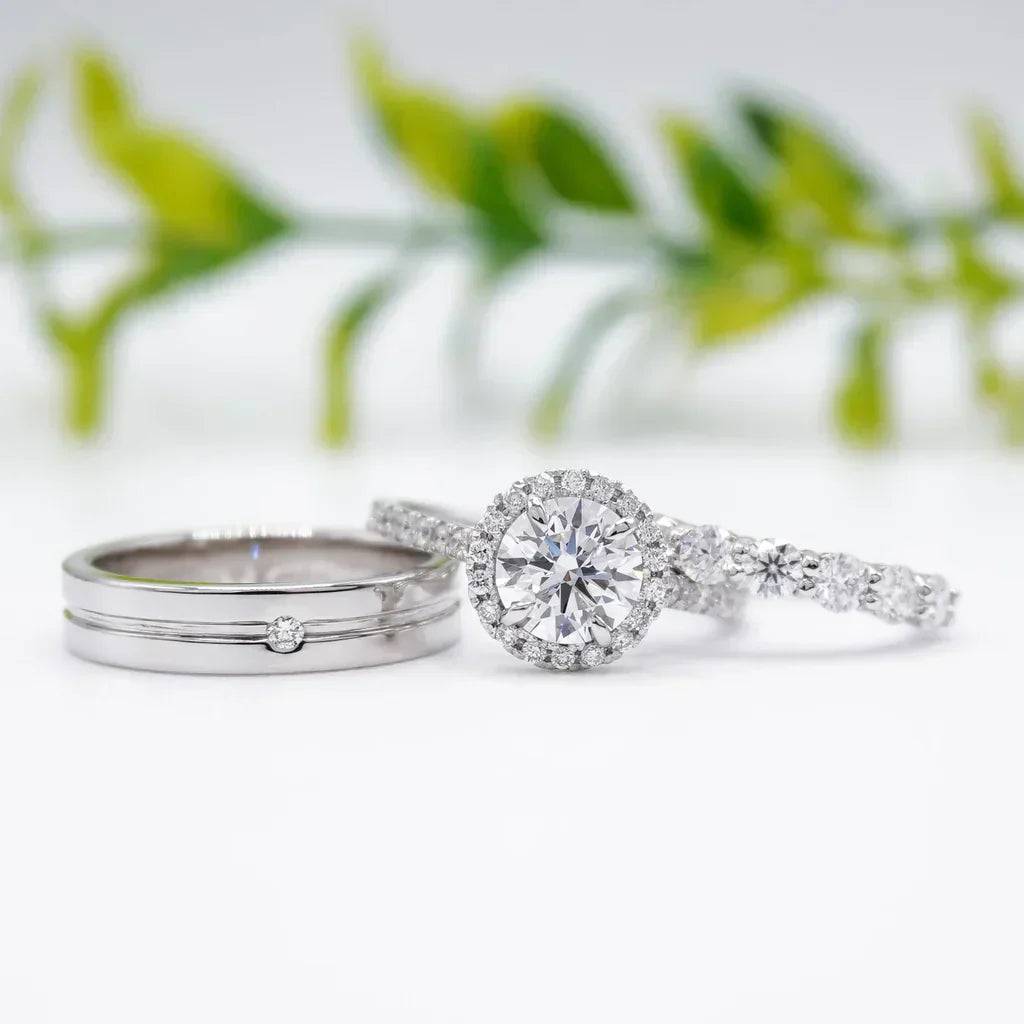
Why More Australians Are Choosing Lab Diamond Wedding Rings
Last updated July 2026
Australians are genuinely rethinking wedding ring tradition, and lab-grown diamonds are a major part of that shift. Once treated as a novelty alternative, they're now a mainstream, considered choice for a huge number of couples. Here's an honest look at why.
Lab Diamonds Are Genuinely Real
One persistent misconception worth clearing up directly: lab-grown diamonds are not "fake." They share the same physical, chemical, and optical properties as mined diamonds, graded by the same reputable labs (IGI or GIA), scoring the same perfect 10 on the Mohs hardness scale. We've covered exactly what "real" means here, including the regulatory detail behind the term, in Are Lab-Grown Diamonds Real Diamonds?
The only genuine difference is origin: grown above ground in controlled conditions using HPHT or CVD, rather than formed underground over billions of years. We've gone deep on exactly how in How Are Lab-Grown Diamonds Made?
Ethical and Fully Traceable
Traditional diamond mining carries genuine, well-documented ethical history, conflict-financing concerns, environmental impact from extraction, and variable supply chain transparency by region. Lab-grown diamonds sidestep this category of concern entirely: fully traceable, with no conflict-zone sourcing risk at any point.
One honest note worth including rather than glossing over: broader environmental impact still depends on the specific facility and energy source used to grow the stone, not just the fact that it's lab-grown. We'd rather be precise here than repeat a blanket "eco-friendly" claim that regulators, including the US Federal Trade Commission, have specifically cautioned against for lab-created stones generally. What's reliably true: no mining-related land disruption, and a fully traceable origin either way.
Better Value for Genuinely Higher Quality
This is where the appeal becomes concrete rather than abstract. As of 2026, lab-grown diamonds typically cost around 70 to 90% less than a comparable mined diamond, a considerably wider gap than a few years ago. That difference can go toward a larger carat weight, higher colour and clarity grades, or more elaborate custom design, without stretching the budget.
For context: a 1.5ct mined diamond of strong quality might run well over $10,000. A lab-grown diamond of the same specification typically lands in a meaningfully lower range, often a few thousand dollars, with no compromise on cut, clarity, or brilliance.
More Room for Custom Design
Because the stone itself costs considerably less, a lot of couples redirect the savings into genuine customisation rather than settling for something off the shelf: choosing the exact cut, size, and quality of the diamond, pairing it with a setting suited to their actual lifestyle, selecting platinum or gold in yellow, rose, or white, and adding engraving or symbolic detail that makes the piece genuinely theirs.
Certification Worth Understanding Properly
Lab-grown diamonds are certified by IGI or GIA, the same labs used for mined stones. One current nuance worth knowing: since October 2025, GIA grades lab-grown diamonds using a simplified Premium/Standard system rather than the detailed scale it still applies to mined diamonds, while IGI continues full 4Cs grading for lab-grown stones. Full detail in our certification guide.
What This Looks Like in Practice
Couples choosing lab-grown diamonds for their wedding rings often describe similar realisations: being able to afford a larger stone than they expected, feeling genuinely comfortable with the ethical sourcing behind it, or redirecting savings toward other parts of the wedding without compromising on the ring itself. From sleek solitaires to vintage-inspired hidden halos and custom three-stone designs, there's real range here for very different tastes.
Backed by Genuine Science and Craftsmanship
Lab-grown diamonds are produced with real precision through HPHT and CVD growth methods, but the craftsmanship doesn't stop at the stone. Every ring is still cut, set, and finished by skilled jewellers, the technology behind the stone doesn't replace the handwork behind the finished piece.
A Genuinely New Set of Traditions
Today's couples are actively rewriting what "traditional" wedding jewellery even means, non-traditional cuts, ethics-first sourcing, and full customisation are all part of a landscape lab-grown diamonds fit naturally into, rather than working against.
Frequently Asked Questions
Are lab-grown diamonds as durable as mined ones?
Yes. Both score 10 on the Mohs hardness scale, identical durability for genuine everyday wear.
Will people know my wedding ring is lab-grown?
Not unless you tell them. Lab-grown and mined diamonds are visually identical to the naked eye, and require specialised equipment to distinguish.
Can I design a fully custom wedding ring with a lab-grown diamond?
Yes, full customisation is available, from a classic band with a pavé accent through to a completely bespoke matching set.
Do lab-grown diamonds hold their value?
Resale value is generally lower than mined diamonds, typically around 10 to 30% of retail versus 25 to 50% for mined. Most couples choose lab-grown diamonds for their sentimental, ethical, and aesthetic value rather than as a financial investment, worth knowing honestly either way.
Is lab-grown diamond jewellery actually more eco-friendly?
It depends on the specific producer's energy source rather than being automatically true across the board. Land disruption from mining is avoided either way, but broader environmental claims deserve more scrutiny than they usually get.
Luxury With Real Purpose
Choosing a lab-grown diamond wedding ring means choosing a stone that's genuinely real, considered, and honestly sourced, proof that luxury and responsibility aren't actually in tension with each other.
See lab-grown diamond wedding rings in person. Book a consultation at our Wembley showroom, or explore our Women's Wedding Rings collection.
Share:
Matching Metals: Should You and Your Partner's Rings Be the Same?
His and Hers Wedding Bands: Unique Design Ideas for Modern Couples