

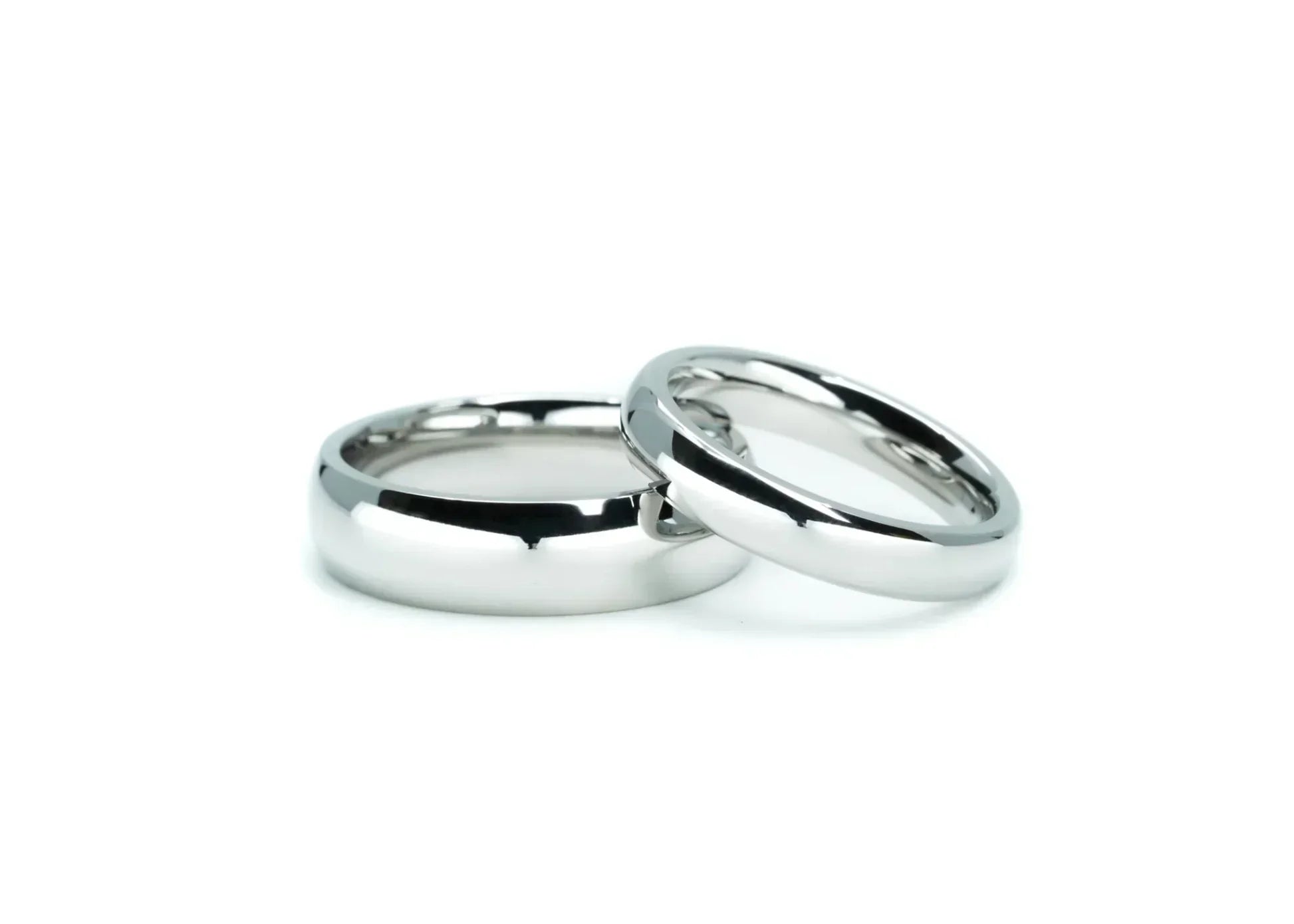
Matching Metals: Should You and Your Partner's Rings Be the Same?
Last updated July 2026
One of the questions we hear constantly: should our rings match, or is it genuinely fine to go in different directions? If you're wondering the same thing, you're in good company, and there's no single correct answer here. For the broader question of matching versus coordinated versus entirely individual wedding ring sets, our guide to Bride and Groom Wedding Ring Sets covers that in full. This piece focuses specifically on the metal decision itself.
Where the Matching Tradition Comes From
Historically, identical bands, same metal, same width, same finish, symbolised shared commitment and unity across many cultures. Modern couples are genuinely rewriting that rule, less about conformity now, more about personal expression, helped along by far more material and customisation options than existed even a generation ago.
The Real Case for Matching
Visual harmony. Both choosing 18K yellow gold, for instance, creates genuine symmetry, particularly noticeable in wedding photos, and works well if you already gravitate toward similar tones in your everyday jewellery.
Symbolic meaning. For some couples, matching metal genuinely represents equality and shared values, a strong, unified visual statement if that's what you actually want the rings to say.
Simpler decision-making. Choosing the same metal streamlines the process considerably, especially if you're designing both rings from one collection together.
The Real Case Against Matching
Different skin tones and personal preferences. Not everyone suits the same metal equally, warm undertones often pair better with yellow gold, cooler undertones with white gold or platinum. Forcing a match can mean one partner compromising on what genuinely flatters them.
Different lifestyles. If one of you works with your hands daily and needs platinum's genuine durability, while the other is drawn to rose gold's softer tone, choosing differently lets each ring actually suit its wearer's daily life, not just the photo.
Individual expression. Contrasting metals, widths, or finishes can represent your own identity within the relationship just as meaningfully as a matched pair, particularly with a subtle shared detail tying the two together.
Coordinating Without Matching Exactly
If you like the idea of connection without full uniformity:
- Shared finish — both matte or both brushed, even across genuinely different metals
- A shared detail — the same engraving, gemstone, or band profile for quiet cohesion
- Reversed metals — one ring in rose gold with a white gold inlay, the other in white gold with a rose gold inlay, a genuinely clever way to connect two distinct pieces
- A shared design motif — a common theme, pattern, or engraving built into two otherwise different rings through custom design
Popular Metals for Wedding Rings Right Now
- 18K yellow gold — timeless, warm, genuinely resurgent, now around 39% of engagement and wedding ring purchases, more than double its share five years ago
- 18K rose gold — romantic, soft, quietly modern
- 18K white gold — sleek, versatile, well suited to minimalist design
- Platinum — durable, naturally white, hypoallergenic, often favoured for higher-wear lifestyles
- Two-tone — genuine contrast within a single band, for couples who want connection without matching
What This Looks Like in Practice
Some couples choose matching platinum bands with a private engraving inside. Others land on genuinely different designs, a rugged brushed white gold band alongside a delicate pavé rose gold ring, say, connected by one small, meaningful shared detail rather than matching metal at all. Neither approach is more valid than the other, the connection lives in the decision made together, not in whether the metals match.
Frequently Asked Questions
Do wedding rings need to match?
No, genuinely not. Matching is a personal choice, not a rule, and plenty of couples choose distinct rings that still feel connected.
Can we match part of the design without full matching?
Yes, matching a single detail, metal, width, finish, or engraving, while keeping the rest of the design distinct is a common, effective middle ground.
What if one of us has a metal allergy?
Hypoallergenic options like platinum work well here, and a shared design element can still connect two rings even if the base metal has to differ for comfort reasons.
Can we adjust our rings later if we change our minds?
Yes, resizing, refinishing, and design adjustments are all available down the track, for anniversaries or simply evolving taste.
Celebrate the Connection, However You Choose to Show It
Your wedding rings should genuinely make you feel something, whether that's the satisfaction of perfect symmetry or the pleasure of individual expression within a shared commitment. Neither is more meaningful than the other.
Ready to explore your options together? Book a consultation at our Wembley showroom, or explore our Women's Wedding Rings and men's collections side by side.
Share:
Wedding Bands for Men: A Complete Style & Material Guide
Why More Australians Are Choosing Lab Diamond Wedding Rings