

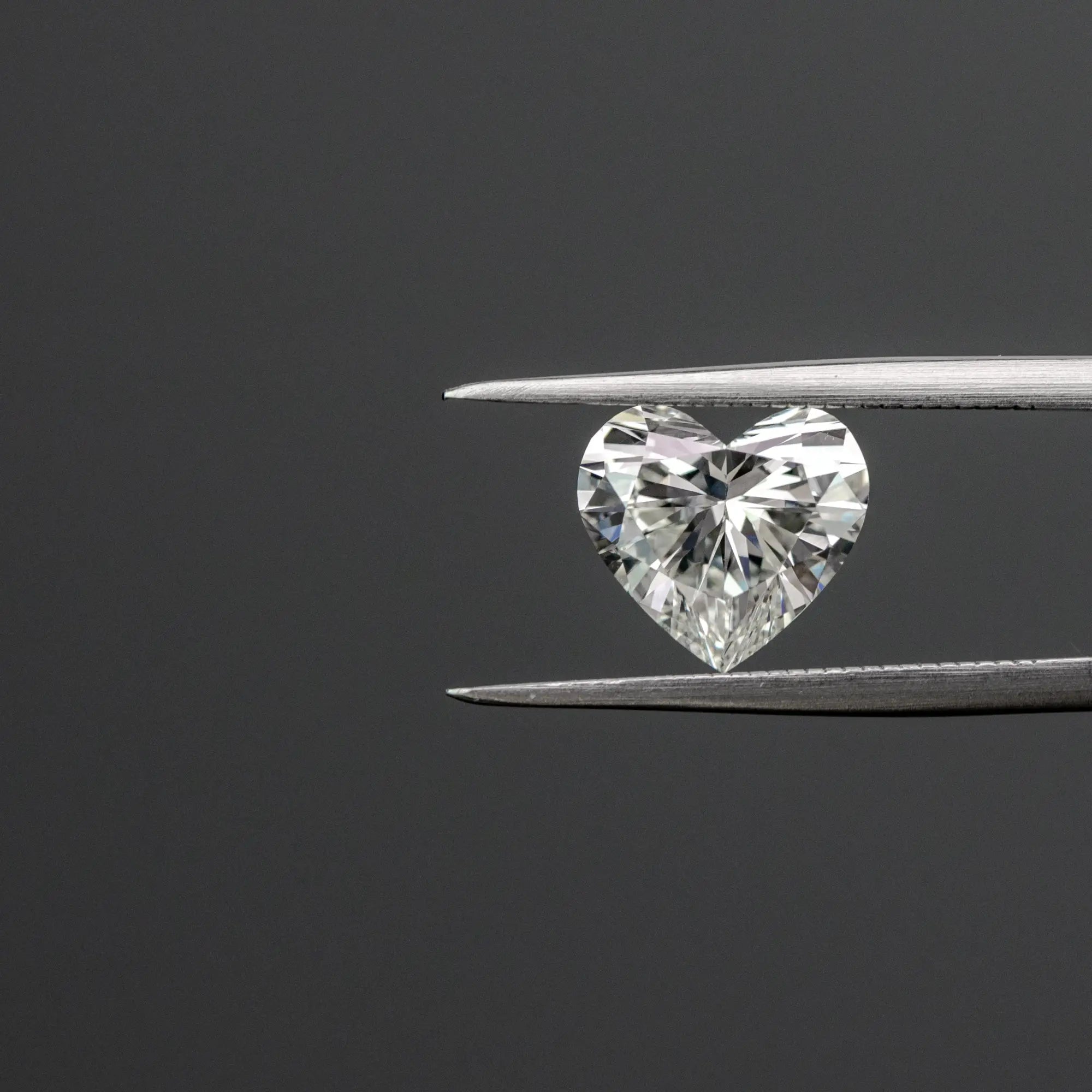
"Moissanite Diamond": What the Term Actually Means
Last updated July 2026
You'll see "moissanite diamond" used constantly online, in listings, in casual conversation, sometimes even in jewellery marketing. It's worth knowing upfront: the term isn't technically accurate. Here's what it actually means, why it persists anyway, and what moissanite genuinely is.
Is Moissanite a Diamond?
No. Moissanite is silicon carbide, a completely different mineral from diamond, which is pure carbon. They share some surface-level similarities, both clear, both hard, both cut and set the same way, but they are not the same material, and moissanite is not a type, category or variety of diamond.
The term "moissanite diamond" is a colloquial shortcut, not a gemological classification. It's roughly equivalent to calling a white sapphire a "sapphire diamond," understandable as a description of similarity, but not accurate as a name.
So Is Moissanite Real?
Yes, unambiguously, just not real diamond. Moissanite is:
- A genuine, distinct gemstone, not a simulant like cubic zirconia
- First identified in 1893 by chemist Henri Moissan, in fragments from a meteor crater
- Recognised worldwide by gemologists as its own legitimate mineral category
- Almost always lab-created today, since natural moissanite is extraordinarily rare
"Real" and "diamond" are two separate questions here, and it's worth holding them apart. Moissanite passes the first question easily. It simply isn't the answer to the second.
Why Does the Term "Moissanite Diamond" Persist?
A few genuine reasons this phrase keeps showing up, despite being inaccurate:
- Visual similarity. It looks like a diamond at a glance, clear, brilliant, often cut in identical shapes.
- Context of use. It's worn in the same settings, for the same occasions, as diamonds, particularly engagement rings.
- Search and marketing shorthand. Some sellers use it because it's how people search, even when they know it's not the precise term.
None of these reasons make the phrase gemologically correct, but they explain why it's stubbornly common. If you see "moissanite diamond" used somewhere, read it as shorthand for "a diamond-alternative gemstone called moissanite," not as a claim that moissanite is a diamond variety.
The Quick Comparison
| Moissanite | Diamond | |
|---|---|---|
| Material | Silicon carbide | Pure carbon |
| Hardness (Mohs) | 9.25 | 10 |
| Brilliance character | High fire, rainbow flashes | Classic white brilliance |
| Origin | Almost always lab-created | Mined or lab-grown |
| Price (1ct, premium quality) | Roughly $300–$900 | Roughly $1,000–$3,000 (lab-grown), $6,000+ (mined) |
For the full breakdown of how these two genuinely compare across every factor that matters, see our Diamond vs Moissanite side-by-side guide.
Should the Terminology Change Your Decision?
Not really, and this is worth being direct about: whether moissanite is technically a "diamond" has no bearing on whether it's a good choice for your ring. It's an extremely durable, genuinely brilliant, fully traceable gemstone in its own right. We've made the full case for why it's a legitimate choice, not a compromise, in Is Moissanite a Good Choice for Engagement Rings?
💎 See it in a finished setting: the Solara Oval Half Bezel Ring, designed to maximise moissanite's genuine fire and presence.
How We Talk About It at VYOR Diamond Lab
We're precise about this deliberately: we never call our moissanite a "diamond," and we'll always tell you plainly which material you're looking at, moissanite or lab-grown diamond, and why each behaves the way it does. Accuracy here isn't pedantry, it's the basis of trusting what you're actually buying.
Frequently Asked Questions
Is "moissanite diamond" a real gemological term? No. It's a common but technically inaccurate colloquial phrase. Moissanite is a distinct mineral (silicon carbide), not a type or variety of diamond (carbon).
Why do people call moissanite a diamond if it isn't one? Mostly due to visual similarity and shared use in engagement rings, plus how people commonly search for it online. It's shorthand, not an accurate classification.
Is moissanite fake or a simulant like cubic zirconia? No. It's a genuine, distinct gemstone recognised by gemologists worldwide, not an imitation material. Cubic zirconia is a different, synthetic simulant entirely.
Does it matter that moissanite isn't technically a diamond? Not for choosing a ring. Moissanite's suitability, durability, brilliance and value stand entirely on their own merits, independent of what it's called.
Is all moissanite lab-created? Virtually all of it used in jewellery today, yes. Natural moissanite exists but is exceptionally rare, originally identified in meteorite fragments.
Explore our Moissanite Engagement Ring Collection, or book a consultation at our Wembley showroom for full transparency on exactly what you're choosing.
Share:
Do Moissanite Engagement Rings Look Cheap? Honestly, No
Buying a Moissanite Ring: The Complete Buyer's Guide