

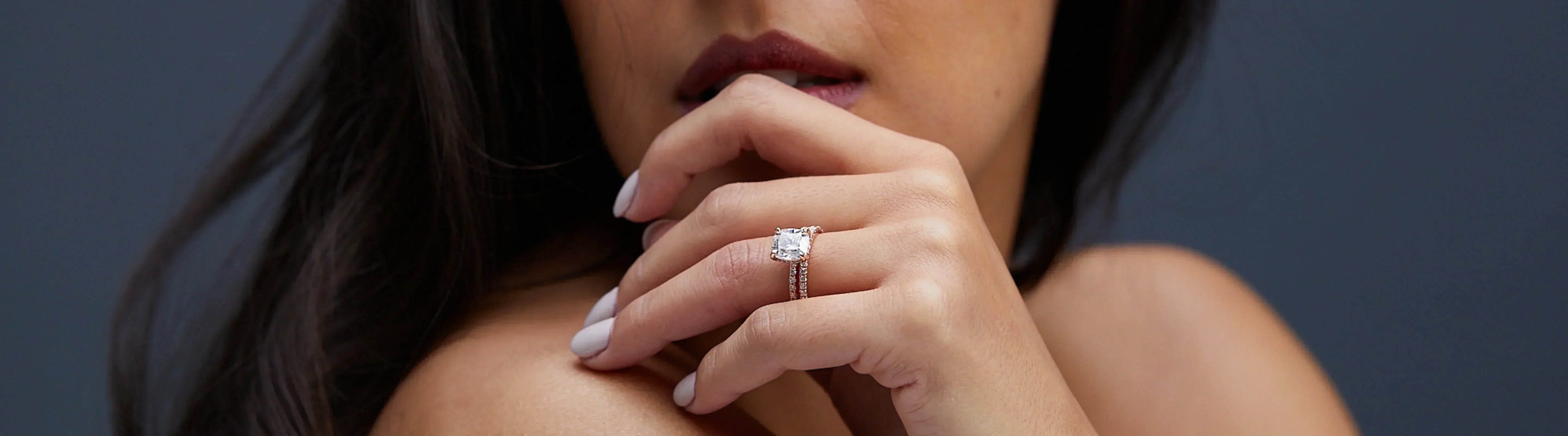
Is Moissanite a Good Choice for an Engagement Ring? An Honest Answer
Last updated July 2026
Moissanite has moved well past "budget alternative" status into a genuine, deliberate choice for a huge number of couples. Whether it's right for you specifically depends on what you actually want from a stone, so here's an honest look at what moissanite is, where it excels, and where it genuinely isn't the better fit.
What Is Moissanite?
Moissanite is a gemstone made of silicon carbide, first identified in 1893 by Nobel Prize-winning chemist Henri Moissan, in fragments recovered from a meteor crater, hence the name. Naturally occurring moissanite is extraordinarily rare; virtually everything used in fine jewellery today is laboratory grown.
That makes it:
- Fully traceable and conflict-free
- Genuinely durable for daily wear
- Consistently produced, without the variability of a rare natural find
Moissanite is not a diamond. It's a distinct gemstone with its own chemical identity, but it's one of the closest visual alternatives available, and in some respects, it actually outperforms diamond optically.
Moissanite vs Diamond: The Real Differences
| Moissanite | Diamond (Lab-Grown or Mined) | |
|---|---|---|
| Hardness | 9.25 (Mohs scale) | 10 (Mohs scale) |
| Refractive index | 2.65–2.69 | 2.42 |
| Dispersion (fire) | 0.104 | 0.044 |
| Brilliance character | More rainbow fire, higher sparkle intensity | More classic white brilliance |
| Price | Roughly 90% less per carat | Premium pricing |
| Sourcing | Always lab-created, fully traceable | Lab-grown: traceable. Mined: varies |
The numbers explain the visual difference precisely: moissanite's higher refractive index bends light more aggressively, and its dispersion, the property that splits light into spectral colour, is more than double a diamond's. That's genuinely why moissanite reads as more colourful and fiery, and diamond reads as more classically white.
Why Moissanite Makes a Genuinely Good Choice
Affordability that changes what's possible. At roughly 90% less per carat than a comparable diamond, moissanite lets you go meaningfully larger, or redirect budget into the setting and metal, without compromising on brilliance.
Real brilliance, not a compromise version of it. With a refractive index and dispersion that both exceed diamond's, well-cut moissanite is genuinely one of the most brilliant gemstones used in fine jewellery, full stop, not just "brilliant for the price."
Durability suited to daily wear. At 9.25 on the Mohs scale, moissanite sits just below diamond and above sapphire and ruby, easily hard enough for an engagement ring worn every day, resistant to scratching, and stable, it won't cloud, dull or degrade over time.
Genuinely conflict-free by design. Lab-created moissanite carries no mining history and no sourcing ambiguity to navigate.
Where Moissanite Might Not Be the Right Fit
Being straight about the trade-offs matters as much as the advantages:
- The "disco ball" effect. Moissanite is doubly refractive, meaning light splits as it passes through the stone, which is the physical cause of its intense rainbow fire. In some cuts, particularly older or less precise faceting, this can look busy or overly colourful rather than classically brilliant. This is a real, physics-based characteristic worth understanding, though it's genuinely less of an issue than it used to be, more on that below.
- It's not a diamond, and for some people that distinction matters emotionally or symbolically, independent of how similar the two look.
- Resale and tradition. If long-term resale value or the specific tradition of a diamond matters to you, a lab-grown diamond is likely the better fit.
Modern Cutting Has Genuinely Changed the "Disco Ball" Conversation
This is worth knowing if you last looked at moissanite years ago: cutting techniques have improved substantially. Precision cuts designed specifically for moissanite's optical properties, tighter symmetry standards, and more considered facet geometry all reduce the scattered, overly busy look that gave early moissanite its "disco ball" reputation. A well-cut modern moissanite still shows genuine fire, that's the point of the stone, but with far more control and elegance than older cutting standards allowed.
Moissanite Styles We're Seeing Right Now
- Oval and radiant cuts — elongated shapes that soften and spread the fire rather than concentrating it. See the Mirella Oval Twisted Pavé.
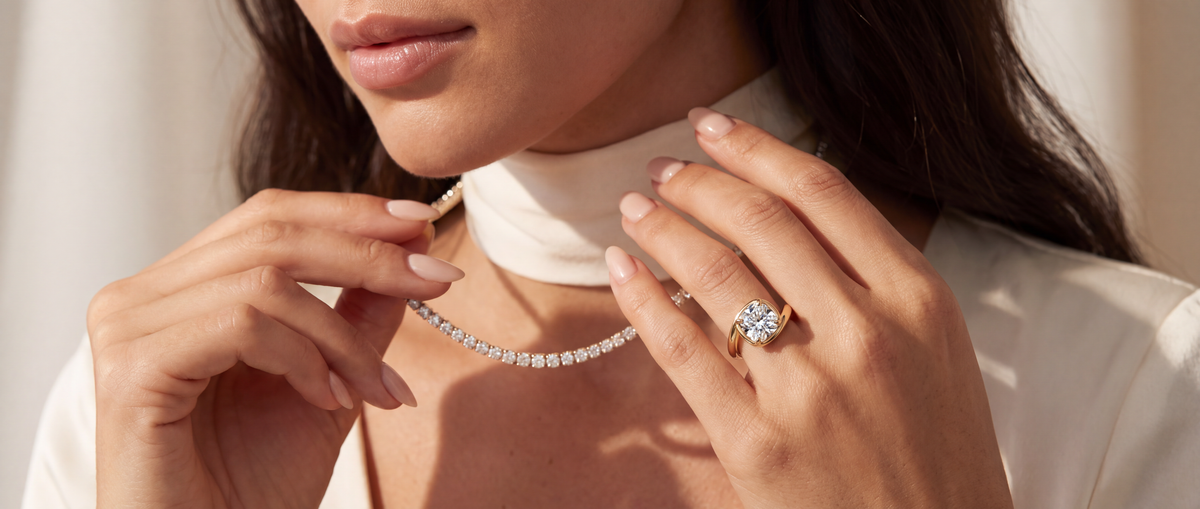
- Bezel settings — a clean, modern pairing that suits moissanite's extra sparkle well. See the Lyra East-West Oval Half Bezel.
- Three-stone designs — a moissanite centre flanked by lab-grown diamond side stones, a genuinely popular mixed-material look.
- East-west settings — a bold, contemporary way to present a classic shape.
Browse our full moissanite engagement ring collection to explore all available styles.
Our Standard at VYOR Diamond Lab
Every moissanite stone we set is D colour, VVS1 clarity, we don't offer a lower tier. Nikolett and I show moissanite and lab-grown diamonds side by side at every consultation where it's relevant, because the difference is genuinely easier to feel in person than to describe, and we'd rather you choose with full confidence than from a comparison chart alone.
The Honest Verdict
Yes, moissanite is a genuinely excellent choice for a large number of modern couples. It's durable, conflict-free by design, extraordinarily brilliant, and meaningfully more affordable. It's not the right fit if diamond specifically, its tradition, its resale profile, or the exact character of its brilliance, is what you're actually after. Knowing which of those two you are is the real question, not whether moissanite is "good enough."
Frequently Asked Questions
Is moissanite as durable as a diamond? Nearly. At 9.25 on the Mohs scale versus diamond's 10, moissanite is easily durable enough for daily wear, including an engagement ring, and won't cloud or dull over time.
Why does moissanite sparkle more than a diamond? Its refractive index (2.65–2.69) and dispersion (0.104) both exceed diamond's (2.42 and 0.044 respectively), which means it bends and splits light more intensely, producing more visible rainbow fire.
Does all moissanite have the "disco ball" effect? Less than it used to. Modern precision cutting has significantly reduced the scattered, overly busy look associated with older moissanite cuts, though some degree of extra fire is inherent to the material's optical properties.
Is moissanite cheaper than a lab-grown diamond? Yes, significantly, moissanite typically costs around 90% less per carat than a comparable diamond, lab-grown or mined.
Does moissanite hold its value like a diamond? No, resale value is generally lower than diamond. If resale is a genuine priority, a lab-grown diamond is typically the better fit.
Explore our Moissanite Engagement Ring Collection, or book a consultation at our Wembley showroom to compare moissanite and lab-grown diamonds side by side.
Share:
Is Moissanite Ethical and Sustainable? Honestly