

Buying a Moissanite Ring: The Complete Buyer's Guide
Last updated July 2026
Moissanite has earned its place as a genuine, deliberate choice for engagement rings, not a fallback. But choosing the right one means understanding a few things diamonds don't require you to think about: sizing conventions, cut character, and what "quality" actually means for this specific material. Here's everything worth knowing before you buy.
1. What Is Moissanite? A Quick Recap
Moissanite is silicon carbide, a genuinely distinct gemstone, not a diamond simulant in the cubic zirconia sense. It scores 9.25 on the Mohs hardness scale, among the hardest materials used in fine jewellery, and doesn't cloud, dull or degrade with age. Full background in Is Moissanite a Good Choice for Engagement Rings?
2. Choosing the Right Cut
Cut determines how a stone catches and returns light, and for moissanite specifically, it also determines how intense the fire reads. Popular shapes:
- Round brilliant — maximum sparkle, timeless
- Oval — elongating, elegant
- Radiant — modern mix of geometry and sparkle
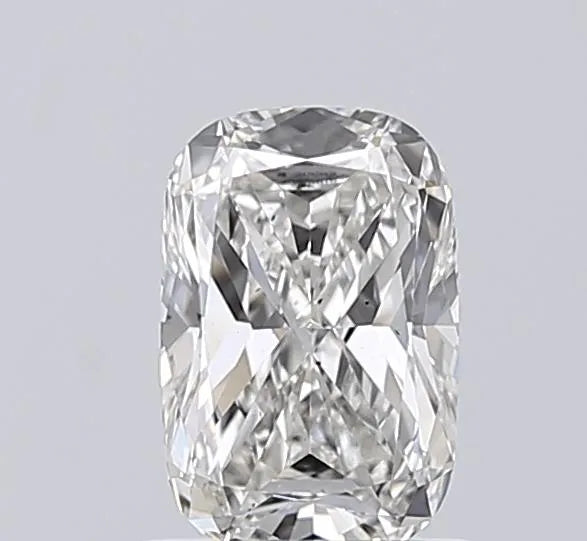
- Cushion — soft corners, vintage character
- Pear — distinctive, feminine
- Marquise — bold, art-deco drama
Beyond shape, there's also facet style to consider: brilliant cut maximises moissanite's signature fire, while crushed ice produces a softer, more diamond-like shimmer. We've gone deep on the trade-offs, including a common misconception about which one hides inclusions better, in Brilliant vs Crushed Ice Moissanite. If you're considering an elongated shape like oval or pear, it's also worth knowing that your choice of cut style affects the bow tie effect differently, covered in our bow tie effect guide.
3. Sizing: Millimetres vs Carats
This trips up a lot of first-time buyers. Diamonds are sold and compared by carat weight; moissanite is more usefully compared by millimetre size, because moissanite is less dense than diamond, roughly 8 to 10% lighter for the same physical dimensions.
That's why the industry uses two different figures:
- Actual Carat Weight (ACW) — what the stone genuinely weighs
- Diamond Equivalent Weight (DEW) — the carat weight of a diamond that would look the same size
A 6.5mm round moissanite, for example, has an actual weight of roughly 0.88 to 0.91 carats, but is marketed and sized as "1.0 carat" because that's the diamond it visually matches. Approximate size guide:
| MM Size (Round) | Diamond Equivalent (DEW) |
|---|---|
| 6.5mm | 1.0 ct |
| 7.5mm | 1.5 ct |
| 8.5mm | 2.5 ct |
Always ask your jeweller to specify both the millimetre size and the DEW, not just a carat number in isolation, so you know exactly what you're comparing.
4. What Colour Grade Should You Choose?
Premium moissanite is typically graded:
- D–F — colourless, most similar to top-grade diamonds
- G–I — near colourless, slightly warmer tones
Every moissanite stone we set at VYOR Diamond Lab is D colour by default, offering crisp, icy brilliance rather than any warmth creeping into the stone.
5. Clarity: It Matters Less, But It Still Counts
Because moissanite is grown under controlled conditions, most stones are genuinely eye-clean. Look for VVS to VS clarity, and be wary of visible cloudy zones or surface blemishes, these can affect long-term sparkle, particularly in crushed ice cuts, which are less forgiving of imperfections in the rough than brilliant cuts, since their complex internal light path can concentrate rather than disguise them.
6. Choosing the Right Setting
Moissanite pairs well with every metal:
- Yellow gold — warm, classic, increasingly popular in 2026
- Platinum or white gold — sleek, cool contrast against the stone's fire
- Rose gold — soft, romantic
Popular styles: solitaire (lets the stone carry the design), bezel or half-bezel (secure and clean), three-stone (balanced, symbolic), and halo or hidden halo (extra perceived brilliance around the centre stone).
7. Moissanite Certification and Brand Trust
Unlike diamonds, moissanite isn't graded by IGI or GIA, neither lab certifies this material. Instead:
- Reputable jewellers issue their own internal certificate of authenticity
- Ask specifically for proof of colour and clarity grade, and confirmation of origin
- Work with a jeweller who's transparent about grading standards rather than vague brand assurances
Every moissanite ring from VYOR Diamond Lab comes with our own certificate confirming D colour, VVS1 clarity grading, and full authenticity.
8. Maintenance and Longevity
Moissanite is genuinely low-maintenance:
- Clean with warm water and mild soap
- Avoid harsh chemicals, chlorine in particular
- Ultrasonic cleaners are generally safe
- A soft toothbrush keeps facets clear of everyday buildup
One nuance worth knowing: if you've chosen a crushed ice cut specifically, clean it a little more diligently than you would a brilliant cut. Its more delicate light path is noticeably more sensitive to oil and dirt buildup, a light film dulls it faster than it would a brilliant cut. With reasonable care, moissanite retains its brilliance for decades, it's a genuine long-term choice, not a placeholder until you can "upgrade."
9. Customisation Ideas
Popular personal touches we see regularly:
- A hidden birthstone tucked into the setting
- Mixing a moissanite centre with lab-grown diamond accent stones
- Engraving meaningful dates or words inside the band
- Adjusting band thickness, height, or building a stackable design
10. Why Choose Moissanite?
- Genuinely outstanding sparkle, more fire than diamond, by design
- Exceptional value relative to diamond, lab-grown or mined
- Fully traceable, conflict-free sourcing
- Extensive customisation across cut, size and setting
- Durable enough for decades of daily wear
It's not "less than" a diamond. It's a different, equally legitimate kind of brilliance.
Explore Moissanite at VYOR Diamond Lab
Whether you're in Perth or shopping from anywhere in Australia, Nikolett and I will help you compare cuts, sizes and settings, then build a piece that's genuinely yours. Book a showroom or virtual consultation to see real stones rather than relying on a chart alone.
Frequently Asked Questions
Why is moissanite sized in millimetres instead of carats? Because moissanite is less dense than diamond, a given millimetre size weighs less in moissanite than the equivalent-looking diamond. Millimetre size tells you how large the stone will actually look; Diamond Equivalent Weight (DEW) tells you which diamond size it visually matches.
What's the difference between actual carat weight and diamond equivalent weight? Actual Carat Weight (ACW) is what the moissanite genuinely weighs. Diamond Equivalent Weight (DEW) is the size of diamond it visually matches. A 6.5mm moissanite weighs around 0.9ct (ACW) but is sold as "1.0ct" (DEW).
What clarity grade should I look for in moissanite? VVS to VS is a strong standard, most moissanite at this grade is genuinely eye-clean. Avoid stones with visible cloudy zones, particularly in crushed ice cuts.
Does moissanite come with a grading certificate? Not from IGI or GIA, neither certifies this material. Reputable jewellers, VYOR Diamond Lab included, issue their own certificate confirming colour, clarity and authenticity.
How do I clean a moissanite ring? Warm water and mild soap, avoiding harsh chemicals like chlorine. Ultrasonic cleaners are generally safe. Crushed ice cuts benefit from slightly more frequent cleaning than brilliant cuts.
Explore our Moissanite Engagement Ring Collection, or book a consultation at our Wembley showroom to compare cuts, sizes and settings in person.
Share:
Do Moissanite Engagement Rings Look Cheap? Honestly, No
Will Moissanite Last Forever? The Honest Durability Guide