

Brilliant vs Crushed Ice Moissanite: Which Sparkle Is Actually You?
Last updated July 2026
Not all moissanite sparkles the same way, the facet pattern, not just the shape, determines how a stone actually performs under light. If you've encountered "brilliant cut" and "crushed ice" while shopping and aren't sure which suits you, here's a genuinely honest breakdown, including a couple of common claims about the two that don't hold up under closer scrutiny.
What Does "Cut" Mean for Moissanite?
Cut refers to how a stone's facets are arranged, which determines brilliance, fire, and scintillation (the flash pattern as the stone or the viewer moves). Moissanite is faceted in two broad styles:
- Brilliant cut — classic, symmetrical facet patterns designed to maximise light return
- Crushed ice cut — smaller, more numerous, irregularly angled facets, producing a scattered, mosaic-like shimmer
Brilliant Cut Moissanite
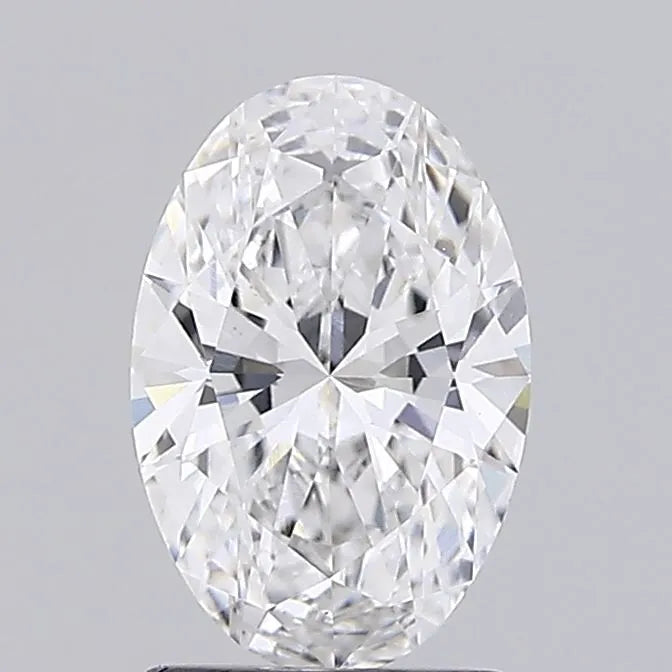
Brilliant cut stones feature large, well-defined, symmetrical facets, arranged so light bounces efficiently off the pavilion and exits cleanly through the crown. The result is strong, well-defined sparkle and moissanite's signature intense fire, particularly visible in direct sunlight.
Available in: round, oval, pear, radiant (standard brilliant style), and cushion (brilliant version).
Visual character: sharp, defined flashes, strong symmetry, a "firework" quality to the sparkle.
Crushed Ice Moissanite
Crushed ice stones use considerably more facets on the pavilion, each set at a slightly different angle, so light bounces multiple times inside the stone before exiting, sometimes through the crown, sometimes back out through the pavilion, in a much less predictable path. This produces a softer, more diffused, glittery shimmer rather than sharp individual flashes, closer to how many step-cut and lower-refractive-index fancy shape diamonds naturally behave.
Available in: modified radiant, cushion, and increasingly elongated ovals and pears.
Visual character: frosty, scattered shimmer, more glow than flash, often described as looking more like a diamond precisely because it dampens moissanite's naturally intense fire.
Side-by-Side Comparison
| Brilliant Cut | Crushed Ice Cut | |
|---|---|---|
| Sparkle type | Bold, defined flashes | Diffused, glittery shimmer |
| Facet pattern | Large, symmetrical | Small, numerous, irregular |
| Fire | Maximised, moissanite's signature rainbow flash | Noticeably softened |
| Bow tie effect (elongated shapes) | Generally minimised, thanks to moissanite's high refractive index | Often more pronounced, giving a more diamond-like look |
| Body colour and inclusions | Tends to mask both well, thanks to strong overall light return | Can concentrate rather than hide them, more on this below |
| Popularity | The more common, classic choice | Growing, particularly among buyers wanting a diamond-like look |
A Common Claim Worth Correcting: Does Crushed Ice Hide Inclusions Better?
You'll see this claimed constantly online, and it's often backwards. Crushed ice's many small facets mean light bounces around inside the stone considerably more before it exits, which can actually concentrate body colour or catch on inclusions rather than disguise them, particularly in lower-grade rough. Brilliant cut, by contrast, tends to mask minor colour and inclusions more effectively, its strong, direct light return is genuinely more forgiving. If you're considering crushed ice specifically, it's worth starting from a higher colour and clarity grade than you might for a brilliant cut of the same size, since crushed ice has less capacity to disguise imperfections in the rough.
The Bow Tie Effect: A Real Difference Between the Two
This one's genuinely underappreciated. Moissanite's high refractive index generally helps brilliant cut ovals and pears minimise the bow tie effect (the dark shadow across an elongated stone's centre) better than an equivalent diamond can. Crushed ice, on the other hand, tends to accentuate the bow tie, which is actually part of why it reads as more diamond-like, since most oval diamonds naturally show a more pronounced bow tie than a brilliant-cut oval moissanite would. If you've read our guide on the oval diamond bow tie effect, the same physical principle is at play here, just working in the opposite direction depending on which moissanite cut you choose.
A Practical Note: Crushed Ice Needs More Diligent Cleaning
Moissanite naturally attracts oils from skin, lotion and everyday contact. Because crushed ice relies on a more delicate, complex light path to create its shimmer, a light film of oil or dirt dulls it noticeably faster than it would a brilliant cut, which stays sparkling under far more grime thanks to its stronger overall light return. If you choose crushed ice, plan on cleaning it more regularly to keep it looking its best.
💎 See classic brilliant-cut sparkle in our Luna Pear Solitaire Ring.
Which One Should You Choose?
Neither is objectively better, they're genuinely different aesthetics, and the choice comes down to what you want the ring to do.
Choose brilliant cut if you:
- Want maximum sparkle and fire
- Want your ring to catch the eye and hold attention
- Prefer the classic look associated with round or oval diamonds
- Want a look that's naturally more forgiving of colour and minor inclusions
Choose crushed ice if you:
- Prefer a softer, more diamond-like shimmer over intense fire
- Like the depth and subtlety of radiant or cushion shapes specifically
- Want something that reads as more understated or vintage-inspired
- Are comfortable starting from a higher colour/clarity grade and committing to more regular cleaning
How to Tell the Difference in Person
Photos, especially edited online listings, can be genuinely misleading here. In video, brilliant cut shows quick, bold, distinct flashes; crushed ice shows a softer, more constant "twinkle" without sharp individual reflections. Ask to see both in natural daylight and indoor lighting, and request slow-motion video if you're shopping remotely, it reveals the light behaviour far more clearly than a still photo ever will.
Custom Ordering Either Cut at VYOR Diamond Lab
We offer both brilliant and crushed ice cuts as part of our custom design process, and for shapes available in both (radiant and cushion in particular), we'll walk you through the trade-offs specific to your chosen shape and stone size. Nikolett and I provide high-resolution video comparisons so you can genuinely see the difference before deciding, not just read about it.
Frequently Asked Questions
Does crushed ice moissanite hide inclusions better than brilliant cut? Generally, no, this is a common misconception. Crushed ice can actually concentrate body colour and inclusions due to its more complex internal light path; brilliant cut tends to mask both more effectively thanks to its stronger, more direct light return.
Which moissanite cut looks more like a diamond? Crushed ice, generally, since it dampens moissanite's naturally intense fire and tends to show a more pronounced bow tie in elongated shapes, both traits closer to how many diamonds actually behave.
Does crushed ice moissanite need more maintenance? Yes, somewhat. It's more sensitive to oil and dirt buildup than brilliant cut, since even a light film dulls its more delicate light path noticeably. Regular cleaning keeps it performing at its best.
Is one moissanite cut better quality than the other? No, they're different faceting styles for different aesthetics, not a quality hierarchy. Both require skilled cutting; crushed ice arguably demands more precision to execute well, given how much more complex its facet pattern is.
Which shapes come in both brilliant and crushed ice? Radiant and cushion are most commonly available in both styles, giving you a genuine choice of light performance within the same overall shape.
Explore our Moissanite Engagement Ring Collection, or book a consultation at our Wembley showroom to compare both cuts in person or via video.
Share:
Moissanite vs Lab-Grown vs Mined Diamonds: Full Comparison
Diamond vs Moissanite: A Clear Side-by-Side Comparison