

The Oval Diamond Bow Tie Effect: What It Is and How to Avoid a Bad One
Last updated July 2026
If you've started shopping for an oval diamond, "bow tie effect" is a term you'll run into fast, and it's worth understanding properly before it either scares you off a beautiful stone or lets a genuinely poorly cut one slip past you.
What Is the Bow Tie Effect?
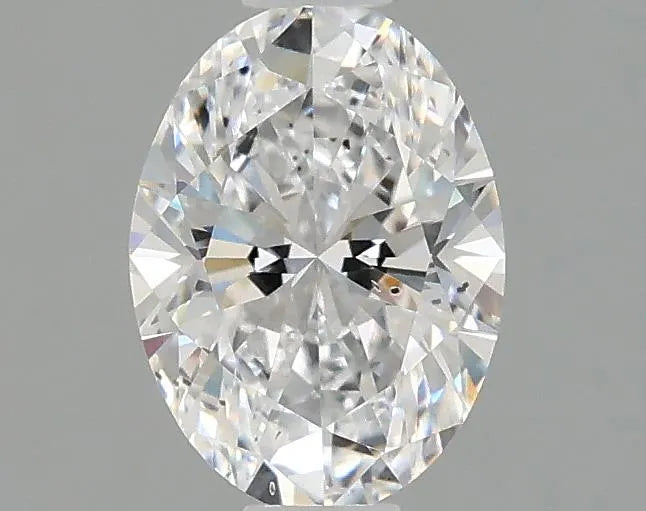
The bow tie effect is a shadow that appears across the centre of certain elongated diamond shapes, most commonly oval, marquise, pear and radiant cuts. It shows up as two dark triangular areas near the stone's centre, resembling a bow tie, most visible when the diamond is viewed face-up under light.
It ranges from:
- Barely noticeable — can genuinely add depth and contrast
- Mild to moderate — common, and usually not a problem
- Heavy or harsh — a distracting dark band that visibly reduces sparkle
What Actually Causes It?
The bow tie effect comes down to light obstruction, specifically, light not reflecting back to the eye properly from certain angles within the pavilion. Interestingly, part of the effect is caused by something outside the diamond entirely: your own head and shoulders block some of the light source as you view the stone, creating that shadow, which is part of why it can look different depending on lighting and viewing angle.
The main contributing factors within the stone itself:
- Uneven facet alignment in the pavilion, the diamond's lower half
- Shallow or overly deep cutting angles
- Asymmetrical proportions
- Weak light return through the centre specifically
It's a natural characteristic of elongated shapes generally, not a defect exclusive to poorly made stones, but severity varies considerably between individual diamonds.
Is a Bow Tie Always a Bad Thing?
Not at all. A subtle bow tie can genuinely enhance a diamond's visual depth and contrast, without contrast, a diamond can actually look flat and washed out, similar to a white cup photographed against a white background. A strong or harsh bow tie, where the centre looks consistently dull or lifeless rather than adding character, is what's worth avoiding.
What actually matters is how the bow tie interacts with the rest of the stone's brilliance. A well-cut oval will show:
- Bright light flashes across the entire stone, not just the outer edges
- Balanced sparkle from side to side
- Minimal, elegant shadowing rather than a heavy, static dark band
💎 View a well-balanced, bright-cut example in our Luna Oval Solitaire Ring collection, chosen specifically for soft, elongated proportions without harsh bow tie shadowing.
How to Spot a Bow Tie Before Buying
Because bow tie severity is entirely a light-performance characteristic, no certificate captures it. IGI and GIA reports don't include a bow tie rating, this is genuinely one area where you have to look at the actual stone.
How to assess it properly:
- View the diamond face-up under good, ideally natural, lighting
- Rotate it slightly and watch how light moves across the centre
- Check for symmetry and sparkle continuing through the centre zone, not just at the edges
- Ask for a 360-degree video or in-person inspection if you're shopping remotely
A jeweller who hand-selects stones, rather than sourcing sight-unseen from a catalogue, can filter for genuine light performance before a diamond ever reaches your shortlist.
Ideal Proportions to Minimise the Bow Tie
There's no formal "bow tie grade," but certain proportions consistently correlate with better light distribution through the centre:
- Length-to-width ratio: 1.35 to 1.50 is the widely cited sweet spot, balancing an elongated look with strong, even light performance. Below 1.30 starts to look rounder; above 1.50 increases the risk of a more pronounced bow tie.
- Table %: roughly 53–63%
- Depth %: roughly 58–63%
- Symmetry: Excellent to Very Good
- Polish: Excellent to Very Good
One nuance worth knowing for lab-grown ovals specifically: IGI does assign cut grades to ovals, using its own established proportion ranges, GIA currently doesn't grade cut for oval diamonds at all. For lab-grown stones, which are predominantly IGI-certified, this actually gives you a genuine benchmark on the certificate itself, though it's still worth confirming bow tie severity visually, since cut grade and bow tie character aren't quite the same thing.
Do Lab-Grown Oval Diamonds Show Bow Ties?
Yes, exactly as mined oval diamonds do. Growth method, CVD or HPHT, has no direct bearing on bow tie, it's entirely a function of cut quality and proportions, not how the rough diamond was formed. We hand-inspect every oval lab-grown diamond we offer at VYOR Diamond Lab, filtering for genuine light performance, clean symmetry and minimal, well-balanced bow tie shadowing rather than relying on grade alone.
What to Remember
- The bow tie isn't a flaw in itself, but it can become a real distraction in a poorly cut stone
- A mild bow tie can add depth and character; a harsh one reduces brilliance and should generally be avoided
- Always view the actual stone, or request a video, since bow tie severity isn't captured on any certificate
- Focus on cut quality, symmetry and face-up sparkle as the real indicators of a well-chosen oval
How We Help You Choose at VYOR Diamond Lab
Nikolett and I hand-select oval diamonds specifically for light performance, not just headline proportions, since two ovals with near-identical numbers on paper can look genuinely different in person. That's exactly the kind of comparison worth doing together at a showroom consultation, watching how a stone actually behaves under light before you commit.
Frequently Asked Questions
Is the bow tie effect a flaw in an oval diamond? Not inherently. A mild, well-balanced bow tie is normal and can add depth and contrast. A heavy, static dark band across the centre is what to actually avoid.
What length-to-width ratio avoids the bow tie effect? No ratio eliminates it entirely, but 1.35 to 1.50 is the widely recommended range for balancing an elongated look with strong, even light performance.
Can a certificate tell me how bad a diamond's bow tie is? No. Neither IGI nor GIA reports include a bow tie rating, it's a purely visual characteristic you need to check in person or via video.
Do lab-grown oval diamonds have more bow tie than mined ovals? No. Growth method has no bearing on bow tie, it's entirely determined by cut quality and proportions, identical logic for lab-grown and mined stones.
Does IGI grade cut quality for oval diamonds? Yes. IGI assigns cut grades to ovals using its own proportion ranges, unlike GIA, which currently doesn't offer an overall cut grade for ovals.
Explore our Lab-Grown Diamond Engagement Ring Collection, or book a consultation at our Wembley showroom to see how a specific oval performs under light before you decide.
Share:
Lab-Grown vs Mined Diamonds: Who Actually Wins? A Scorecard
How to Read an IGI Diamond Certificate: A Section-by-Section Guide