

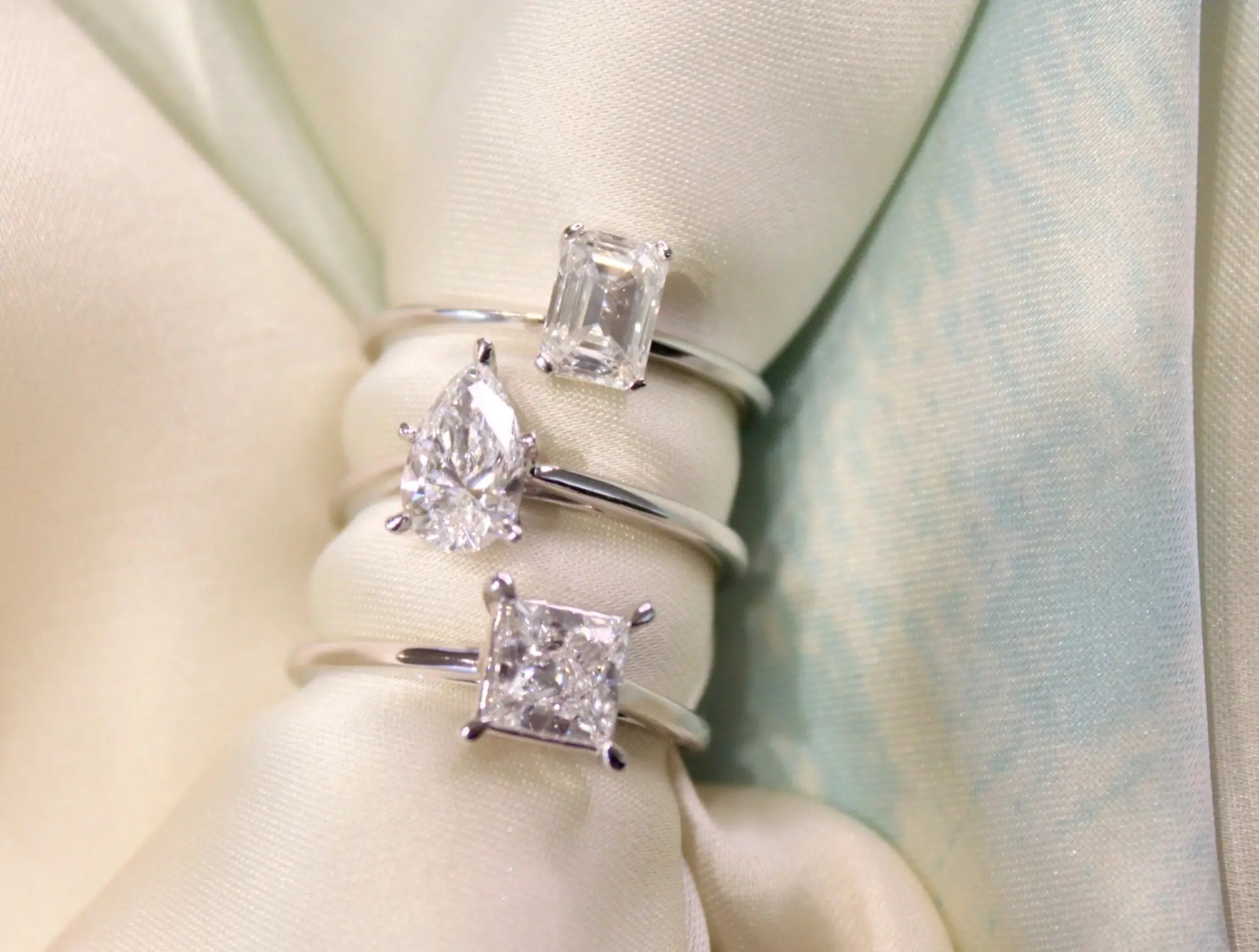
Are Lab-Grown Diamonds Lower Quality? Here's What the Science Says
Last updated July 2026
Short answer: no. A lab-grown diamond isn't a lesser version of a mined diamond, it's the same material, graded on the same scale, by the same labs. The myth persists mostly because people conflate "cheaper" with "lower quality," which isn't how diamond pricing actually works. Here's the full explanation.
The Myth: "Lab Diamonds Are Fake or Cheaper Quality"
This is the misconception worth clearing up directly. A lab-grown diamond is not a simulant and not a lesser stone. It shares, exactly, with a mined diamond:
- Crystal structure — the same cubic carbon lattice
- Hardness — 10 on the Mohs scale, both
- Refractive index — identical brilliance and fire
- Thermal conductivity — the same heat dispersion, which is actually one of the properties used to identify a genuine diamond of either origin
Without specialised equipment such as spectroscopy, lab-grown and mined diamonds are indistinguishable, including to most jewellers.
How Diamond Quality Is Actually Measured
Every diamond, lab-grown or mined, is graded on the same global standard: the 4Cs.
- Cut — how effectively the diamond reflects light
- Colour — the degree of colourlessness, graded D (colourless) to Z (light yellow/brown)
- Clarity — the visibility of internal and external characteristics, graded Flawless to Included
- Carat — the diamond's weight
These are assessed by independent gemological labs, chiefly IGI and GIA. Every certified lab-grown diamond at VYOR Diamond Lab comes with an IGI or GIA report. One nuance worth knowing if you're comparing certificates: since October 2025, GIA grades lab-grown diamonds on a simplified Premium/Standard system rather than issuing the specific letter and number grades it still uses for mined stones. IGI continues to grade lab-grown diamonds on the full 4Cs scale. Neither approach makes a diamond better or worse, it just changes how the certificate presents the grading. We've explained this fully in our lab-grown certification guide.
Are Lab-Grown Diamonds Flawless?
No, and that's true of mined diamonds too. Inclusions and characteristics can form during growth just as they do underground, which is part of what makes clarity grading meaningful. See our full breakdown in Diamond Clarity Explained.
What is true is that the controlled growing environment tends to produce cleaner rough overall, particularly with CVD-grown diamonds, which is why it's common to see lab-grown stones achieve VVS or even Internally Flawless clarity more consistently than the average mined stone. That's a production characteristic, not a guarantee on any individual diamond, which is exactly why certification still matters.
Durability: Do Lab-Grown Diamonds Last as Long?
Yes. Hardness is identical between lab-grown and mined diamonds, both score 10 out of 10 on the Mohs scale, and both are well suited to daily wear, including an engagement ring worn every day for decades.
A note on hardness versus toughness, since the two get conflated: hardness measures resistance to scratching, which diamond has in abundance regardless of origin. Toughness (resistance to chipping from a direct knock) is a separate property, and any diamond, lab-grown or mined, can chip under a hard enough impact on an unprotected edge. This isn't a lab-grown weakness; it's true of diamond generally, and good setting design is what actually protects a stone day to day.
Why the "Lower Quality" Myth Persists
A few things tend to drive the confusion:
- Price gets mistaken for quality. Lab-grown diamonds cost roughly 70 to 90% less than a comparable mined diamond, not because the stone is lesser, but because the production process is shorter and doesn't involve mining, extraction and the associated supply chain costs. Price here reflects production economics and scarcity, not the diamond's physical or optical quality.
- Confusion with simulants. Moissanite and cubic zirconia are genuinely different materials, not diamonds at all, and get lumped in with lab-grown diamonds in casual conversation. A lab-grown diamond is diamond; a simulant is not.
- The category is still relatively new to mainstream jewellery, so some outdated assumptions haven't caught up with the current market.
The Honest Summary
Lab-grown diamonds offer:
- Identical brilliance, hardness and crystal structure to mined diamonds
- Independent grading from the same trusted labs, IGI and GIA
- Frequently high clarity and colour grades, thanks to the controlled growing environment
- A traceable origin, and, where the stone is grown using renewable energy specifically, a meaningfully lower environmental footprint than mining (this depends on the individual producer's energy source, so it's worth asking rather than assuming)
They're not a lesser alternative to a mined diamond. They're the same material, assessed the same way, at a materially lower price.
How We Approach Quality at VYOR Diamond Lab
Nikolett and I personally review every stone we source, checking cut, clarity and colour against the certificate rather than taking a grading report at face value. If you'd like to see the difference between clarity grades in person, or compare a lab-grown diamond against moissanite side by side, that's exactly what a showroom consultation is for.
💎 Curious to see a refined lab-grown diamond design in person? Explore the Elysian Marquise Solitaire Ring, available with your choice of GIA or IGI-certified lab-grown diamond.
Frequently Asked Questions
Are lab-grown diamonds fake? No. They're chemically, physically and optically identical to mined diamonds, real diamond, grown above ground rather than mined.
Why are lab-grown diamonds cheaper if the quality is the same? Because the production process is shorter and doesn't involve mining and extraction, not because the stone itself is lesser quality. Price reflects production economics and scarcity, not durability or brilliance.
Do lab-grown diamonds scratch or chip more easily? No. Hardness is identical (10 on the Mohs scale) for both. Any diamond, regardless of origin, can chip under a hard impact on an unprotected edge; that's a property of diamond generally, not specific to lab-grown stones.
Are lab-grown diamonds usually higher clarity than mined diamonds? Often, yes, particularly CVD-grown stones, because the controlled growing environment tends to produce cleaner rough. It's a general tendency though, not a guarantee for any individual stone, which is why certification still matters.
Are lab-grown diamonds certified the same way as mined diamonds? Largely, yes, both are graded by IGI or GIA. Since October 2025, GIA uses a simplified Premium/Standard system for lab-grown diamonds rather than the detailed grading it still applies to mined stones; IGI continues full 4Cs grading for both.
📍 Visit our Wembley showroom or book a consultation online — we're here to help you make an informed, confident choice.
Share:
Diamond Proportions Guide: Why Cut and Symmetry Matter
Are Lab-Grown Diamonds "Real"? What That Word Actually Means