

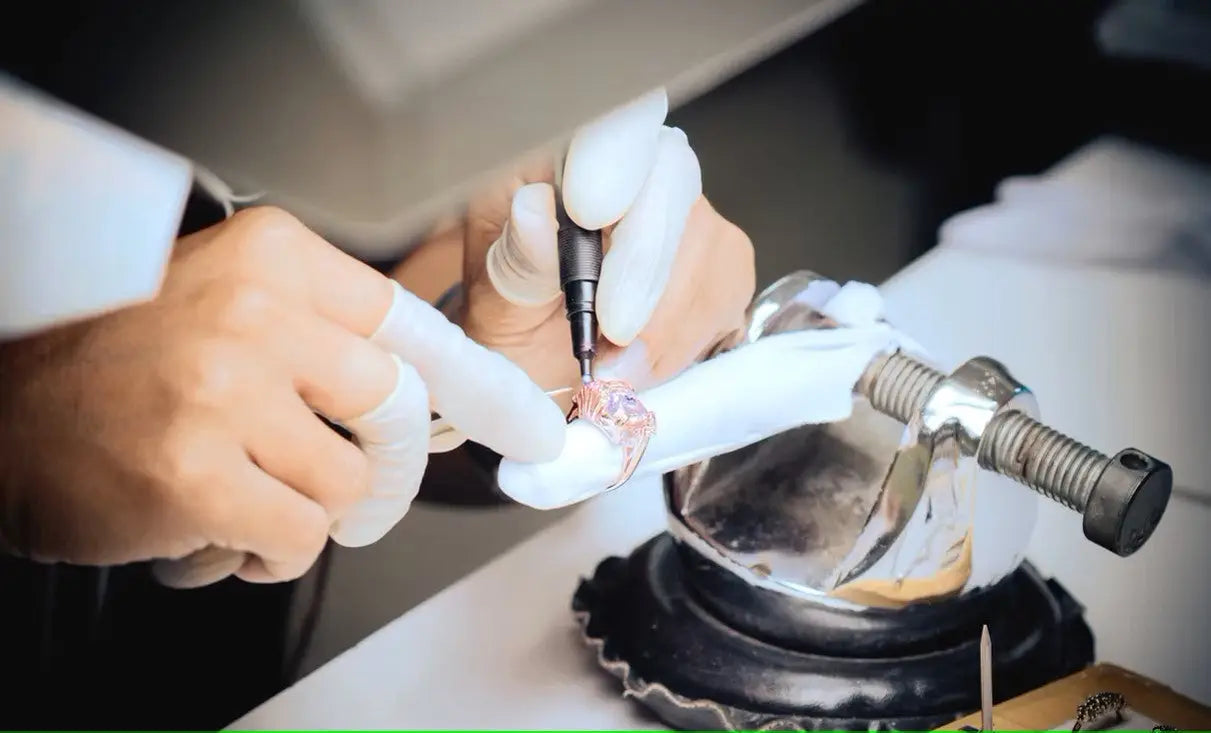
Diamond Clarity Explained: Grades, Inclusions and What Actually Matters
Last updated July 2026
Clarity is one of the most misunderstood of the 4Cs, and often the easiest to overpay for. Here's what it actually measures, what the different inclusion types look like, and how to choose a grade that looks flawless without paying for perfection you'll never see.
What Is Diamond Clarity?
Clarity measures internal features (inclusions) and external features (blemishes) within or on the surface of a diamond. These form naturally, whether a diamond formed underground over billions of years or in a growth chamber over several weeks.
Fewer and smaller characteristics generally mean a higher clarity grade and a more valuable stone. But here's the part worth understanding properly: most inclusions are microscopic and have little to no effect on how a diamond actually looks to the naked eye.
The Diamond Clarity Scale
Clarity is assessed under 10x magnification by trained gemologists, using the globally standardised scale developed by GIA and applied consistently by IGI.
| Grade | Description | What You'll Actually See |
|---|---|---|
| FL (Flawless) | No inclusions or blemishes | Perfect even under magnification, extremely rare |
| IF (Internally Flawless) | No internal inclusions | May have minor surface blemishes only |
| VVS1–VVS2 | Inclusions extremely difficult to detect | Invisible to the naked eye |
| VS1–VS2 | Minor inclusions, difficult to see | Eye-clean in the vast majority of lighting and settings |
| SI1–SI2 | Inclusions visible under magnification | Some may be visible unaided, particularly in SI2 |
| I1–I3 | Obvious inclusions | Visible to the naked eye; at the I3 end, can occasionally affect durability if a significant feather reaches the surface |
Types of Inclusions and Blemishes
Inclusions (internal):
- Feathers — small internal cracks
- Crystals — embedded mineral or diamond crystals from formation
- Needles — thin, elongated inclusions
- Clouds — clusters of tiny crystals that can soften brilliance if dense enough
- Knots — inclusions that reach the diamond's surface
Blemishes (external):
- Polish lines — minor marks left from the finishing process
- Scratches — small surface marks
- Pits or nicks — tiny surface openings
Location matters as much as type. An inclusion hidden under a prong or tucked near the girdle often has zero visual or performance impact, regardless of what the clarity plot technically shows.
Does Clarity Actually Affect Appearance?
Less than most buyers assume. Diamonds graded VS1, VS2 and even SI1 are frequently described as "eye-clean," meaning the inclusions genuinely aren't visible without magnification.
Inclusions become a real visual concern only when they're:
- Dark and positioned centrally in the stone
- Large enough to noticeably affect transparency
- Set in a step-cut shape (emerald or asscher, particularly), where large open facets reveal internal characteristics far more readily than a brilliant cut's broken-up light pattern does. We've covered exactly why in our diamond proportions guide.
💎 For brilliant sparkle in a clean-looking design, explore the Elysian Marquise Solitaire Ring.
Lab-Grown Diamonds and Clarity
Lab-grown diamonds tend to show fewer and less visible inclusions than the average mined stone, a direct result of the controlled growing environment:
- CVD diamonds may show slight feathering or clouding
- HPHT diamonds can occasionally carry tiny metallic inclusions from the growth catalyst, generally invisible without magnification
We source IGI- or GIA-certified lab-grown diamonds, and most of what we offer sits in the VS1 to VVS1 range, visually flawless to the naked eye in nearly every case. Full detail on how growth method affects the finished stone is in How Are Lab-Grown Diamonds Made?
Clarity vs the Other Cs: Where to Compromise
If you're working to a budget, clarity is often the easiest of the 4Cs to compromise on, particularly if size or cut matter more to you.
- VS1 or VS2 — the sensible default for peace of mind and a genuinely eye-clean look
- SI1 — strong value if you inspect the stone first (or trust the gemologist doing it for you)
- VVS1 to FL — really only worth the premium for collectors or buyers specifically chasing certificate perfection over visible difference
A well-cut diamond with a lower clarity grade will still sparkle brilliantly, brilliance comes from cut, not clarity, and plenty of inclusions end up hidden under a prong regardless of grade.
How to Read Clarity on a Certificate
A certified diamond from IGI or GIA includes:
- The clarity grade itself
- A clarity characteristics plot, a map showing the type, size and position of each inclusion
- A comments section noting anything not captured on the plot
- Laser inscription details, where applicable
Always review the actual plot rather than the grade alone, it tells you exactly what you're dealing with and where, which matters far more than the letter grade in isolation. We've explained how to read a full certificate section by section in How to Read an IGI Diamond Certificate.
What Clarity Grade Is Actually Right for You?
The right grade is whatever fits your budget, your setting, and what you can actually see, not necessarily what scores highest on paper. Plenty of SI1 diamonds look genuinely stunning and can save you a meaningful amount over a VVS grade with no visible difference in the finished ring.
How We Help You Choose at VYOR Diamond Lab
Nikolett and I compare clarity grades with clients directly, side by side under magnification and in normal lighting, so you can see exactly what a grade means for a specific stone rather than trusting a letter on a certificate alone. That's exactly the kind of detail worth working through together at a showroom consultation.
Frequently Asked Questions
What's the best diamond clarity grade for the money? VS1 or VS2 generally offers the best balance, genuinely eye-clean in almost all lighting, without paying the premium that FL, IF or VVS grades carry for a difference you likely won't see.
Can you see inclusions in an SI1 diamond? Sometimes, depending on size, position and lighting, but many SI1 stones are eye-clean, particularly in brilliant cuts. It's worth viewing the specific stone or its clarity plot before deciding.
Do lab-grown diamonds have better clarity than mined diamonds? Often, yes, on average, due to the controlled growing environment, though this is a general tendency rather than a guarantee for any individual stone.
Does clarity affect a diamond's durability? Rarely, and only at the lower end of the scale. I3-grade inclusions can occasionally affect structural integrity if a significant feather reaches the surface; VS and above have essentially no durability impact.
Why does clarity matter more in emerald and asscher cuts? Step cuts have large, open facets that act like windows into the stone, making inclusions more visible than in brilliant cuts, where light is broken up into many smaller facets that help disguise them.
Explore our Lab-Grown Diamond Engagement Ring Collection, or book a consultation at our Wembley showroom to compare clarity grades in person.

Share:
Lab-Grown vs Mined Diamonds: Who Actually Wins? A Scorecard
How to Read an IGI Diamond Certificate: A Section-by-Section Guide