

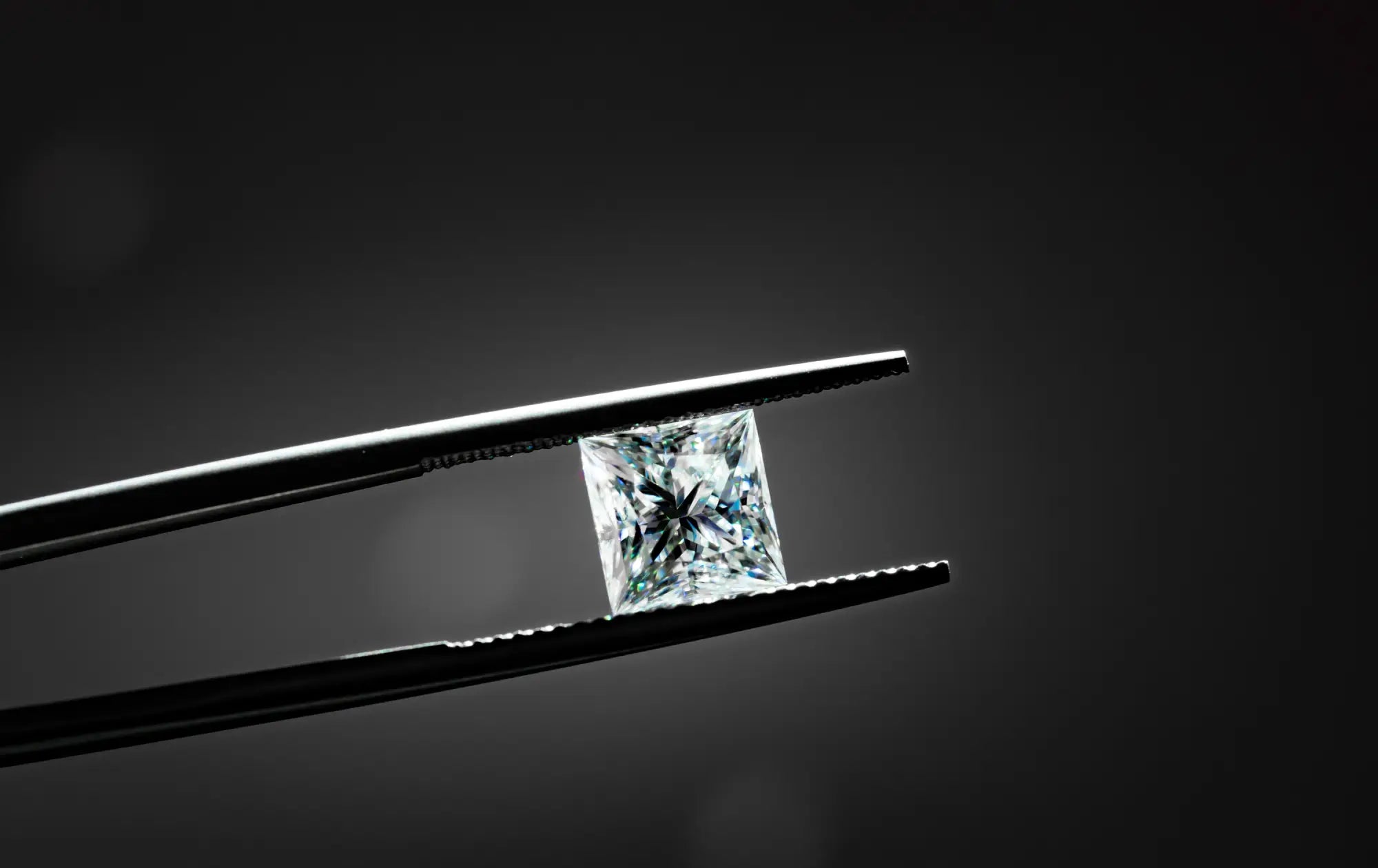
Diamond Proportions Guide: Why Cut and Symmetry Matter More Than the Grade Alone
Last updated July 2026
The 4Cs tell you cut, colour, clarity and carat, but "cut" is really shorthand for a much more precise set of measurements: the proportions. Two diamonds can carry the same cut grade and still perform very differently, and for fancy shapes specifically, the grade on the certificate doesn't tell you as much as most buyers assume. Here's what proportions actually are, what to look for, and where the certificate needs a second look.
What Are Diamond Proportions?
Diamond proportions are the measured ratios between a stone's structural elements:
- Table size — the flat top facet, expressed as a percentage of the diamond's average girdle diameter
- Total depth — the measurement from table to culet, also expressed as a percentage
- Crown angle and height — the upper portion of the stone, which shapes fire and brightness
- Pavilion angle and depth — the lower portion, which determines how much light gets reflected back up rather than lost out the sides or base
- Girdle thickness and culet size — structural factors that affect both appearance and durability
Together, these proportions control how light enters, bounces around inside, and exits the diamond, which is the entire physical basis of brilliance, fire and scintillation.
Why Proportions Matter More Than Carat Weight Alone
Two diamonds of identical carat weight can look meaningfully different depending on how they're cut. A well-proportioned stone:
- Returns more light to the eye
- Reads larger and brighter face-up, even at the same weight
- Masks minor inclusions more effectively, since strong light return distracts the eye from small internal characteristics
- Sits and wears more evenly in a setting
Poorly proportioned stones cause light leakage, where light escapes through the pavilion or sides instead of reflecting back through the table. A diamond cut too deep tends to look smaller than its carat weight suggests, with excess weight hidden below the girdle. Cut too shallow, and brilliance loses definition, sometimes with a visible dark area through the centre.
Ideal Proportions for Popular Cuts
Round Brilliant
- Table: 54–58%
- Depth: 59–62.5%
- Crown angle: approximately 34–35°
- Pavilion angle: approximately 40.6–41°
The round brilliant is the most extensively studied cut in the industry, GIA's cut grading system alone was built on more than 70,000 observations across 2,300+ diamonds, which is why its ideal ranges are the most precisely defined of any shape.
Oval Cut
- Table: 53–63%
- Depth: 58–63%
- Look for minimal bowtie effect, the dark area that can appear across the centre of elongated shapes, which is a proportion issue rather than a flaw in the stone itself
Radiant Cut
- Table: 61–69%
- Depth: 61–67%
- Symmetry and polish carry extra weight for this shape, since radiant's cropped-corner rectangular outline is less forgiving of uneven faceting than a round brilliant
💎 See how precise cut enhances brilliance in our Elysian Radiant Solitaire Ring.
GIA Cut Grades vs Actual Proportions: The Detail Most Buyers Miss
This is worth being precise about, because it changes how you should actually read a certificate.
GIA currently issues a full cut grade, Excellent, Very Good, Good, Fair or Poor, for round brilliant diamonds only. For fancy shapes, including oval and radiant, GIA reports polish and symmetry but does not assign an overall cut grade, because the acceptable proportion ranges for fancy shapes are wider and less standardised than for round brilliants. This is a genuinely important distinction: it means two GIA-graded oval diamonds with identical colour and clarity can perform very differently in terms of brilliance, and the certificate alone won't tell you which is better cut. You need to review the proportion percentages directly.
This is changing, but not immediately. GIA has announced it will begin issuing cut grades for oval, pear and marquise diamonds starting in 2027. Until then, if you want an overall cut assessment on a fancy shape certificate rather than raw proportions to interpret yourself, IGI already grades cut for nine fancy shapes, including oval and radiant, assigning Ideal and Excellent grades using its own established proportion ranges. This is one of the more practical differences between the two labs if you're set on a fancy shape stone specifically.
How to Read a Diamond Proportions Report
Every certified diamond, IGI or GIA, includes a proportions section detailing:
- Table %
- Depth %
- Crown angle and height
- Pavilion angle and depth
- Girdle thickness
Look for balanced measurements rather than chasing a single "perfect" number in isolation, proportions work together, and a slightly shallow pavilion can be well compensated by a slightly steeper crown, for example. What to actually avoid: extremes at either end, an excessively thick girdle, an unusually deep or shallow total depth, or a mismatch between crown and pavilion angles that isn't offsetting anything. These are the combinations that cause visible light leakage regardless of what the headline cut grade says.
Why This Matters Even More for Lab-Grown Diamonds
Lab-grown diamonds are cut to the same precision standards as mined stones, using the same equipment and the same cutters in many cases. Because the rough is grown under controlled conditions rather than mined with natural inclusions and shape constraints, cutters often have more flexibility to prioritise ideal proportions over weight retention, which is part of why exceptionally well-cut lab-grown stones are genuinely easier to find with consistency.
That said, this is a general tendency, not a guarantee. Not every lab-grown diamond is cut to ideal proportions, and the same discipline applies: check the actual numbers on the certificate rather than assuming quality from origin alone.
How We Approach Cut at VYOR Diamond Lab
Nikolett and I review the full proportions report on every stone we source, not just the headline cut grade, particularly for fancy shapes where the certificate alone doesn't tell the whole story. If you're deciding between two similarly graded stones, this is exactly the kind of detail worth walking through together at a showroom consultation, where you can also see the actual light performance in person rather than reading it off a report.
Frequently Asked Questions
What are the ideal proportions for a round brilliant diamond? Roughly a 54–58% table, 59–62.5% total depth, a crown angle around 34–35°, and a pavilion angle around 40.6–41°. These work together rather than as isolated targets.
Does GIA give a cut grade for oval and radiant diamonds? Not currently. GIA's overall cut grade (Excellent to Poor) applies only to round brilliant diamonds. Fancy shapes receive polish and symmetry grades but not a combined cut grade, until GIA's planned 2027 rollout for oval, pear and marquise shapes specifically.
Which lab grades cut for fancy shape diamonds? IGI currently grades cut for nine fancy shapes, including oval and radiant, using its own Ideal and Excellent proportion ranges. GIA does not yet offer this for most fancy shapes.
What causes light leakage in a diamond? Poorly matched proportions, typically a pavilion cut too deep or too shallow relative to the crown angle, which lets light escape through the base or sides instead of reflecting back through the table.
Are lab-grown diamonds cut better than mined diamonds? Not automatically, but often more consistently. Controlled growing conditions give cutters more flexibility to prioritise ideal proportions over weight retention, though individual stones should still be checked on their own proportions rather than assumed.
Explore our Lab-Grown Diamond Engagement Ring Collection, or book a consultation at our Wembley showroom to compare cut and proportions in person.
Share:
Are Lab-Grown Diamonds "Real"? What That Word Actually Means
Are Lab-Grown Diamonds Lower Quality? The Facts, Explained