

Why Cut Is the Most Important C: The Engineering of Sparkle
We often tell clients that while nature, or science, provides the diamond, the cutter provides the actual beauty. A stone with the highest colour and clarity will still look dull and lifeless if the cut is poor. As a gemologist, I consider cut the most critical of the 4Cs, it's the engine that drives every bit of light performance.
What "Cut" Actually Means
Cut gets confused with shape constantly, oval, pear, round are shapes, not cut. In gemology, cut refers specifically to how well a diamond's facets interact with light, covering:
- Proportions — the angles and depths of each facet
- Symmetry — how precisely the facets align with each other
- Polish — the smoothness of the diamond's surface
The Actual Science of Light Return
When a diamond is cut to Ideal or Excellent proportions, light enters through the table, reflects internally off the facets, and returns to the eye as brilliance (white light) and fire (rainbow flashes).
- Too shallow — light leaks out the bottom, giving the stone a watery, less substantial look
- Too deep — light leaks out the sides, darkening the centre, sometimes described as a "nail-headed" appearance
Our Standard: Hand-Selected for Genuine Light Return
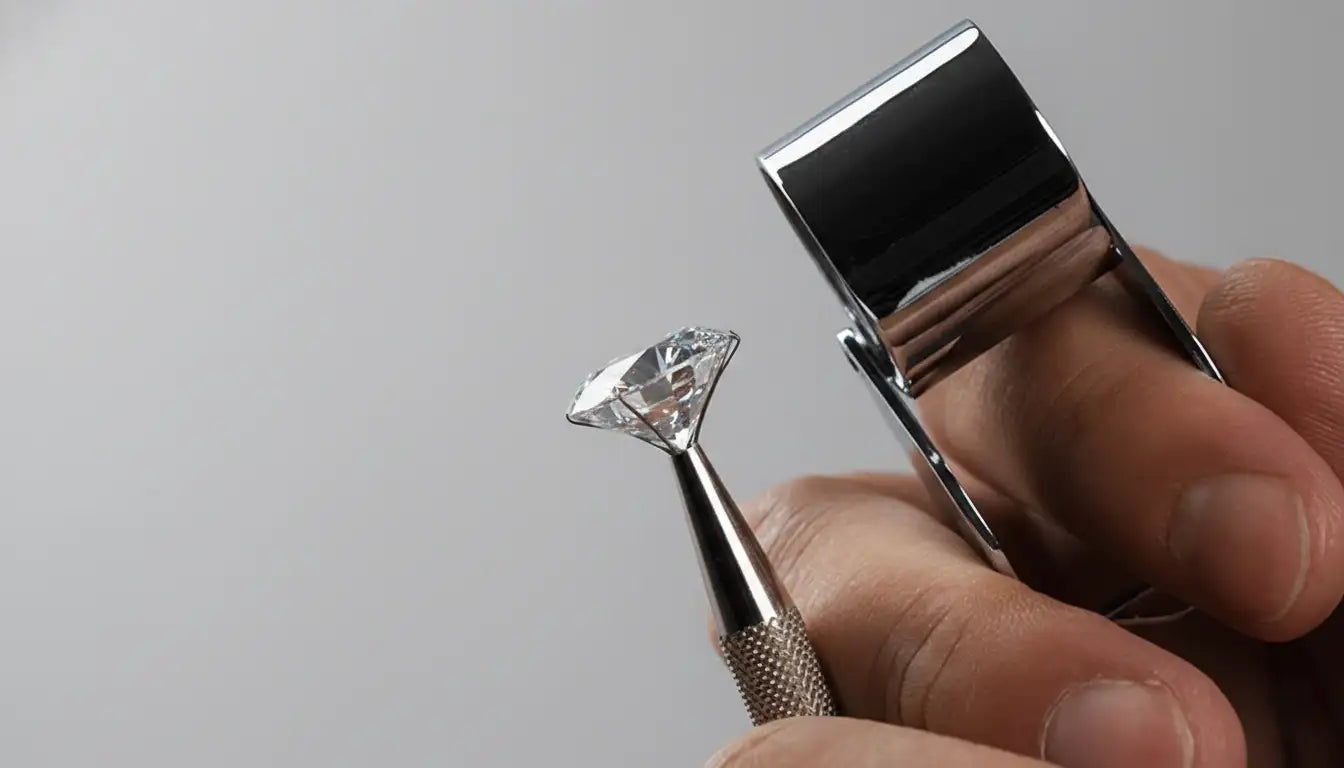
We don't just look at the grade printed on a certificate, every stone is physically inspected for how it actually returns light. We prioritise stones with strong, consistent brilliance, a genuinely crisp, intense sparkle that holds up even in lower-light environments, rather than relying on a single "luster" descriptor that isn't well established as a meaningful visual difference between growth methods.
Whether you're browsing ready-to-ship engagement rings or sourcing a loose stone for a custom design, the cut is checked for genuine performance, not just a passing grade.
Shape Matters: "Ideal" Proportions Differ by Cut
Every shape carries its own ideal proportions, and it's worth being precise about who grades what:
- Round brilliants are the only shape with a formal, universal cut grade from GIA specifically. IGI, by contrast, already grades cut for nine fancy shapes, including oval and radiant, using its own established proportion standards.
- Fancy shapes without a formal GIA cut grade (emerald, pear, cushion, and others not yet covered by IGI's system) genuinely require a gemologist's eye to rule out dark bowtie areas or poor symmetry that a headline grade alone wouldn't reveal.
Experience the Sparkle in Person
The clearest way to actually understand cut is to see it in action, side by side. We invite you to book a consultation at our Wembley showroom to compare cut qualities directly.
Ready to see the difference a genuinely well-cut stone makes? Book a consultation, or explore our engagement ring gallery to find a stone that performs the way it should.
Share:
Understanding Growth Remnants: The Birthmarks of a Lab Diamond
The Best Ratios for Oval Cuts: Finding Your Perfect Silhouette