

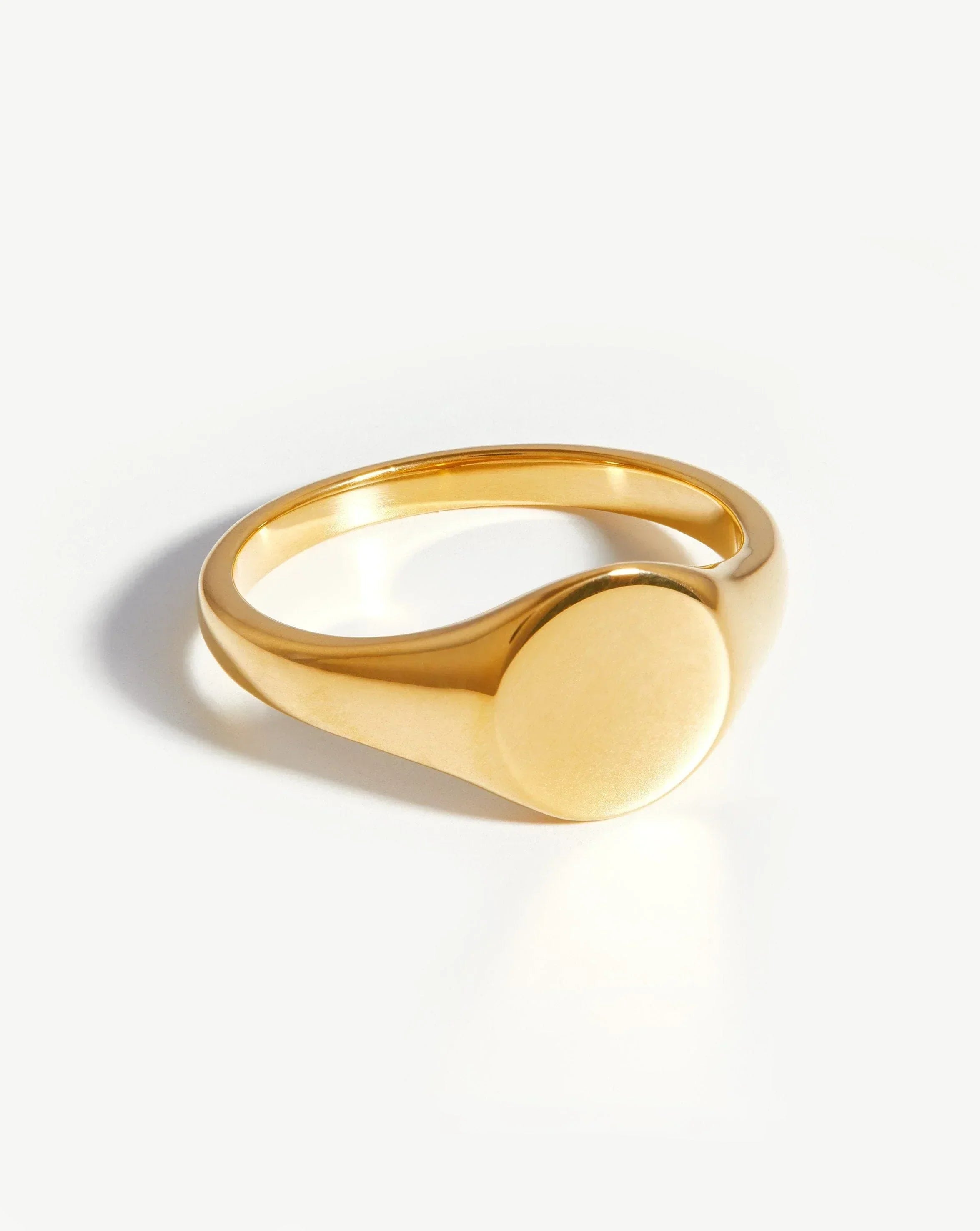
What Is a Signet Ring? The Story Behind the Statement
Last updated July 2026
Signet rings carry serious history, worn by royals, nobles, and influential families for thousands of years. In recent years, that once-formal symbol has found a genuine place in contemporary jewellery, blending real heritage with personal style rather than simply borrowing its prestige.
The Real History of the Signet Ring
The word "signet" comes from the Latin signum, meaning sign or mark. Historically, signet rings functioned as personal seals, pressed into hot wax to authenticate documents with a unique family crest or emblem. They carried genuine legal and social weight, not just decoration.
The earliest seals go back further than most people expect, Mesopotamian cylinder seals date to around 3500 BCE, with ring-form signets emerging in Ancient Egypt not long after, some of the earliest known examples are roughly 4,000 years old. Egyptian pharaohs used them as marks of religious and political authority. The tradition carried through the Greeks and Romans, where senators wore gold signet rings specifically to signal rank, and into medieval Europe, where they became a genuine marker of nobility, passed down through generations as part of a family's identity.
For most of this history, owning a signet ring meant something real about your status. That weight is part of why the design still carries genuine gravity today, even worn purely as personal style.
Traditional Design Features
Classic signet rings share a few recognisable traits:
- A flat or slightly domed top surface, traditionally engraved with initials, a monogram, or a family crest
- A bold, substantial silhouette, typically wider than a standard band
- Gold construction, often 9K or 18K yellow gold, though platinum and silver versions exist too
The flat top was traditionally engraved using intaglio, a technique where the design is carved into the surface rather than raised from it, so that pressing it into wax leaves a correct, readable impression. Today, that same flat canvas is more often a space for personal meaning than a functional seal.
Who Wears Signet Rings Today?
Once reserved largely for men of status, signet rings today are genuinely genderless and versatile. People wear them to represent:
- Heritage and family history
- Personal milestones, weddings, achievements, significant birthdays
- Contemporary fashion, clean, bold lines that suit both minimalist and maximalist taste
We regularly design signet rings for grooms, milestone birthdays, and as generational gifts, they're no longer tied to old hierarchies, they're about building a personal legacy instead.
Popular Signet Styles We're Seeing
- Initial signet rings — custom engraved with one or two letters, popular as wedding gifts or personal milestone pieces
- Minimalist oval or cushion shapes — a nod to tradition without ornate detailing
- Stone inlay signets — black onyx, lapis lazuli, or lab-grown diamonds for a modern twist on the classic flat top
- Chunky gold designs — a genuine statement piece worn as a pinky ring or on the middle finger
Can a Signet Ring Be a Wedding Ring?
Yes, and increasingly so. We often craft signet-style wedding bands for clients wanting something distinctive, a couple's initials, a meaningful symbol, or simply a minimalist flat-top design with a custom polish or brushed finish. It's a genuine way to blend centuries of tradition with your own specific story.
How to Wear a Signet Ring
There's no strict rule anymore, but a few classic approaches:
- Pinky finger, left or right — the most traditional placement, historically associated with discretion and legacy
- Index or middle finger — a bolder, more fashion-forward look
- Stacked with other bands — a slimmer signet can sit comfortably alongside a wedding band or other rings
Matching the metal tone across your signet, watch, and any other jewellery you wear regularly tends to read as more considered and cohesive.
Custom Engraving Ideas
The engraving is genuinely where the personal story lives. Common requests:
- A couple's initials or a shared monogram
- Wedding dates, coordinates, or star signs
- Symbolic imagery, family crests, lions, hearts, trees
- Artistic or abstract etching
Engraving is what turns a well-made ring into something genuinely irreplaceable.
Final Thoughts
Signet rings are ancient in origin but entirely modern in spirit. Whether worn as a nod to heritage, a marker of achievement, or simply a bold personal choice, the signet remains timeless, and genuinely yours to define on your own terms.
Frequently Asked Questions
What does "signet" actually mean?
From the Latin signum, meaning sign or mark. Signet rings were originally personal seals, pressed into wax to authenticate documents with a unique crest or symbol.
Are signet rings only for men?
Not anymore. While historically associated with men of status, signet rings today are genuinely worn across all genders, for heritage, milestones, or personal style.
Can a signet ring double as a wedding band?
Yes, signet-style wedding bands are increasingly popular, often featuring initials, a shared symbol, or a minimalist flat-top design.
Which finger should a signet ring be worn on?
Traditionally the pinky, though the index or middle finger gives a bolder, more contemporary look. There's no fixed rule today.
Can I have a signet ring custom engraved?
Yes, this is genuinely the heart of the design. Initials, dates, symbols, or custom artwork can all be engraved into the flat top.
Ready to create a piece that carries your own story? Book a consultation at our Wembley showroom or online, or explore our gift card options if you're commissioning a signet as a milestone gift for someone else.
Share:
Platinum & Gold vs Tungsten & Titanium: Choosing the Right Wedding Band Metal
The VYOR Diamond Lab Guide to Styling Stacker Rings