

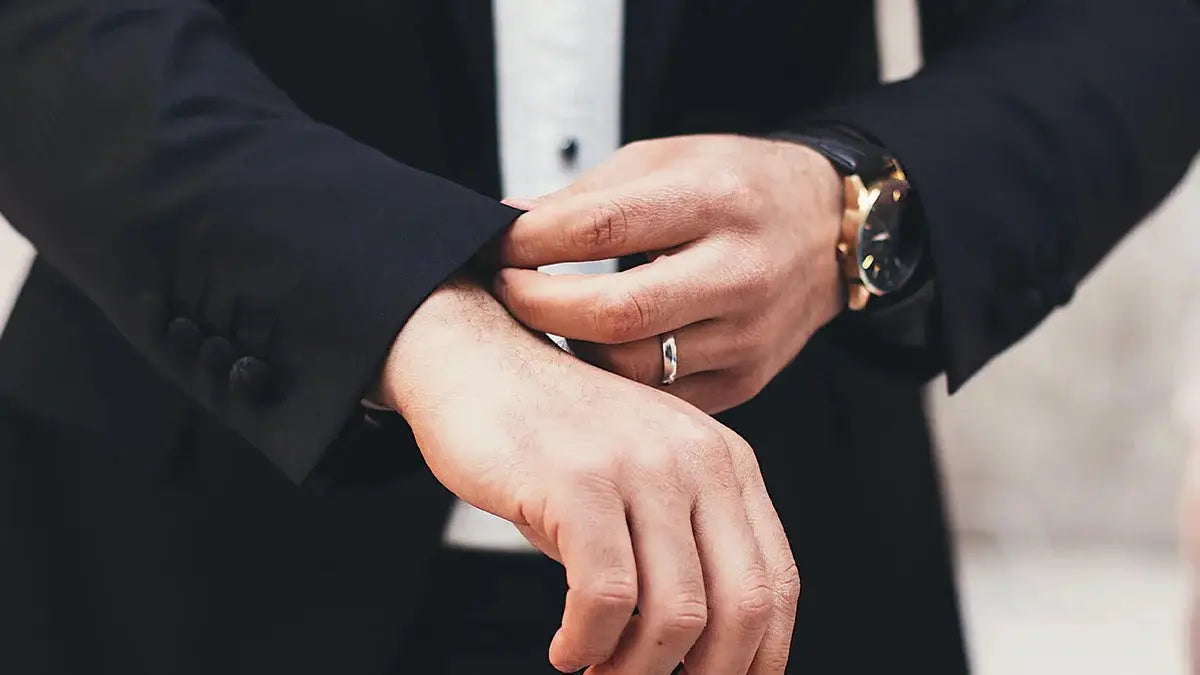
Platinum & Gold vs Tungsten & Titanium: Choosing the Right Wedding Band Metal
Last updated July 2026
A note on what we offer: at VYOR Diamond Lab, we work exclusively in platinum and 14K/18K gold, yellow, white, and rose. This guide is intended as honest, general education for anyone researching wedding band metals broadly, including alternatives outside our own range, so you can make a properly informed decision wherever you end up buying.
Tungsten and titanium get marketed hard on toughness and price, and there's real substance behind both claims. But the comparison against platinum and gold involves a genuine trade-off that a lot of sellers gloss over: resizability. Here's the honest picture.
The Trade-Off Nobody Leads With: Resizing
This is arguably the single most important practical difference, and it's worth understanding before anything else.
Tungsten cannot be resized at all. Its hardness, which is exactly what makes it so scratch-resistant, also makes it too brittle to safely cut and reshape. If your size changes, you need a new ring entirely, not a resized one.
Titanium can technically be resized, but it's genuinely difficult and not every jeweller offers it. In practice, many people treat titanium the same way as tungsten, plan for the size you have now, not the one you might have later.
Gold and platinum can both be resized and repaired by the vast majority of jewellers, a genuine, practical advantage for a ring meant to be worn for decades, since hands do change over a lifetime, weight fluctuation, pregnancy, ageing, are all completely normal reasons a ring might need adjusting.
If you're buying a ring intended to last a lifetime without replacement, this single factor is worth weighing heavily.
Durability and Hardness, Properly Compared
Tungsten carbide sits around 9 on the Mohs scale, roughly ten times harder than 18K gold, and is genuinely the most scratch-resistant option here. The trade-off: that same hardness makes it brittle. A hard enough impact won't dent tungsten the way it would gold, it can crack instead.
Titanium is considerably lighter and more impact-resistant than tungsten, it bends slightly rather than cracking under pressure, but it picks up fine surface scratches more readily over time. Many wearers describe it as barely noticeable on the hand, which is either a plus or a minus depending on what you want a wedding band to feel like.
Platinum, while softer than either alternative metal, is dense, genuinely durable for daily wear, and develops a soft patina over years that many people like rather than dislike.
Gold varies by karat, 18K is softer and more prone to scratching than 14K, but both are entirely suitable for daily wear and, unlike tungsten, can be re-polished to look new again indefinitely.
Hypoallergenic Properties
Titanium is genuinely, almost universally hypoallergenic, it's biocompatible enough to be used in medical implants.
Tungsten is generally well tolerated too, though it depends on the binder metal used in the carbide, nickel binders are typically fine even for sensitive skin, while lower-quality cobalt binders can occasionally cause irritation. Worth checking the specific alloy if you have known metal sensitivities.
Platinum is naturally hypoallergenic and among the safest options for sensitive skin.
Gold depends on purity and alloy, higher karat gold (18K and above) is generally safer for sensitive skin than lower karat gold, which contains more alloyed metal, sometimes including nickel.
Cost and Long-Term Value
Tungsten and titanium are both considerably more affordable than platinum or gold upfront, which is a genuine part of their appeal for a simple, budget-conscious band.
Where the comparison shifts: gold and platinum carry real, intrinsic material value and hold genuine resale value over time. Tungsten and titanium have essentially no resale value, if the relationship or the ring's purpose changes down the track, that's worth knowing upfront rather than discovering later.
A Few Other Practical Differences
- Stacking: tungsten's extreme hardness can mark a softer gold or platinum band worn on the same finger through everyday contact. A slim spacer band, or simply wearing them on separate hands, avoids this.
- Design flexibility: gold and platinum can be cast into intricate, detailed designs. Tungsten and titanium are machined rather than cast, which genuinely limits how ornate or customised the final design can be.
- Colour options: gold and platinum offer real colour variety (yellow, white, rose, and platinum's natural white). Tungsten and titanium are largely limited to silver or black tones, occasionally with coatings.
So Which Should You Actually Choose?
If you want a ring built to be resized, repaired, and potentially passed down or repurposed over decades, platinum or gold is the safer long-term choice, and it's the range we work in specifically because of this. If you want the absolute maximum scratch resistance at the lowest cost, and you're confident in your sizing, or you're after a simple backup band for travel and manual work, tungsten or titanium both have genuine merit.
There's no universally "better" answer here, only the right trade-off for how you'll actually use and live with the ring.
Frequently Asked Questions
Can a tungsten ring be resized?
No. Tungsten's hardness makes it too brittle to safely cut and reshape, if your size changes, a new ring is needed rather than a resize.
Is titanium or tungsten better for sensitive skin?
Titanium is almost universally hypoallergenic. Tungsten is generally well tolerated too, but depends on the specific binder metal used, worth checking if you have known sensitivities.
Do tungsten and titanium rings hold resale value?
No, unlike gold and platinum, they carry essentially no intrinsic material value, worth knowing if long-term value matters to your decision.
Is platinum or gold more durable for daily wear?
Both are genuinely durable for decades of daily wear. Platinum develops a soft patina over time; gold can be re-polished indefinitely to look new. Neither compares to tungsten's raw scratch resistance, but both can be resized, repaired, and maintained in ways tungsten and titanium can't.
Does VYOR Diamond Lab offer tungsten or titanium bands?
No, we work exclusively in platinum and 14K/18K gold. This guide is intended as general, honest education for your own research, wherever you ultimately choose to buy.
Looking for a wedding band built to last, and to grow with you? Book a consultation at our Wembley showroom or online, or explore our Women's Wedding Rings collection.
Share:
What Is a Signet Ring? The Story Behind the Statement