

Diamond Colour Grading Explained: The Full D-to-Z Guide
Last updated July 2026
Colour doesn't get the same attention as carat or clarity, but it has a real, visible effect on how a diamond reads, and how much you'll pay. Here's exactly how colour grading works, what each grade actually looks like, and how to choose the right one for your specific setting and budget.
What Is Diamond Colour?
In gemology, "diamond colour" describes how colourless or tinted a white diamond appears. Most diamonds carry a subtle yellow or brown tint, caused by trace nitrogen. The less colour present, the rarer and more valuable the stone.
Colour is graded on the D-to-Z scale, developed by GIA and now used as the global standard across major labs, including IGI.
The GIA Diamond Colour Scale
| Grade | Category | Visible Appearance |
|---|---|---|
| D | Colourless | Exceptionally white, no detectable tint even under close inspection |
| E–F | Colourless | Bright, icy white, minimal tint detectable only by an expert |
| G–H | Near Colourless | White with a faint warmth, generally unnoticeable once mounted |
| I–J | Near Colourless | Slightly more noticeable warmth, still reads as white to most eyes |
| K–M | Faint | Subtle yellow visible, particularly in larger stones |
| N–R | Very Light | Noticeable yellow or brown tint |
| S–Z | Light | Distinct yellow or brown tint, visible without magnification |
The D to Z scale covers white diamonds specifically. It doesn't apply to fancy colour diamonds, more on that below.
How Is Colour Actually Graded?
Grading takes place under controlled, standardised lighting, with the diamond compared against calibrated master stones. Graders view the stone table-down, through the pavilion, specifically to remove brilliance and light performance from the assessment, since sparkle can otherwise mask or distract from true body colour. Multiple graders submit assessments independently, without discussing the stone, and a grade is only assigned once enough independent opinions agree.
Every lab-grown diamond we sell at VYOR Diamond Lab is independently graded by IGI or GIA, with the specific colour grade listed clearly on the certificate.
Does Diamond Colour Actually Matter?
Yes, but how much depends heavily on setting, shape and personal taste, it's genuinely one of the more flexible 4Cs.
Colour matters more when:
- Set in platinum or white gold, which highlight any warmth against the cool metal tone
- Cut as a step cut, emerald or asscher in particular, where large open facets show colour more readily than a brilliant cut's broken-up light pattern
- The stone is larger, colour becomes easier to notice as carat weight increases
You can be more flexible when:
- Set in yellow or rose gold, where the metal's warmth blends with a lower colour grade rather than fighting it
- Cut as a brilliant shape (round, oval, radiant), which reflects more light and does a genuinely good job of masking colour
- Prioritising carat size or clarity within a fixed budget
💎 A popular, balanced option: the Solara Oval Half Bezel Ring, which pairs beautifully with D–H colour grades in both warm and cool metals.
Lab-Grown Diamonds and Colour
Lab-grown diamonds frequently achieve higher colour grades than the average mined stone, a result of the controlled growth environment. Most lab-grown diamonds sold today fall in the D–F (colourless) or G–H (near colourless) range.
Colour can still vary depending on growth method:
- CVD diamonds occasionally develop a brown or grey undertone during growth, typically corrected through post-growth HPHT annealing, a standard, disclosed treatment
- HPHT diamonds more often produce very white, high-colour stones directly from growth, without needing correction
We've covered exactly how each method works in How Are Lab-Grown Diamonds Made? Every lab-grown diamond we sell includes IGI or GIA certification detailing the exact colour grade and any treatment applied.
What About Fancy Colour Diamonds?
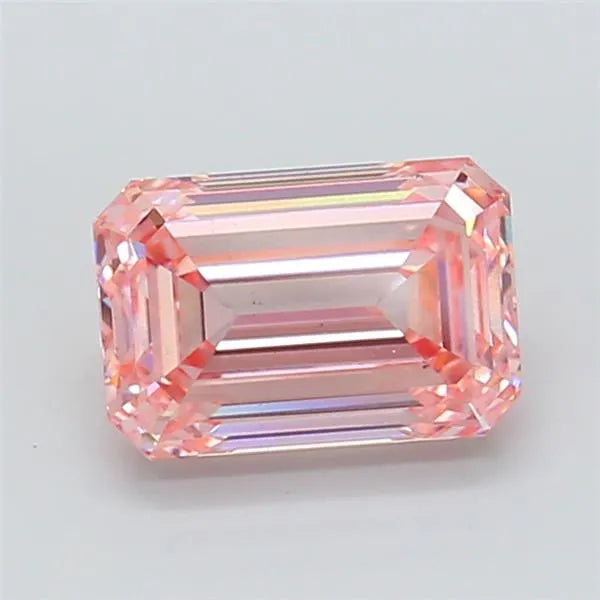
The D-to-Z scale applies only to white diamonds, colourless through tinted. Fancy colour diamonds, pink, yellow, blue and beyond, are graded on an entirely different framework based on hue, tone and saturation, running from Faint through to Fancy Vivid. We source these almost exclusively through IGI, and cover the full grading system in our coloured lab-grown diamonds guide.
Tips for Choosing the Right Colour
- Match metal to stone. D–F pairs cleanly with platinum and white gold. G–J works well with yellow or rose gold, where the metal's warmth complements rather than competes with the stone.
- Factor in size and cut. Larger stones show colour more readily; brilliant cuts mask it better than step cuts.
- Weigh the budget trade-off. Dropping a single grade, F to G, for example, can meaningfully reduce price with minimal visible difference in most settings.
- View stones in person where you can. Lighting genuinely changes how colour reads, and comparing similar stones side by side tells you more than any chart.
What Colour Actually Says About Your Diamond
Colour isn't purely a scientific ranking, it's also a style choice. A D colour diamond reads icy and contemporary; a warmer J or K can lean into a vintage aesthetic deliberately, particularly in antique-inspired settings. Understanding the scale means choosing what genuinely looks right to you, not just chasing the highest number on a certificate.
How We Help You Choose at VYOR Diamond Lab
Nikolett and I walk clients through colour comparisons directly, side by side, under different lighting, and against the specific metal you're considering, because a chart only tells you so much. If you're deciding between adjacent grades or unsure how a particular colour will read in your chosen setting, that's exactly the conversation a showroom consultation is built for.
Frequently Asked Questions
What is the best diamond colour grade? There's no single "best," D is the rarest and most colourless, but G to H offers excellent value with minimal visible difference in most settings, particularly brilliant cuts.
Does diamond colour matter in white gold vs yellow gold? Yes, meaningfully. White metals highlight any warmth in the stone, so a higher colour grade (D–F) shows to better advantage. Yellow or rose gold blends with a lower grade (G–J) without the tint standing out.
Are lab-grown diamonds usually higher colour than mined diamonds? Often, yes, particularly HPHT-grown stones, thanks to the controlled growing environment. It's a general tendency though, individual stones should still be checked against their certificate.
What's the difference between the D-to-Z scale and fancy colour grading? The D-to-Z scale measures the absence of colour in white diamonds. Fancy colour diamonds (pink, yellow, blue, and so on) are graded on a completely separate hue, tone and saturation system.
Can I save money by choosing a lower colour grade? Yes, often significantly. Dropping one or two grades, particularly in a brilliant cut or warmer metal setting, can reduce price noticeably with little to no visible difference.
Explore our Lab-Grown Diamond Engagement Ring Collection, or book a consultation at our Wembley showroom to compare colour grades in person.
Share:
2026 Engagement Ring Trends | What’s In Style This Year?
Coloured Lab-Grown Diamonds: A Complete Guide to Fancy Hues