

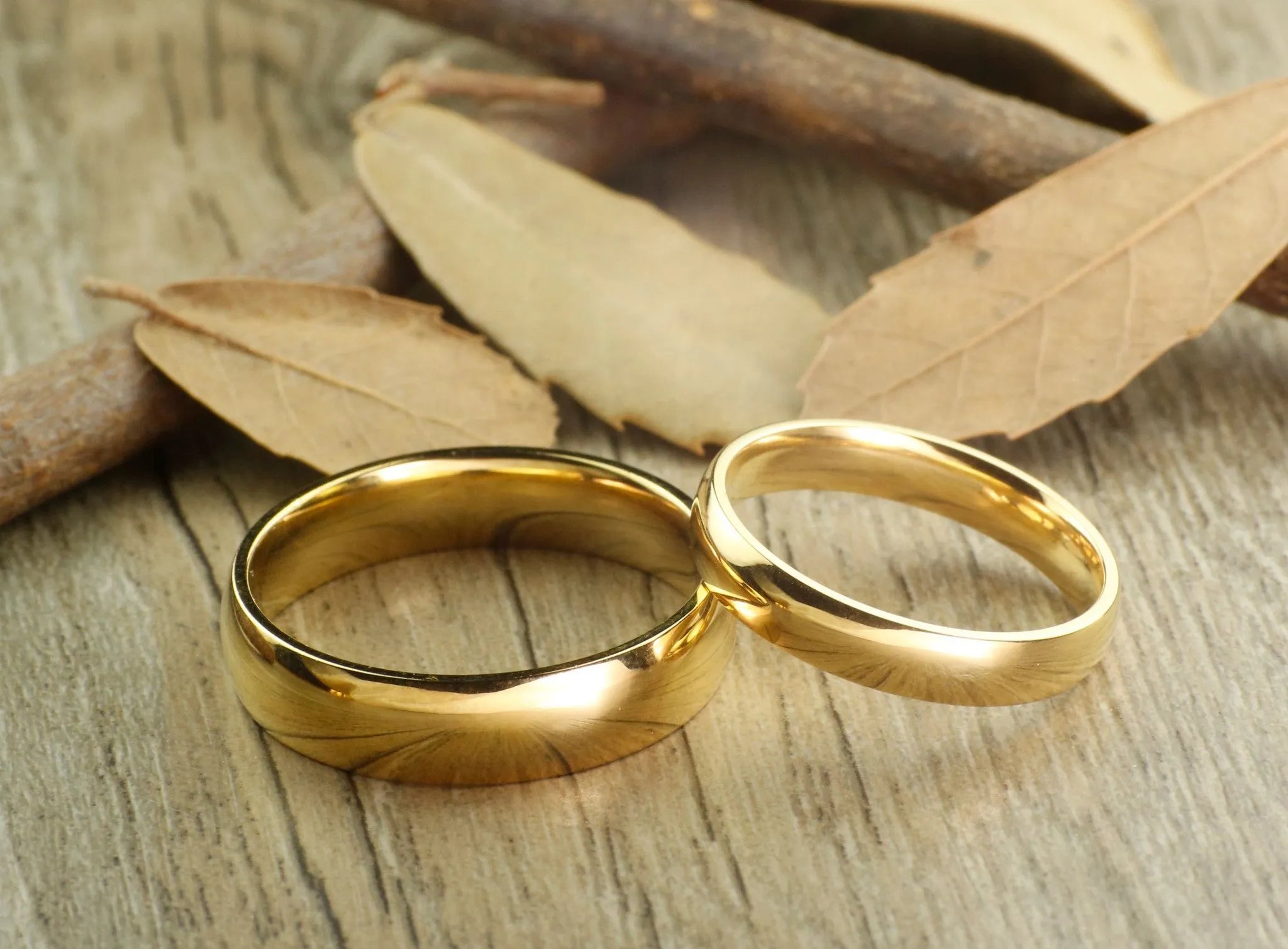
The History of Wedding Rings: A Timeless Symbol of Commitment
Last updated July 2026
A wedding ring looks like a simple piece of jewellery. Its symbolism runs considerably deeper than that. Worn on the hand, tied conceptually to the heart, this enduring circle has represented love, unity, and commitment across thousands of years and dozens of cultures, evolving constantly in materials and meaning along the way.
The Earliest Rings: Ancient Egypt
The tradition is generally traced back roughly 4,800 years, to Ancient Egypt, where rings exchanged between lovers were crafted from reeds, hemp, leather, or bone. The circular shape carried real symbolic weight: no beginning, no end, and the open centre read as a doorway into a shared future.
These early rings were commonly worn on the fourth finger of the left hand, based on the belief that this finger held a direct connection to the heart, the vena amoris, or "vein of love." Worth knowing the more precise version of this history: the belief itself is generally traced to Egypt and Rome, and was documented by the Roman writer Macrobius in the 4th to 5th century AD, who actually described it as a nerve rather than a vein. The Latin phrase "vena amoris" itself wasn't coined until centuries later, in 1686, by the English lawyer Henry Swinburne. The custom is genuinely ancient; the exact term most people quote today is considerably younger than the tradition itself.
Roman Influence: Ownership and Status
Under Rome, the wedding ring's meaning shifted. Iron rings symbolised not romantic love but control and legal ownership, a ring given to a woman functioned closer to a binding contract than a gesture of affection.
Gold eventually replaced iron among the wealthy, and with that shift came a new layer of meaning: status and material wealth, alongside commitment. This period also saw the rise of inscribed rings, personal messages engraved into the band itself.
Medieval and Renaissance Romance
Medieval Europe brought a more romantic reading back to the ring. Gemstones became genuinely fashionable, rubies for passion, sapphires for loyalty, diamonds for enduring strength, and rings began being blessed as part of religious ceremony, tying the object directly to sacred vows rather than just personal exchange.
The Renaissance introduced gimmel rings, interlocking bands worn separately during the engagement period and joined together at the wedding itself, and poesy rings, engraved with short poetic lines, often in French or Latin, hidden inside the band.
The Rise of the Diamond Ring
Diamonds appeared in engagement rings as early as the 15th century, but didn't become mainstream in wedding jewellery until the late 19th and early 20th centuries, driven by expanding global diamond mining and, decisively, by marketing. De Beers' 1947 "A Diamond is Forever" campaign is the single biggest reason the diamond-and-eternal-love association became so deeply embedded in Western culture.
Wedding bands themselves, though, generally stayed simpler than engagement rings throughout this period, typically plain gold, sometimes engraved, rarely stone-set.
Men's Wedding Rings: A Genuinely Modern Tradition
Men largely didn't wear wedding rings until the 20th century. The practice became common specifically during World War II, when soldiers wore gold bands to feel connected to partners back home while deployed. That sentimental habit became a lasting norm, and men's wedding rings have continued evolving since, platinum bands, textured finishes, and modern two-tone designs among them.
Cultural Traditions Around the World
Wedding ring customs vary genuinely widely:
- India — married women may wear a toe ring (bichiya), with bangles or a mangalsutra also serving as marital symbols
- Nordic countries — couples often exchange both engagement and wedding rings together, a tradition going back well over a century
- Russia — the wedding ring is traditionally worn on the right hand, with three-band "troika" rings a popular style
These variations show how much the specific custom shifts by culture, while the underlying idea, love, partnership, commitment, stays remarkably constant.
Today's Couples, Today's Rings
Couples now have more genuine freedom than ever to design rings reflecting their own story and values. Common directions we see:
- Lab-grown diamonds, for sustainability and fully traceable sourcing
- Moissanite, for brilliance and genuine budget flexibility
- Custom designs incorporating hidden birthstones, personal engraving, or unconventional metal combinations
- Matching or coordinated sets that reflect the connection between partners
Why the Circle Endures
Regardless of how trends shift around it, the wedding ring remains a symbol of continuity:
- A daily reminder of a shared promise
- A piece of genuine history worn on the hand
- A quiet reflection of two lives brought together
Whether that's a traditional yellow gold band or a fully custom platinum piece, what actually matters is the intention it carries, not the specific material or era it borrows from.
Frequently Asked Questions
What were the earliest wedding rings made from?
Natural materials, reeds, hemp, or bone in Ancient Egypt, followed by Roman iron and eventually gold. Today, platinum and gold remain the standard precious metal choices.
When did men start wearing wedding rings?
Commonly from World War II onward, when soldiers wore gold bands as a connection to partners back home. It's a genuinely modern tradition compared with the history of women's wedding rings.
Is it okay to modernise the tradition entirely?
Genuinely, yes. Lab-grown stones, moissanite, and fully personalised designs are all part of how this tradition keeps evolving rather than staying frozen in one era.
Can a wedding ring be redesigned or upgraded later?
Yes, plenty of couples revisit their rings for anniversaries or significant life changes, evolving the design without losing what it originally represented.
Do you design for same-sex couples?
Absolutely, every love story deserves a considered, fully customisable design.
Looking Back, Moving Forward
The history of the wedding ring shows that tradition has never actually been fixed, it's been shaped by culture, material availability, and marketing in equal measure across thousands of years. Today, you have real freedom to design something that honours that long history while genuinely reflecting your own.
Ready to begin your own chapter of this story? Book a consultation at our Wembley showroom or online, or explore our Women's Wedding Rings collection to start designing.
Share:
Bride and Groom Wedding Ring Sets: Creating a Meaningful Match
How to Find the Perfect Wedding Band Pairing