

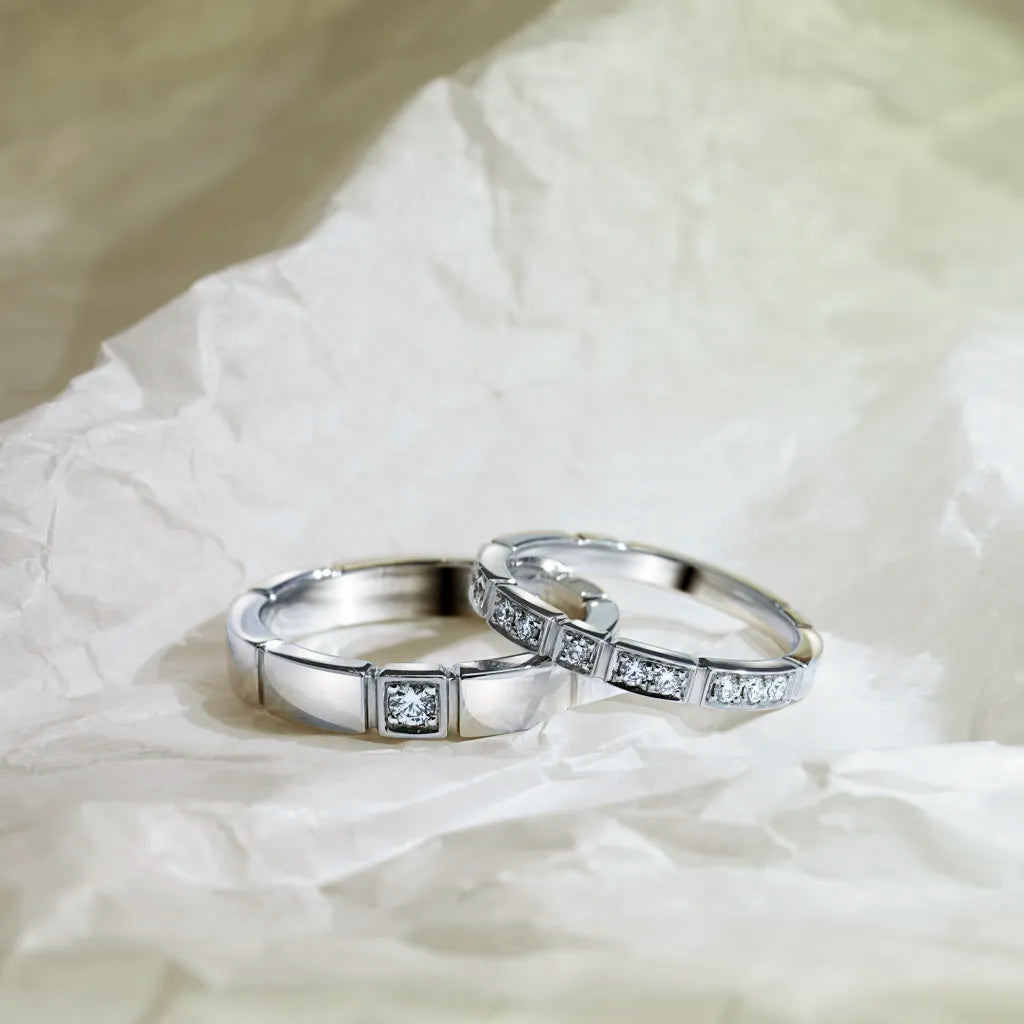
How to Keep Your Wedding Ring Looking New for Years
Last updated July 2026
Your wedding ring is a daily symbol worn for decades, and it deserves care that actually matches that lifespan. Whether it's a sleek platinum band, a pavé diamond ring, or a custom moissanite design, here's how to keep it looking as brilliant as the day you said yes.
1. Clean It at Home, Regularly
Everyday life exposes your ring to lotion, soap, sweat, dust, and oils, all of which dull sparkle gradually and often without you noticing until it's fairly obvious.
A simple, safe home method:
- Mix warm water with a few drops of mild dish soap
- Soak the ring for 15 to 20 minutes
- Gently scrub with a soft toothbrush, particularly into any crevices
- Rinse thoroughly with clean water
- Dry with a lint-free cloth
This is genuinely safe for lab-grown diamonds, moissanite, and all gold or platinum settings. Avoid harsh chemicals, abrasives, or toothpaste, all of which can scratch metal or dull a stone's surface rather than clean it.
If your ring has pavé, halo, or hidden halo detailing, spend a little extra time brushing into those crevices specifically, that's where buildup collects fastest and shows least until it's already noticeable.
One nuance worth knowing if your centre stone is moissanite: crushed ice cuts are more sensitive to oil and dirt buildup than brilliant cuts, and benefit from slightly more frequent cleaning to stay looking their best.
2. Get It Professionally Checked Annually
Even careful wearers can loosen a prong or chip a small pavé stone without noticing day to day. An annual professional inspection genuinely catches this early, before it becomes a bigger problem.
What a jeweller checks:
- Prong tightness
- Stone stability
- Metal wear, particularly on thinner bands
- Hidden damage not visible without close inspection
- Overall cleaning and polish
3. Know When Not to Wear It
It's genuinely fine, encouraged, even, to take your ring off sometimes:
- During workouts, particularly weightlifting or gym equipment
- Gardening or heavy housework
- Applying lotion, oils, or sunscreen, which build up under stones quickly
- Swimming, chlorine and saltwater both affect metal over time
- Sleeping, more prongs catch on bedding overnight than most people expect
Leaving a ring on constantly, including overnight, is one of the more common causes of gradual band warping and stone loosening over years of wear.
4. Store It Properly
A drawer or handbag is a fast route to scratches, especially with other jewellery nearby.
- Use a soft, fabric-lined ring box or a dedicated jewellery tray
- Travel with a padded case with separate compartments if you're bringing multiple pieces
- Never store rings loose together, they'll rub against each other and scratch, moissanite and diamond surfaces included
- If you remove your ring often for work, a dedicated dish by the sink or bedside prevents the classic "where did I put it" scramble
5. Watch for Normal Metal Wear vs Genuine Damage
Gold, even 18K, is a relatively soft metal and will develop fine surface scratches with daily wear, this is normal, expected, and part of what a genuinely worn gold ring looks like over time. Deep gouges or a visibly warped shape are different, that's when it's time for a proper polish and reshape.
White gold specifically: it's rhodium-plated for brightness, and that plating wears off gradually. Replating roughly every 12 to 24 months keeps it looking consistently bright and white rather than developing a warmer, worn tone underneath.
6. Don't Ignore a Changing Fit
If your ring feels tight, or spins loosely and constantly, it's worth getting resized. A poor fit causes ongoing rubbing, which wears down the band faster and can gradually loosen stones. Fingers genuinely change size over time, temperature, weight fluctuation, pregnancy, and normal ageing are all completely ordinary reasons a ring might need adjusting.
7. Insure What You Genuinely Love
Even excellent care can't prevent every possible loss, theft, or accident. Insuring your wedding ring is straightforward peace of mind, keep your appraisal documents, CAD drawings, or original receipt somewhere safe, and update your coverage if the ring's value changes over time.
Frequently Asked Questions
How often should I clean my ring at home?
Every one to two weeks is ideal for daily wear; monthly is a reasonable minimum if you want to keep it consistently looking its best.
Can I use an ultrasonic cleaner at home?
Only if your ring doesn't have delicate pavé or loosely set stones, ultrasonic cleaners can dislodge small stones if used carelessly. When in doubt, ask your jeweller before trying it yourself.
Does moissanite need different care than diamond?
Moissanite is genuinely durable and easy to care for, though it can build up surface oils slightly faster, particularly in crushed ice cuts, so a bit more frequent cleaning helps it stay at its best.
How do I know if my prongs are loose?
If the stone wiggles slightly, or you hear a faint rattle shaking the ring near your ear, it's genuinely time for a professional check.
What if my metal looks dull rather than scratched?
White gold likely needs rhodium replating. Yellow or rose gold can usually be professionally polished to restore its original shine.
A Little Consistent Care Goes a Long Way
Your wedding ring is built to last decades, but how you actually care for it is what determines whether it still looks brilliant on your 20th anniversary or just quietly worn down. Regular cleaning, sensible wear habits, and an annual check-up are genuinely all it takes.
Need a resize, cleaning, or general advice? Book a consultation at our Wembley showroom or online, or explore our Women's Wedding Rings collection.
Share:
The Rise of Two-Tone Wedding Bands in Australia
Wedding Rings for Tradies: Durable, Stylish & Comfortable Options