

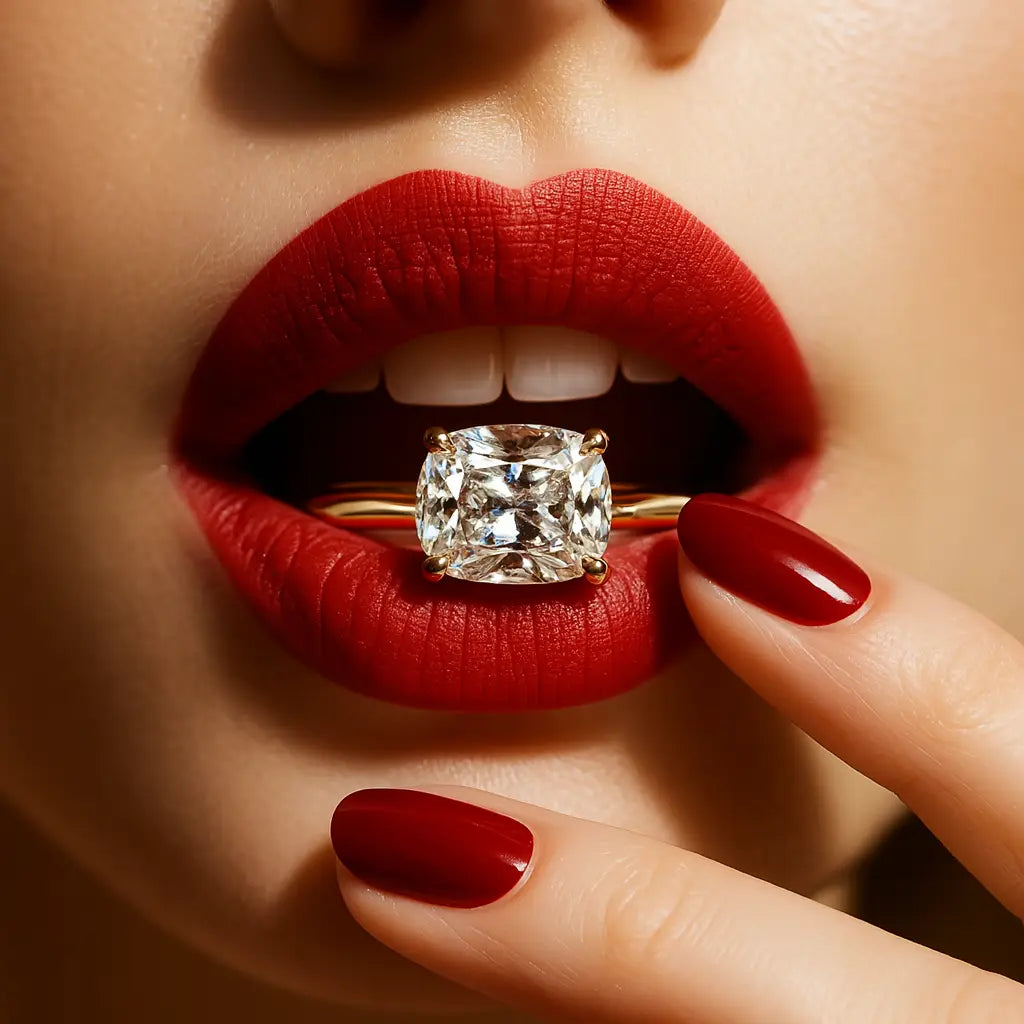
The East-West Engagement Ring: A Modern Twist on Timeless Elegance
Last updated July 2026
Today's couples are increasingly drawn to designs that reflect individuality alongside tradition, and the East-West setting is one of the more striking examples: a familiar elongated cut, rotated just 90 degrees, reads as an entirely different ring. Here's everything worth knowing, including one genuine consideration most guides skip entirely.
What Is an East-West Engagement Ring?
An East-West setting rotates the centre stone 90 degrees, so instead of running vertically up the finger (north-south), it sits horizontally across it. The effect is subtle but genuinely bold, familiar at a glance, unexpected on closer look.
This orientation suits elongated cuts particularly well: oval, emerald, marquise, radiant, and pear. Each takes on a noticeably different character once rotated, less traditional, more fluid and contemporary.
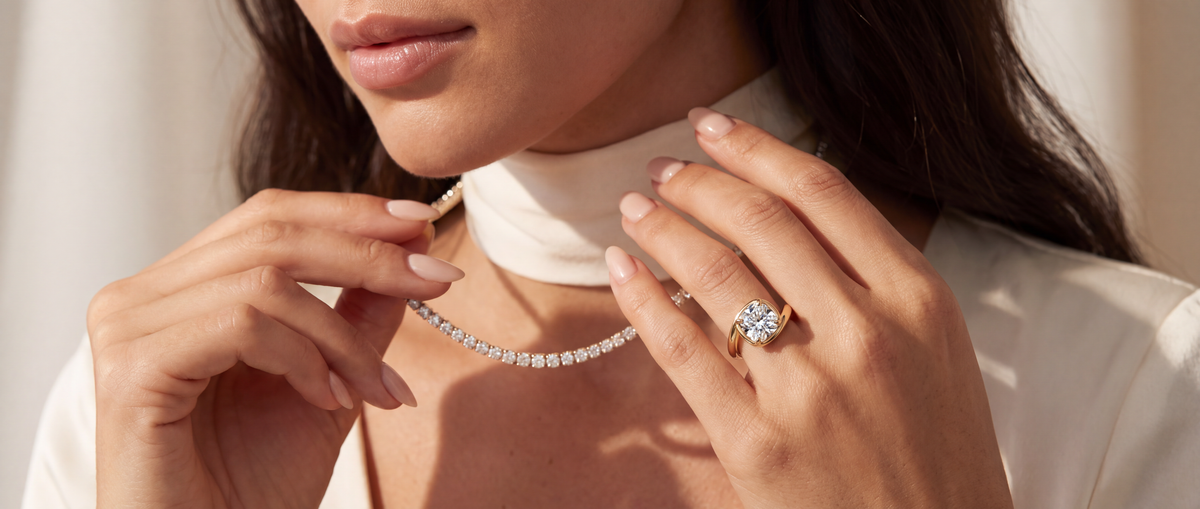
See our East-West design in action: the Lyra East-West Oval Half Bezel — one of our most-loved styles in this orientation.
Why Couples Choose East-West Rings
A statement of individuality. It's not a layout most people see every day, which is precisely the appeal for couples wanting something considered rather than default.
Enhanced finger coverage. Set horizontally, the stone spans more of the finger's width, creating a genuinely larger visual footprint without increasing carat weight. Oval stones specifically can appear up to around 1.5 times the size of an equivalent-carat round brilliant, and turning that horizontally maximises the effect further.
Sleek, low-profile comfort. Many East-West settings sit lower on the finger, a practical benefit for active lifestyles or hands-on work.
A fresh take on familiar shapes. Whether it's a marquise's regal points, an emerald's architectural lines, or an oval's softness, the East-West orientation gives these cuts a genuinely different presence.
The Bow Tie Consideration Most Guides Skip
This is worth knowing clearly before committing to an East-West setting with an elongated shape. The bow tie effect, the shadow that can appear across the centre of oval, marquise and pear stones, isn't just present in East-West settings, it can genuinely be more pronounced than in a standard vertical setting. Multiple independent sources in the trade note this directly: rotating an elongated stone horizontally increases how important it is to inspect for a strong bow tie beforehand, since a poorly cut stone's shadow can become a more prominent feature once flipped sideways.
This isn't a reason to avoid East-West settings, it's a reason to be more careful about cut quality specifically. A well-cut stone with minimal bow tie will hold up beautifully in this orientation; a stone with an already-noticeable bow tie will likely show it more, not less. We've covered exactly what to look for in our oval diamond bow tie effect guide, well worth reading before finalising an East-West design with any elongated cut.
Best Stone Shapes for East-West Settings
Oval — timeless and finger-flattering, gains a genuinely modern edge horizontally, worth extra scrutiny on bow tie given the effect above.
Emerald — clean, geometric lines that read as vintage sophistication when rotated, and step cuts generally show a milder bow tie risk than brilliant-cut elongated shapes.
Marquise — already a distinctive pointed shape, becomes a genuine statement piece set horizontally; the orientation also helps protect the vulnerable pointed tips somewhat, since they sit closer to the finger rather than projecting outward.
Radiant — balances brilliance and structure, a strong choice for those wanting sparkle with geometric presence.
Pear — a soft, distinctive silhouette with one rounded and one pointed edge; also genuinely prone to bow tie, so cut quality matters even more here.
East-West Styles and Variations
- Solitaire East-West — minimal and striking, the purest expression of the orientation
- Bezel or half bezel — sleek and modern, with strong protection for the stone's edges
- Cathedral setting — gently arched to lift the stone and catch more light
- Pavé band accents — small diamonds lining the band draw the eye toward the horizontal centre stone
Why Claw Prongs Matter Here
We use refined claw prongs rather than bulkier rounded settings, since this genuinely affects the finished look:
- Lets in more light, supporting brilliance rather than blocking it
- Maintains a clean, contemporary aesthetic
- Offers secure, elegant support that suits the East-West orientation specifically
Customising an East-West Ring
You'll choose your centre stone (moissanite or lab-grown diamond), shape, size, setting style and band profile, metal (platinum or 14K/18K white, yellow, or rose gold), and any side stone or band detail. A CAD rendering confirms every element before production begins.
Browse our lab-grown diamond engagement rings or moissanite engagement rings for inspiration, or see what's available now in our ready-to-ship range.
Who Tends to Love This Style?
- Those wanting a non-traditional yet still timeless silhouette
- Couples drawn to symbolic design choices, horizontality read by some as a nod to balance and equality
- Minimalists who appreciate clean, considered lines
- Anyone wanting a distinctive engagement ring that's still genuinely heirloom-worthy
Frequently Asked Questions
What makes an East-West ring different from a standard setting? The centre stone is rotated 90 degrees to sit horizontally across the finger rather than vertically along it, a distinctive, contemporary aesthetic shift.
Does an East-West setting make the bow tie effect worse? It can, genuinely. Rotating an elongated stone horizontally may make an existing bow tie more visible rather than less. Cut quality matters more, not less, in this orientation.
Which stones work best in an East-West setting? Oval, emerald, marquise, radiant and pear, all elongated shapes that visually expand and take on a fresh character when set horizontally.
Are East-West rings more comfortable for daily wear? Often, yes, particularly for elongated cuts, since many East-West settings sit lower on the finger, which suits active lifestyles well.
Can I customise an East-West ring fully? Yes, stone type, shape, metal, band profile, and setting style are all fully customisable, with a CAD rendering confirmed before production.
Ready to explore this style? Browse our Engagement Ring Collection, or book a consultation at our Wembley showroom to discuss an East-West design.
Share:
The Halo Setting Explained: History, Styles & Pros/Cons
Bezel-Set Engagement Rings: Sleek, Secure, and Elegant