

The Halo Setting Explained: History, Styles, and Whether It's Right for You
Last updated July 2026
Some rings whisper elegance. The halo setting is built to dazzle. Known for its vintage-meets-modern appeal, it remains one of the most enduring settings in fine jewellery, though its popularity has genuinely ebbed and flowed over the decades, and continues to do so. Here's everything worth knowing before choosing one.
What Is a Halo Engagement Ring?
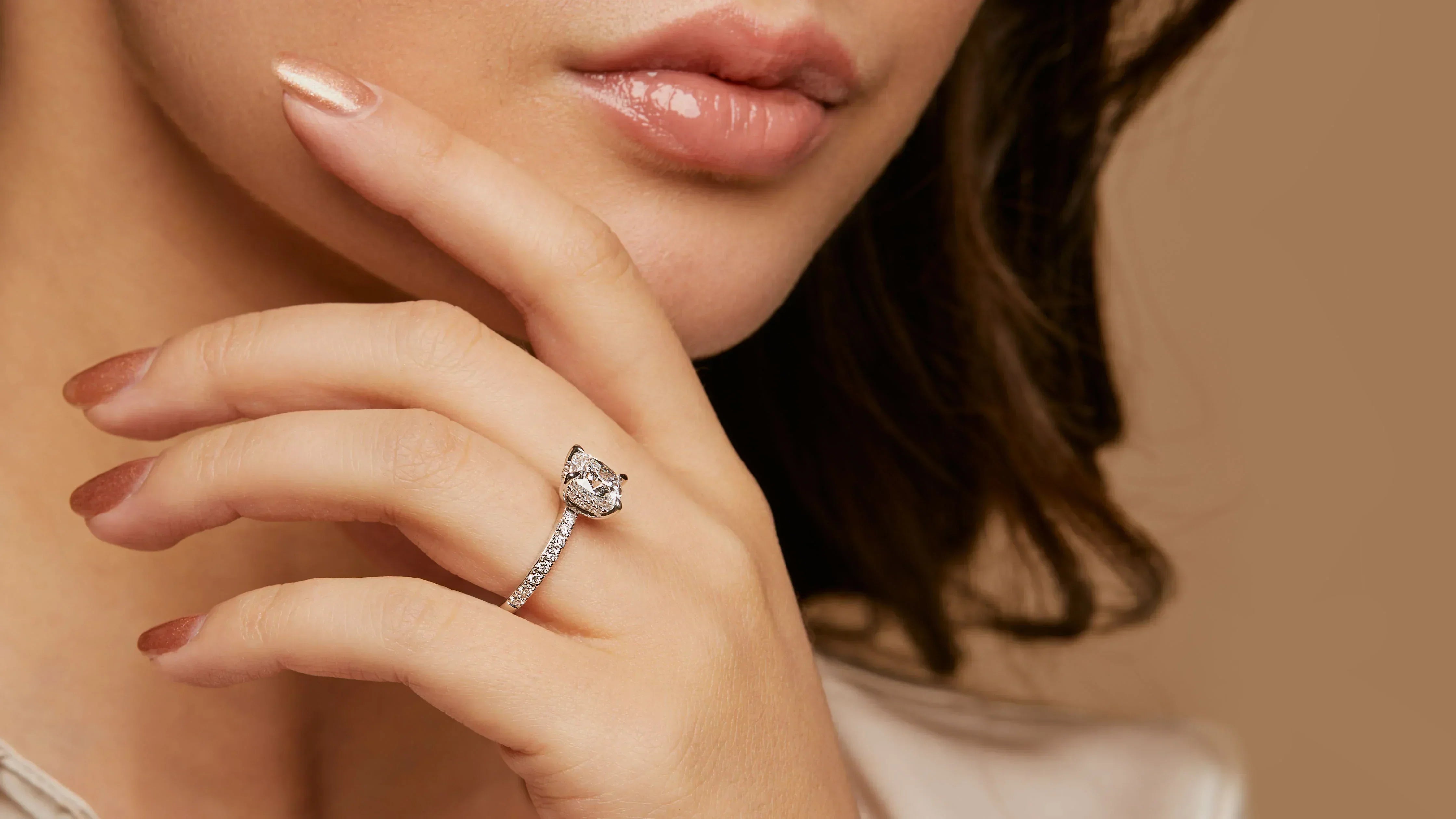
A halo ring features a centre gemstone, typically a lab-grown diamond or moissanite, encircled by a ring of smaller pavé or micro-pavé stones. The surrounding halo amplifies the centre stone's brilliance and creates the visual impression of greater size.
We design halo rings from timeless round-cut classics through to bold cushion-shaped frames, each crafted to genuinely elevate the centre stone's light performance rather than just add decoration.
The History of the Halo Setting
The halo's origins trace back to the early Georgian era (1714–1837) in Europe, where round diamonds or pearls, only slightly smaller than the centre stone, formed an opulent frame. The style evolved through the Victorian era (1837–1901), often designed to resemble flowers, with coloured gemstone centres surrounded by diamonds mimicking petals.
What we consider the classic halo today emerged in the Art Deco period of the 1920s, when a movement obsessed with symmetry and bold geometric pattern found the halo's concentric circles a natural fit. The style has genuinely gone in and out of fashion multiple times since, resurging with Hollywood glamour in the 1930s and 40s, declining through the late 20th century, and returning again with the broader vintage revival of the past decade or so.
Why Choose a Halo Setting?
- Enhanced sparkle — surrounding stones catch light from additional angles, increasing overall brilliance
- Illusion of greater size — a halo can make a centre stone read as noticeably larger without increasing carat weight
- Added detail and texture — a more dimensional, ornate look than a solitaire offers
- Versatility — works well with nearly every cut, round, oval, cushion, pear, marquise and beyond
- Genuine timelessness — whether styled vintage or ultra-modern, the underlying design has real staying power, even through its various dips in popularity
Types of Halo Settings
- Classic halo — a single circle of pavé stones, balanced and brilliant
- Double halo — two concentric halos for extra drama and size illusion
- Hidden halo — a subtle row of stones tucked beneath the crown, visible mainly from the side, this is the style genuinely driving renewed interest in halos right now
- Floral halo — stones arranged to suggest petals, romantic and whimsical
- Geometric or custom halos — hexagon, cushion, or pear-shaped frames for a bolder, architectural effect
Which Cuts Work Best in a Halo Setting?
- Round — the most classic, traditional halo pairing
- Oval — elegant and elongating, often paired with hidden or floral halos
- Cushion — soft, vintage character with strong brilliance
- Pear — balances beautifully in a halo frame, upright or east-west
- Emerald — step-cut clarity contrasts effectively against pavé sparkle
- Radiant — combines brilliance and geometric presence
Metal Matters: Setting Your Halo
- White gold — blends into the surrounding pavé, maximising overall sparkle
- Yellow gold — bold contrast, genuine vintage warmth
- Rose gold — romantic, particularly well suited to floral halo designs
- Platinum — the most durable option, with a naturally bright white finish
For the broader principle behind how metal choice changes a stone's appearance, see our moissanite metal pairing guide, the same logic applies to halo settings generally.
Customising Your Halo Ring
Whether you want a hidden halo paired with an emerald-cut centre stone, or a two-tone double halo design, our team can bring it to life. You'll choose stone type (lab-grown diamond or moissanite), cut and carat size, halo shape and detail, band width and profile, metal type, and shank style, with a CAD rendering confirmed before production begins.
Pros and Cons of Halo Settings
Pros:
- More visual impact without a higher carat cost
- Genuinely increased brilliance
- Flexibility across vintage and modern styling
- The halo itself offers a degree of protective framing around the centre stone
Cons:
- Additional stones mean more surfaces to keep clean
- Can be somewhat harder to match precisely with a wedding band, see our engagement ring vs wedding ring guide for pairing considerations
- May feel like more detail than an ultra-minimalist aesthetic wants
Frequently Asked Questions
Is a halo ring more expensive than a solitaire? A halo can add cost due to the additional stones, but it often lets you choose a smaller, more affordable centre stone while still achieving a large visual effect, so total cost isn't always higher than a comparable solitaire.
Can I have a halo with moissanite instead of a lab-grown diamond? Absolutely. Moissanite halo rings are genuinely popular, combining moissanite's own brilliance with the halo's amplifying effect for a particularly striking result.
Is it possible to add a halo to an existing solitaire ring? Yes, redesign services can add a halo to a classic solitaire setting. Worth discussing during a consultation to check proportions work well for your specific stone.
Will a halo ring suit any hand shape? Generally, yes, particularly oval and pear centre stones, which halos tend to balance and elongate effectively.
Are halo settings still in style in 2026? Here's the honest, current picture: halo sales actually declined through 2025, down to roughly 5.3% of engagement ring purchases from around 9% the year before. That said, a revival is genuinely anticipated for 2026, driven by the broader swing toward vintage and old-money-inspired styling, and hidden halos specifically continue to modernise the classic look for buyers who want the effect without an overtly traditional appearance. If you love a halo, you're arguably ahead of a resurgence rather than following a currently dominant trend, which is a perfectly good reason to choose one. We've covered the fuller trend picture in 2026 Engagement Ring Trends.
Should You Choose a Halo Ring?
A halo suits anyone drawn to sparkle, presence, and a design with genuine historical depth, whether styled vintage or contemporary. It's a considered choice, not a trend-chasing one, halos have proven their staying power across a century of fashion cycles precisely because the underlying design genuinely works.
Designing Yours at VYOR Diamond Lab
Nikolett and I will help you customise every element, halo shape, centre stone, metal, and shank style, to create something that feels genuinely yours rather than a template. Book a consultation, in showroom or virtual, and we'll walk through the options together.
Explore our Engagement Ring Collection, or book a consultation at our Wembley showroom to see halo settings in person.
Share:
Engagement Ring vs Wedding Ring: What's Actually Different
The East-West Engagement Ring: A Modern Twist Explained