

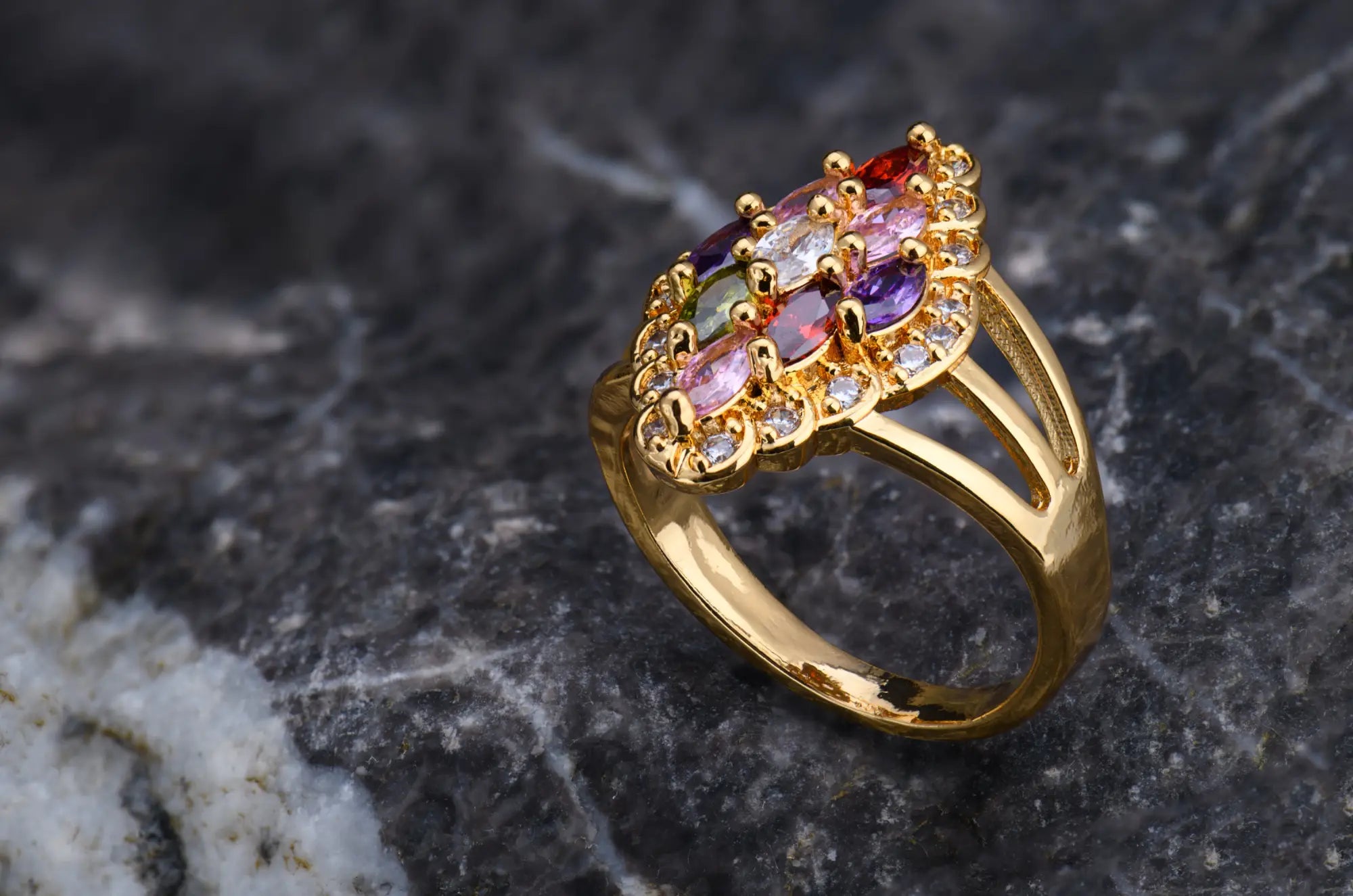
Do Engagement Rings Have to Be Diamonds? A Modern Guide to Meaningful Alternatives
Once, the answer was yes, or at least it felt that way. Today, it's genuinely no, and it's worth understanding why that changed, not just that it did.
Why Diamonds Became "The Default"
The idea that a diamond is the only real choice wasn't handed down through the ages, it was largely built in the 20th century. De Beers' 1947 "A diamond is forever" campaign is the single biggest reason the association stuck, and it worked because it was genuinely brilliant advertising, not because diamonds were the only meaningful option beforehand. Plenty of historical engagement rings, including some of the most famous ones, used coloured stones long before that campaign existed.
What's actually changed is that couples now have far more information, and far more genuine alternatives, available to them. Ethical sourcing, value, personal meaning, and environmental considerations all factor into the decision far more than they did a generation ago. Lab-grown diamonds and moissanite in particular have gone from niche to genuinely mainstream in a remarkably short window.
Lab-Grown Diamonds: Same Material, Different Origin
Lab-grown diamonds are real diamonds, chemically, physically and optically identical to mined diamonds. The only difference is where and how they formed. Because they're grown in a controlled environment rather than extracted from the ground, they're often available at higher clarity and colour grades for the price than a comparable mined stone, and at a meaningfully lower cost overall.
If you want the exact material and tradition of "diamond," just without mined diamond's premium, this is the straightforward answer.
Moissanite: A Genuinely Different, Brilliant Option
If you're open to a stone that isn't diamond at all, moissanite is worth serious consideration. First identified in fragments from a meteor crater, it's a distinct gemstone, silicon carbide, with a refractive index and dispersion that both exceed diamond's, meaning more fire, more colourful sparkle, genuinely more brilliant by some measures, not just "close enough."
It's also durable (9.25 on the Mohs scale, just below diamond), fully traceable in its sourcing, and considerably more affordable. It suits minimalist and maximalist tastes equally well, depending on cut and setting.
Coloured Gemstones: A Different Kind of Statement
Sapphires, emeralds, and a range of other stones have their own long history in engagement rings, this isn't a new idea, just a returning one.
Sapphires — traditionally associated with loyalty and depth, available in white, blue, pink, yellow and more. One of the most famous modern examples is the sapphire ring Prince William gave Kate Middleton, itself a tribute to his mother's ring.
Emeralds — rich, saturated colour with genuine historical weight, well suited to vintage-inspired or more bohemian design directions.
Tourmaline, garnet, aquamarine, alexandrite and others offer real personal meaning and colour, though it's worth knowing that some of these sit softer on the hardness scale than diamond or moissanite, garnet and tourmaline in particular benefit from a protective setting if worn daily, which is exactly the kind of detail worth discussing at the design stage rather than after the fact.
Coloured stones work particularly well when they carry real personal meaning, a birthstone, a nod to family heritage, a colour that means something specific to the two of you, rather than being chosen purely for novelty.
The Ring Isn't the Tradition, the Meaning Is
The honest question isn't "what's traditional," it's simpler than that: is it beautiful to you, does it feel authentic to your relationship, does it reflect what actually matters to you both? For plenty of couples that's moissanite. For others, it's a custom sapphire design, or a classic lab-grown diamond, or occasionally, no centre stone at all.
What This Looks Like in Practice
A Perth couple recently chose a pear-shaped moissanite specifically because they wanted something distinctive and ethically sourced, and it's become a genuine conversation starter. A Melbourne couple built a deep blue cushion-cut sapphire design that reads as regal without feeling costume-like. One Sydney client came in fairly set on a mined diamond, until he saw moissanite's fire in person and changed course entirely, upgrading the setting to platinum with the savings.
None of these are unusual outcomes, they're representative of how often the "right" choice turns out to be something other than the assumed default once people actually see the alternatives.
Frequently Asked Questions
Can I propose with moissanite instead of a diamond?
Absolutely. It's a genuinely popular choice, brilliant, durable, and considerably more affordable, without being a lesser substitute.
Will a non-diamond ring still look luxurious?
Yes. With a well-chosen stone, thoughtful cut, and considered setting, a non-diamond ring can read as every bit as elevated as a diamond one, sometimes more so.
Do coloured gemstones last as long as diamonds?
Many do, sapphires and rubies in particular are genuinely durable for daily wear. Softer stones like garnet or tourmaline benefit from a protective setting, worth discussing when you choose the stone rather than after.
Is it okay to break from tradition entirely?
Genuinely, yes. The ring should reflect the two of you, not a convention neither of you chose.
Can I mix stones in one ring?
Yes, two-stone Toi et Moi styles, birthstone accents, and side stones are all common ways to build something more personal than a single traditional centre stone allows.
Whatever direction feels right for you, book a consultation at our Wembley showroom or online, and we'll help you build a ring that's genuinely yours.
Share:
The Toi et Moi Engagement Ring: Two Stones, One Love Story
The Beauty of Rose Gold Engagement Rings: A Warm Twist on Tradition