

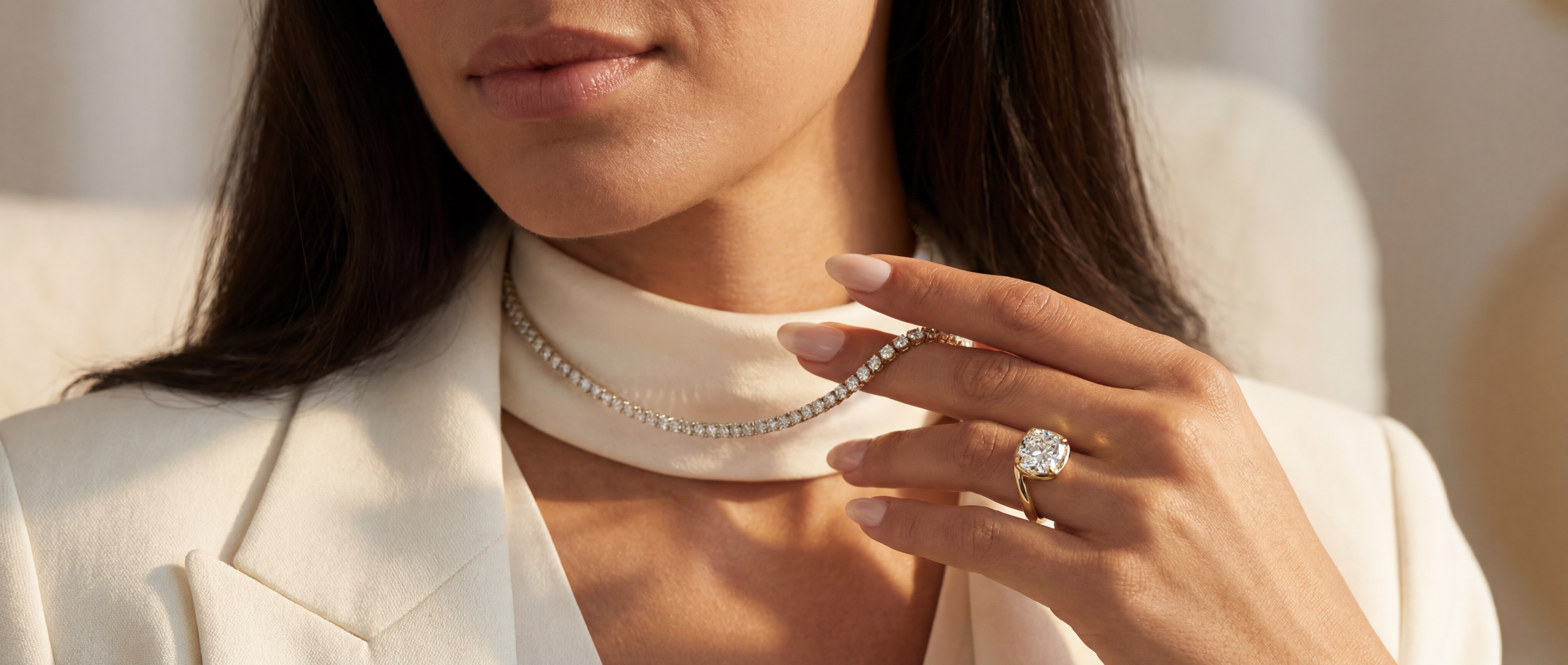
The Beauty of Rose Gold Engagement Rings: A Warm Twist on Tradition
Rose gold isn't new, it's been in and out of fashion for close to two centuries, but it's never quite felt as at home in modern engagement ring design as it does right now. Once mostly reserved for vintage pieces, this blush-toned metal has become a genuine favourite for couples wanting something romantic and a little different from the standard white or yellow gold default.
What Rose Gold Actually Is
Rose gold isn't a naturally occurring metal, it's an alloy: pure gold blended with copper, and usually a touch of silver. The copper is doing the real work here, it's what shifts the colour from yellow toward that warm pink-red tone, and the ratio of copper to gold determines exactly how deep that colour runs. More copper means a redder, bolder rose; less means a softer blush.
We work in 14K and 18K rose gold. 18K carries more pure gold, giving a subtler, softer pink. 14K has a higher copper ratio, producing a slightly more vivid colour and, genuinely, a bit more resistance to everyday wear.
The Real History, Not Just the Highlight Reel
Rose gold's story starts in 19th-century Imperial Russia, where Carl Fabergé, the jeweller behind the famous Fabergé eggs, used the gold-copper alloy extensively in his work for the Russian imperial family. It became so associated with that period and place that it picked up the nickname "Russian gold," a term that's since faded from use but tells you something real about where this colour came from.
It resurfaced properly in the 1920s, when Cartier's Trinity ring, three interlocking bands of yellow, white and rose gold, brought it into the wider fashion conversation. It had another moment in the 1940s, when World War II restricted platinum for civilian use and jewellers leaned on gold alloys instead. And it's had its most recent, and by far its largest, resurgence over roughly the past decade, driven as much by changing taste as by any single design house.
None of this makes rose gold a trend chasing relevance. It's a genuinely old colour that keeps finding its moment again.
Why Choose Rose Gold for an Engagement Ring?
The colour itself carries real emotional weight. Warm, soft, unmistakably romantic, rose gold tends to read as personal before the ring's even tried on.
It flatters a genuinely wide range of skin tones. Its warmth sits between the coolness of white gold and the boldness of yellow, which is a big part of why it works so broadly, fair, olive, or deep complexions all read well against it.
It's distinctive without being a fad. With real design history behind it, rose gold doesn't carry the risk of looking dated the way a purely trend-driven colour might.
It creates genuine contrast against your stone. Whether you've chosen a D-colour lab-grown diamond or a fiery moissanite, rose gold's warmth makes the centre stone read as brighter and more prominent by comparison.
It suits both directions equally well. Vintage detailing, milgrain, filigree, intricate halos, all pair naturally with rose gold. So does a completely minimal, clean-lined solitaire. It's rare for a metal to genuinely work both ways.
Popular Rose Gold Styles
- Solitaire on a rose gold band — simple, warm, modern
- Hidden halo — extra sparkle beneath the centre stone, softened and warmed by the metal tone
- Three-stone rings — the warmth of rose gold pairs particularly well with step-cut or vintage-inspired stones
- East-west settings — a bold emerald or oval cut set horizontally in rose gold reads as genuinely contemporary
Plenty of clients also mix metals, a rose gold band with white gold claws, for example, getting warmth and structural contrast in the same piece.
How Durable Is Rose Gold, Honestly?
This is where it's worth being precise rather than repeating a blanket claim. Copper genuinely does add hardness compared with pure gold, and rose gold typically holds up better than yellow gold of the same karat, since copper is a harder alloying metal than the silver more commonly used in yellow gold blends.
Against white gold specifically, the picture is more mixed than a lot of jewellery guides let on. White gold's own alloying metals, usually nickel or palladium, add real hardness too, and its rhodium plating gives it extra surface scratch resistance while that plating lasts (typically one to three years before it needs redoing). So rather than claiming rose gold is simply "stronger," the honest answer is: rose gold is genuinely durable and doesn't rely on any plating to hold its colour, which is a real, permanent advantage, while white gold's hardness depends on its specific alloy and periodic rhodium maintenance.
One thing rose gold does uniquely well: it can develop a soft natural patina over years of wear, which plenty of people genuinely love for the antique character it adds. If you'd rather keep it looking freshly polished, that's a simple, quick fix at any point.
Caring for Your Rose Gold Ring
- Clean with warm water, mild soap, and a soft toothbrush
- Avoid harsh chemicals, chlorine and bleach in particular
- Store it separately in a fabric-lined box to avoid scratching against other jewellery
- Bring it in periodically for polishing if you prefer a brighter, less patinaed look
Can Rose Gold Be Customised?
Yes, entirely. You can choose rose gold as your primary metal, or combine it with white or yellow gold for a two-tone design, a rose gold band with white gold accents, for instance, or a hidden halo finished in a contrasting tone. A CAD rendering lets you see the design fully before anything goes into production.
Frequently Asked Questions
Is rose gold more expensive than other metals?
Generally not. Pricing is driven mainly by karat (gold content) rather than colour, so rose gold typically sits close to yellow and white gold at the same purity.
Will rose gold suit my skin tone?
Very likely, yes. Its warmth sits between cool and warm undertones, which is exactly why it complements such a wide range of complexions.
Can I mix rose gold with other metals?
Absolutely, two-tone designs are genuinely popular, a rose gold band paired with white gold claws or accents is a common, striking combination.
Does rose gold tarnish over time?
It doesn't tarnish in the way silver does, but it can develop a natural patina with age, which many people like for the antique feel it adds. It can be polished back to a brighter finish any time you prefer.
Can men wear rose gold too?
Genuinely, yes. It's not a gendered colour choice, plenty of men choose rose gold wedding bands or accent detailing for the same warmth it brings to any design.
Rose gold is more a feeling than a metal choice, warm, individual, and quietly durable. Book a consultation at our Wembley showroom or online to explore it for your own design.
Share:
Do Engagement Rings Have to Be Diamonds? A Modern Guide to Meaningful Alternatives
Do Men Wear Engagement Rings in Australia? A Look at Evolving Traditions