

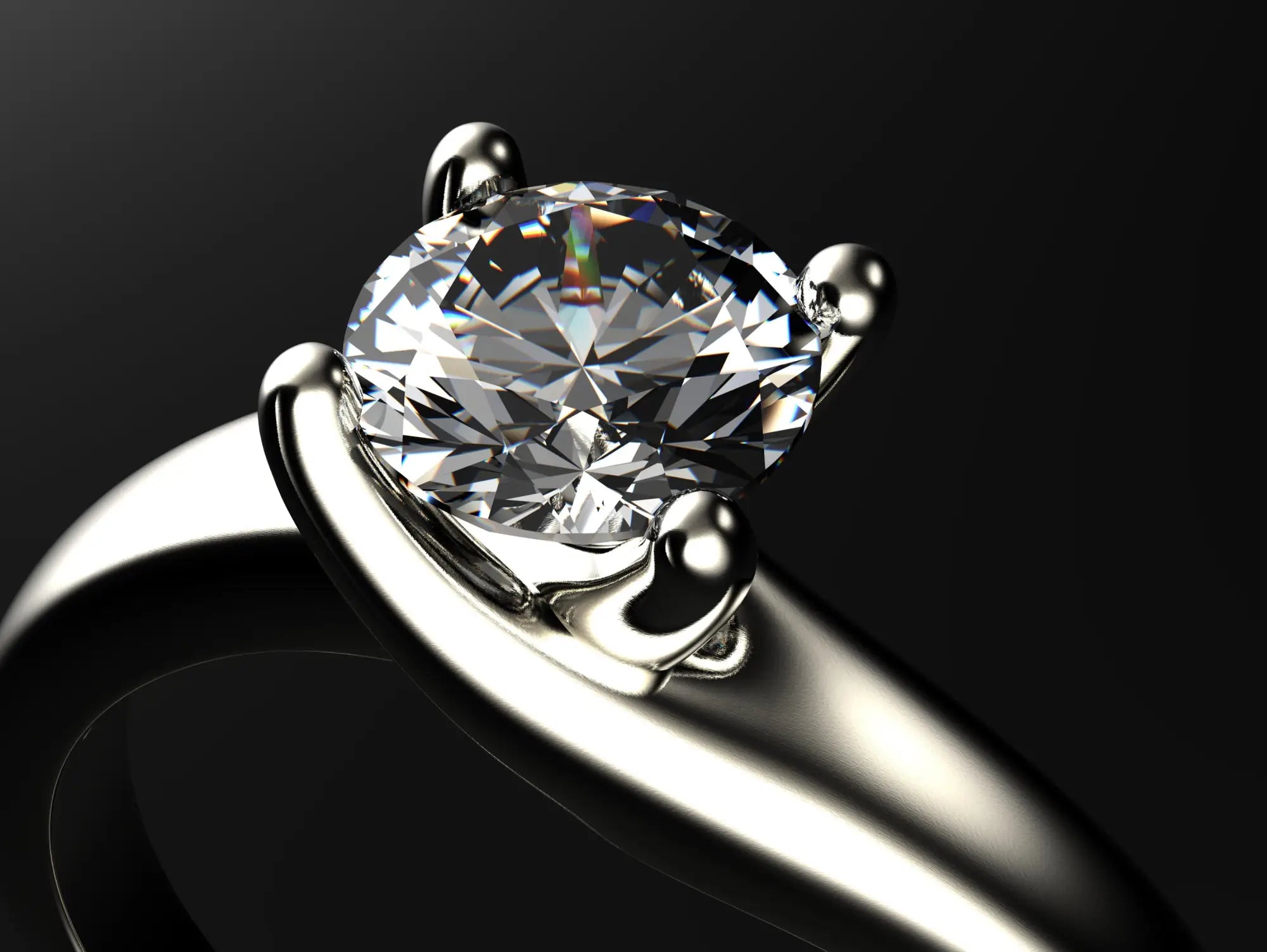
Diamond Fluorescence Explained: What It Means for Lab-Grown Diamonds
Last updated July 2026
Fluorescence is one of the more misunderstood entries on a diamond certificate. It sounds technical, it sometimes gets treated as a red flag by online forums, and most articles about it are written for natural diamonds without mentioning that lab-grown stones behave differently. Here's what fluorescence actually is, how it's graded, and what it means specifically if you're choosing a lab-grown diamond.
What Is Diamond Fluorescence?
Fluorescence is the glow a diamond emits when exposed to ultraviolet (UV) light, most commonly from direct sunlight or a blacklight. It happens because trace elements, such as nitrogen or boron, absorb UV radiation and briefly re-emit it as visible light. The moment the UV source is removed, the glow stops.
It appears most often as blue, though yellow, orange and green fluorescence occur occasionally. It has no bearing on a diamond's durability or hardness. It's a visual characteristic, not a structural one.
How Common Is Fluorescence, and Is It Different in Lab-Grown Diamonds?
In natural diamonds, roughly 25 to 35% of stones show some degree of fluorescence. Lab-grown diamonds are notably different: IGI's own grading data puts fluorescence at around 10% or less of lab-grown stones submitted, and it tends to correlate with growth method. CVD-grown diamonds occasionally show a faint yellow fluorescence, while HPHT-grown diamonds rarely fluoresce at all, and when they do it tends to read as faint orange rather than blue.
This is worth knowing because most fluorescence content online is written with natural diamond statistics, which overstate how often you'll actually encounter it while shopping for a lab-grown stone.
How Fluorescence Is Graded
Fluorescence is graded on a five-point intensity scale:
- None — no visible reaction under UV light
- Faint — a weak reaction, generally undetectable without lab equipment
- Medium — a light glow visible under UV light, no impact on face-up colour
- Strong — a noticeable glow, may have a slight influence on colour appearance
- Very Strong — a pronounced glow, occasionally associated with a hazy or oily look in rare cases
Fluorescence is not one of the 4Cs. It's a supplementary characteristic noted on the report, not a factor that determines the diamond's grade.
IGI grades fluorescence on this full scale for lab-grown diamonds and lists it as a standard field on every full report.
GIA graded fluorescence the same way for lab-grown diamonds until September 2025. Since GIA moved to its two-tier Premium/Standard quality assessment for lab-grown diamonds in October 2025, it no longer issues a standalone fluorescence grade on lab-grown reports. Where fluorescence is present and relevant to the diamond's appearance, GIA now notes it in the report's comments rather than as a separate graded field. If you're comparing a pre-October 2025 GIA report against a current one, this is one of the details that will look different.
Does Fluorescence Affect a Diamond's Appearance?
For the vast majority of diamonds, no meaningfully. GIA's own research has found that fluorescence has little to no impact on transparency, and that the long-standing assumption of a "milky" or "oily" appearance only shows up in a very small fraction of diamonds with an unrelated light-scattering defect, not from fluorescence alone.
Where fluorescence can genuinely change how a diamond looks:
- In lower colour grades (I to M): a blue fluorescence can subtly counteract the diamond's natural yellow tint, making it appear whiter under UV-rich lighting such as daylight
- In very high colour grades (D to F) with Strong or Very Strong fluorescence: there's a small chance of a slight haziness in rare cases, which is why it's worth viewing any stone with strong fluorescence in person or under multiple lighting conditions before deciding
For most buyers, fluorescence sits well down the list of priorities behind cut, clarity, colour and carat. It's a characteristic worth understanding, not one worth losing sleep over.
Should You Choose a Diamond With Fluorescence?
It comes down to personal preference and the specific stone. A few practical points:
- Fluorescence is entirely invisible in typical indoor lighting; you'll only notice it under a blacklight or in strong, direct sunlight
- It's not a defect, and it's not a way to distinguish lab-grown from natural diamonds, despite that myth circulating online (both can fluoresce, and both can show none at all)
- If a diamond has Strong or Very Strong fluorescence, ask to view it in person under a few different light sources before finalising your decision
How We Approach Fluorescence at VYOR Diamond Lab
Nikolett and I review fluorescence alongside cut, clarity and colour for every stone we source, and we'll always tell you plainly what a diamond's fluorescence grade is and what it means for that specific stone, rather than treating it as a footnote. If a stone has any degree of fluorescence, we'll show it to you under different lighting during your consultation at our Wembley showroom so you can judge it with your own eyes rather than relying on the report alone.
Frequently Asked Questions
Is diamond fluorescence good or bad? Neither, on its own. It's a natural characteristic that has no effect on durability and, for most stones, little to no visible effect on appearance. Whether it's desirable depends on the individual diamond and personal preference.
How common is fluorescence in lab-grown diamonds? Uncommon. Around 10% or less of lab-grown diamonds show any fluorescence, compared with 25 to 35% of natural diamonds.
Does GIA still grade fluorescence on lab-grown diamonds? Not as a standalone grade. Since October 2025, GIA's lab-grown reports use a Premium/Standard quality assessment and note fluorescence in comments only where it's relevant, rather than listing a specific intensity grade.
Does fluorescence make a diamond look cloudy? Rarely. GIA research shows this only occurs in a very small percentage of diamonds with a separate, unrelated light-scattering defect, not from fluorescence by itself.
Can fluorescence help a lower colour grade diamond look better? Yes, in some cases. Blue fluorescence can subtly offset the yellow tint in I to M colour diamonds, making them appear whiter under UV-containing light such as daylight.
Explore our Lab-Grown Diamond Engagement Ring Collection, or book a consultation at our Wembley showroom to view certified stones in person.
For a visual understanding of diamond fluorescence, you might find this video insightful:
Share:
What is an IGI Certificate? Understanding Lab Grown Diamond Certification